
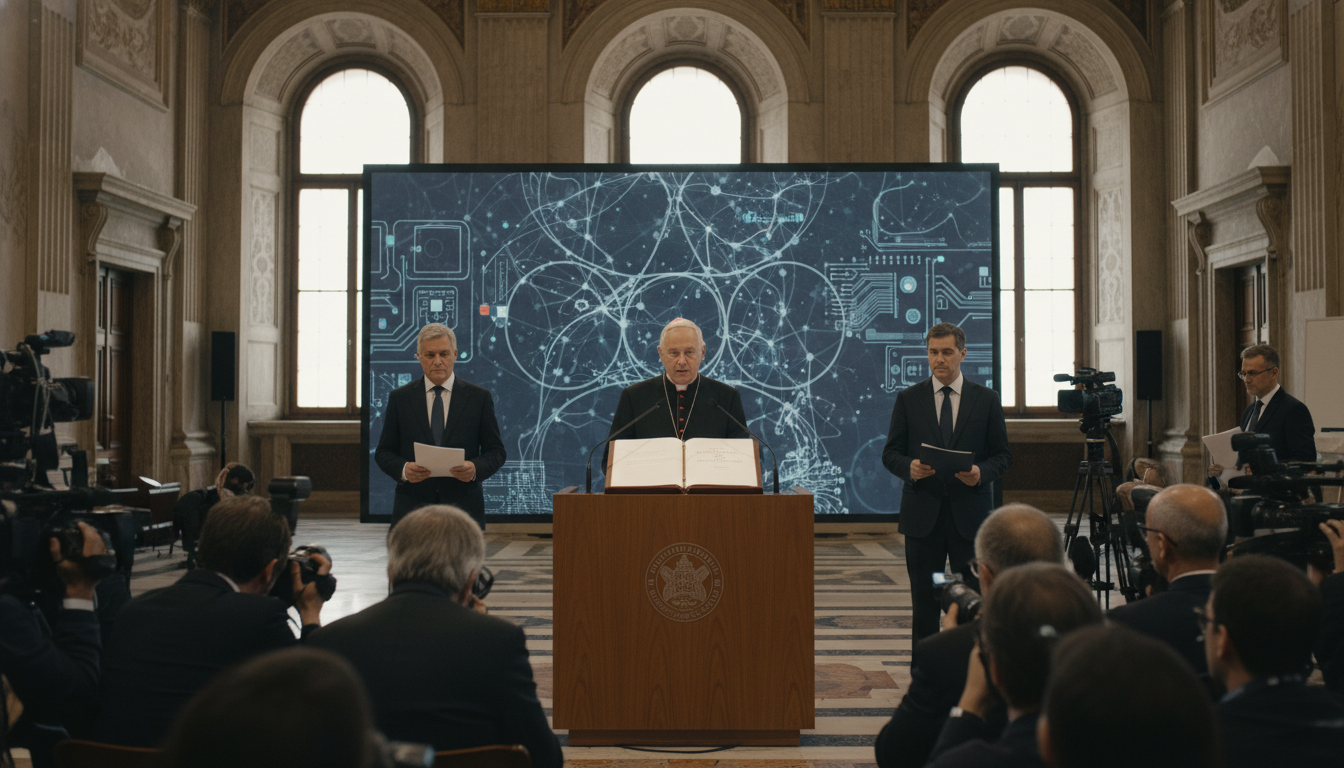
Pope Leo XIV Issues ‘Magnifica Humanitas’ Encyclical on Artificial Intelligence and Human Dignity
Pope Leo XIV has issued a landmark encyclical, “Magnifica Humanitas,” addressing artificial intelligence and its ethical impact on society, labor and human dignity. The document, signed on the anniversary of Pope Leo XIII’s Rerum Novarum, sets out moral principles and practical recommendations for governments, tech leaders and the faithful. The encyclical positions human dignity at the center of debates over automation, data and the use of emerging technologies.
Historic timing and papal intent
The pope released “Magnifica Humanitas” to coincide with the 135th anniversary of Rerum Novarum, drawing an explicit parallel between the Industrial Revolution and today’s digital transformation. The timing underscores a deliberate pastoral and philosophical effort to treat artificial intelligence as a social question, not merely a technical one. Leo XIV frames the encyclical as guidance for Catholics and broader publics confronting rapid technological change.
AI is framed as tool, not human replacement
In the text, Leo XIV describes artificial intelligence as a rapidly advancing and valuable tool while asserting a clear distinction between machines and human persons. The encyclical rejects notions that computational systems can possess true human emotions or intrinsic moral worth. That distinction informs the document’s repeated insistence that technology must serve human flourishing, rather than redefine what it means to be human.
Labour protections and fair wages emphasized
A central strand of the encyclical is its focus on work: Pope Leo XIV warns that automation has already displaced many entry-level and repetitive jobs and could upend white- and blue-collar roles alike. He reiterates the Catholic tradition that labour carries inherent dignity and calls for policy measures to ensure living wages and social protection. The text highlights the obligation of states and employers to prioritize workers’ welfare as economic structures evolve.
Condemnation of digital-era exploitation
“Magnifica Humanitas” criticizes what it terms new forms of digital-era exploitation, naming low-paid data labeling, content moderation and hazardous mineral extraction as practices that demean human life. The pope appeals for stronger safeguards against exploitation in global supply chains and online labour markets. He frames such abuses as moral problems that require regulatory, corporate and consumer responses to restore justice and human dignity.
Biblical caution against technological hubris
The encyclical repeatedly invokes the Tower of Babel as a cautionary metaphor, warning against projects that seek uniform domination or the elevation of human systems to rival spiritual claims. Leo XIV uses the biblical story to underline the value of cultural and linguistic diversity and to critique technocratic impulses toward total standardization. This theological angle anchors his plea for humility, pluralism and attention to social consequences.
Concrete recommendations on children, data and weaponry
Beyond theological reflection, the pope offers concrete recommendations: tighter protections for children’s online experiences, clearer rules on data ownership and stewardship, and restraints on the militarization of artificial intelligence. The document surveys research on the effects of early and unsupervised screen exposure while urging legislators to craft laws that protect minors. On data, the encyclical advocates for frameworks that recognize personal rights and prevent commodification of human behaviour.
Engagement with tech leaders and global audiences
The Vatican’s presentation of the encyclical included invitations to leading figures from the technology sector, signaling an intent to engage rather than to isolate the industry. Leo XIV stresses that decisions made in corporate boardrooms and research labs will have global social consequences for people who may never visit those centres of power. The text calls on innovators to heed ethical constraints and for policymakers to ensure public oversight and accountability.
The pope’s language is pastoral as well as prescriptive, insisting that human beings possess rights and dignity “simply by virtue of being human,” and repeating the term dignity throughout the document to underscore its centrality. This rhetorical emphasis aims to reframe technical debates as fundamentally moral and communal questions that require broad participation.
The encyclical’s mixture of moral theology, social doctrine and practical policy proposals positions it as both a spiritual guide and a civic intervention. Governments, international organizations and technology companies face a set of recommendations that range from labour law reform to educational interventions aimed at preparing communities for technological shifts.
Finally, the document closes with an affirmation of human worth and a call to stewardship: rather than being surpassed by their inventions, people are to steward technology in ways that honor human limits and potentials. The pope invites global conversation, urging leaders and citizens alike to ensure that the age of artificial intelligence enlarges human flourishing instead of diminishing it.
