
Russia-Ukraine prisoner exchange returns 185 detainees each in UAE‑mediated swap
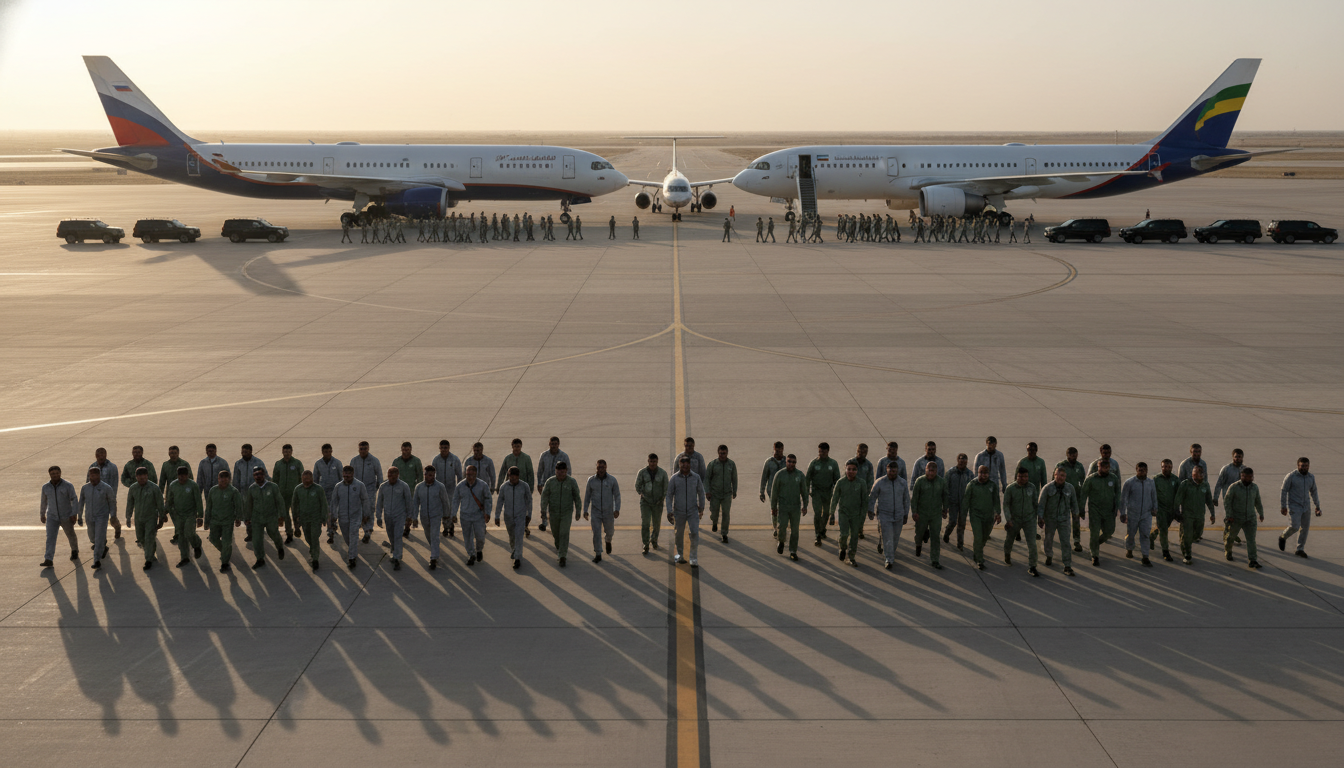
Russia and Ukraine exchanged 185 prisoners each in a UAE‑mediated swap on June 5, 2026, returning soldiers, officers and a civilian held since early 2022.
Summary of the exchange
Russia and Ukraine announced a coordinated prisoner exchange on June 5, 2026, in which each side released 185 detainees as part of what Moscow described as mediation by the United Arab Emirates. The returned group, Ukraine said, included front‑line soldiers, officers and at least one civilian, many of whom had been held since the opening months of the war in 2022. Officials from both capitals reported that transports and processing of the freed detainees were underway on Friday, with families and support services mobilised to receive them.
Numbers and logistics confirmed
Both sides confirmed the numerical parity of the swap — 185 individuals repatriated to each country — a format increasingly used in prior exchanges to maintain reciprocal balance. Organisers said the transfer followed agreed procedures for handover and identity verification, with medical checks and initial screening conducted immediately upon release. Details on the exact locations of transfers or the routes used were not disclosed by either government at the time of announcement.
Composition of those released
Ukraine stated the group returning home included soldiers, officers and a civilian, with many detainees taken captive during the early months of the 2022 conflict. While authorities in Kyiv did not publish full lists immediately, they indicated that a number of returnees had been held for extended periods and would undergo rehabilitation and debriefing. Russia reported that the persons it received included individuals detained by Ukrainian forces, but provided limited public detail on their identities or conditions.
UAE’s reported role in mediation
Moscow publicised the role of the United Arab Emirates as a mediator in arranging the exchange, describing UAE channels as instrumental in facilitating dialogue and logistics. Ukrainian officials acknowledged the announcement of mediation but offered limited comment on third‑party involvement pending verification and internal coordination. The UAE did not immediately issue a detailed public statement about the mechanics of its involvement in the operation.
Reactions in Kyiv and Moscow
In Kyiv, government sources described the return of servicemen and a civilian as a priority, emphasising the state’s efforts to secure the release of citizens held abroad. Officials said reintegration and medical care would be provided, and that families had been notified as procedures progressed. In Moscow, officials framed the swap as a reciprocal humanitarian step, reiterating that prisoner exchanges could be handled through diplomatic channels and third‑party facilitators when necessary.
Humanitarian and legal considerations
The exchange underscores ongoing humanitarian concerns surrounding detainees captured during the conflict and the need for compliance with international legal standards governing prisoners of war and civilians. Medical and psychological support will be central to post‑release care, according to agencies that typically handle reintegration after prolonged captivity. Observers noted that transparency around detention conditions and access to independent monitoring remain important for broader confidence in future swaps.
Potential impact on future talks
While the swap is a concrete humanitarian action, analysts suggest it is unlikely on its own to shift the broader diplomatic landscape between Russia and Ukraine. However, successful exchanges can create channels of communication and limited confidence‑building measures that may be used in future negotiations on narrow, practical issues. Both sides have used such arrangements in the past to secure the return of detainees and to manage acute humanitarian needs even as wider hostilities continue.
The freed individuals face immediate medical and administrative processing, and authorities on both sides said they would continue efforts to account for other missing or detained persons. Families and advocacy groups called for continued exchanges and for independent oversight to ensure the safety and rights of all detainees still held.
