
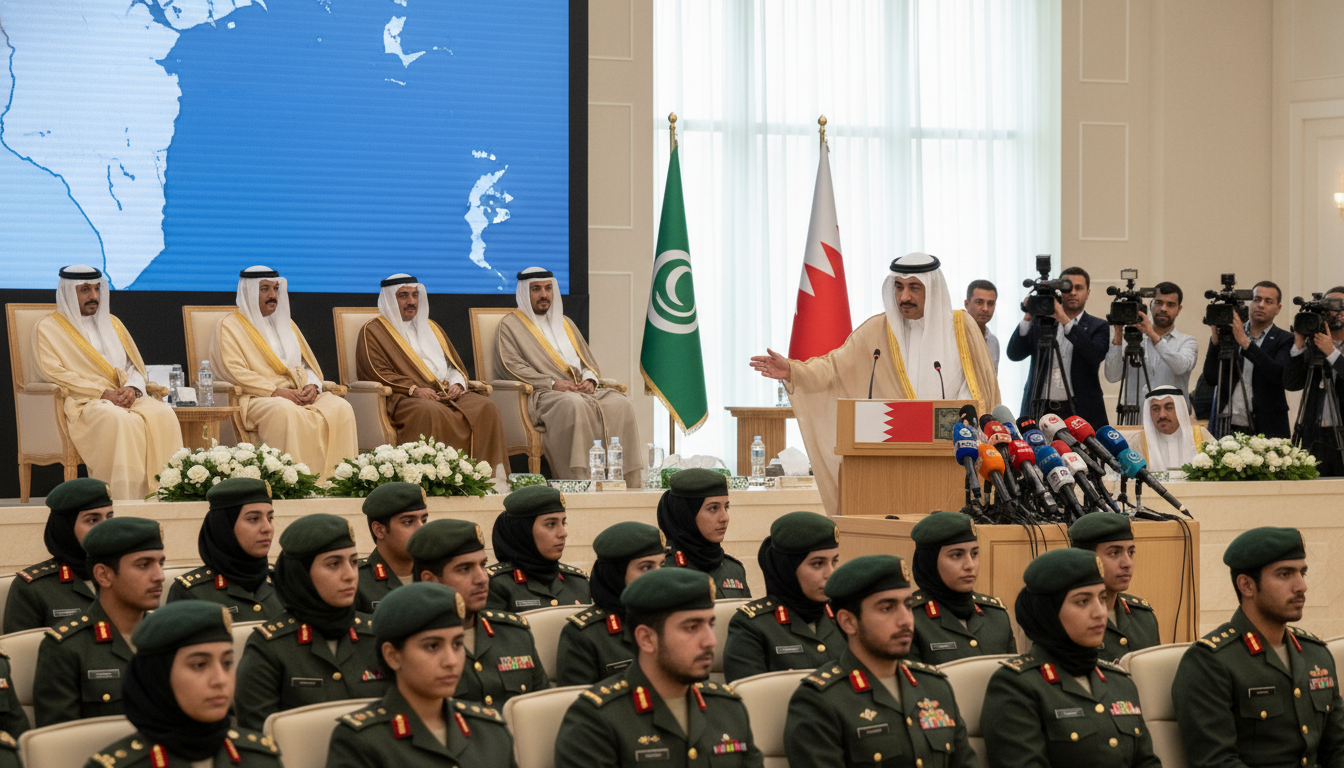
Bahrain FM Praises Gulf Youth for Unity and Frontline Role Amid Iranian Attacks
Bahrain FM Abdullatif Al Zayani praises Gulf youth for unity and frontline defence after Iranian attacks, highlighting Bahrain’s youth programmes and GCC regional empowerment efforts.
Bahrain’s foreign minister commended Gulf youth for their steadfast unity and direct contribution to national defence, saying their actions underlined regional solidarity during recent hostile Iranian strikes. The minister highlighted the role of Gulf youth in standing with wise leadership, serving on the frontlines with armed forces and security services, and rejecting divisive rhetoric. He made the remarks on the occasion of the fifth Gulf Youth Day, stressing that young people remain central to Gulf security and social cohesion. Bahrain’s ongoing initiatives to develop youth skills and civic engagement were presented as part of a broader strategy to secure long-term stability.
Minister’s Remarks on Gulf Youth
The foreign minister framed the youth response as a national and collective achievement, praising their readiness to support sovereign institutions and preserve stability. He emphasised that young people’s adherence to official guidance and rejection of rumours had been critical in countering attempts at provocation. The statement linked youth conduct directly to the resilience of member states of the Gulf Cooperation Council (GCC). Officials presented this public recognition as both a thank-you and a call to sustain youth engagement in public life.
Youth Participation in Defence and Security
Bahrain’s statement underlined that Gulf youth did not remain on the sidelines but took active roles alongside security services during the attacks. Young men and women were described as participating in front-line defence, community protection and information integrity to blunt the effects of hostile acts. The minister singled out their discipline and commitment as evidence of a maturing civic culture across the Gulf. Observers say such involvement can deepen ties between security institutions and the communities they serve, reinforcing mutual trust.
Bahrain’s GCC Presidency and Youth Agenda
As the current holder of the GCC rotating chairmanship, Bahrain signalled a proactive push to elevate a shared regional youth agenda. The foreign minister said Bahrain would prioritise joint youth programmes that develop scientific, creative and leadership capacities across member states. This approach is being framed as consistent with the council’s vision to treat youth as a strategic asset for national security and sustainable development. The presidency’s agenda reportedly includes capacity-building, cross-border exchange programmes and institutional support to scale promising initiatives.
National Programmes and Recognition for Youth
Bahrain highlighted a cluster of domestic initiatives aimed at empowering young people, including a national award for youth achievement tied to sustainable development goals. Officials noted that the prize has reached its fifth edition, awarding a range of youth-led projects that contribute to the country’s development priorities. The government also pointed to the launch of a global network, termed a platform for youth competitiveness, intended to link Bahraini talent with international opportunities. These measures are being presented as part of an effort to institutionalise youth development and create sustainable career and civic pathways.
Coexistence, Tolerance and International Engagement
The minister drew attention to Bahrain’s investments in institutions that promote coexistence and tolerance as a foundation for youth education and civic participation. He cited the establishment of a centre dedicated to coexistence and tolerance that runs academic and training programmes for young people. Bahrain also highlighted an initiative adopted by the United Nations related to a day for peaceful coexistence, framing it as an international endorsement of the kingdom’s work. Officials describe these diplomatic and cultural efforts as complementary to security measures, shaping a narrative of resilience that is both defensive and values-driven.
Diplomatic, Developmental and Civic Roles of Youth
Beyond security, the statement praised Gulf youth for contributions in diplomacy, development and public discourse, urging continued responsible engagement. Young diplomats, entrepreneurs and civic actors were singled out for advancing the region’s international standing and development goals. The minister appealed for youth to maintain vigilance against misinformation and to resist calls to violence and extremism. Authorities framed this as a shared responsibility that ties individual conduct to national reputation and regional stability.
Bahrain’s messaging combines recognition of immediate contributions with a broader plan to institutionalise youth empowerment across the Gulf through exchange programs, awards and centres of learning. The emphasis on education, creativity and civic responsibility is presented as the long-term antidote to instability and the key to sustaining economic and social progress.
Looking ahead, officials signal that Bahrain will use its leadership role within the GCC to build coordinated youth policies that support security, dialogue and sustainable development. Continued investment in training, international networks and civic institutions is expected to remain central to that effort. Gulf youth, according to the ministry’s statement, will be treated as partners in both safeguarding national interests and driving the region’s future prosperity.
