
Japan Hints at Cutting Fuel Subsidy to Keep Gasoline Price Near ¥170 per Liter
Government signals to study subsidy adjustment as naphtha distribution concerns prompt calls for intervention amid budget talks.
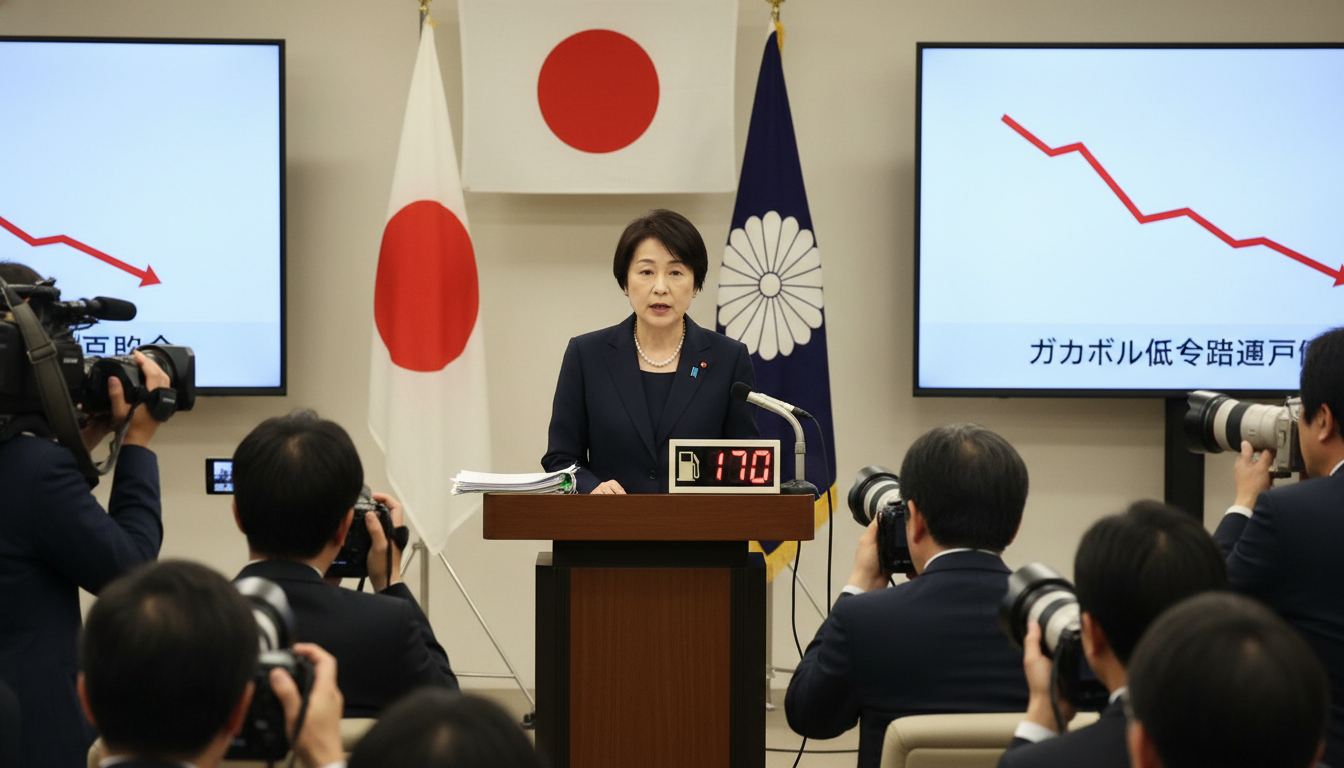
Prime Minister Sanae Takaichi signalled that the government may reduce subsidies in order to maintain the gasoline price at around ¥170 per liter, comments made during deliberations on the supplementary budget for fiscal 2026 at the Lower House Budget Committee, Jiji Press reported. The remark explicitly mentioned a flexible approach to fuel pricing as officials consider adjustments within the supplemental spending plan. At the same time, opposition centrist leader Junya Ogawa urged the administration to consider direct intervention to manage naphtha distribution, citing risks of supply interruption that could ripple through fuel and petrochemical chains.
Takaichi Signals Flexible Approach to Fuel Subsidies
Prime Minister Takaichi told lawmakers that fuel pricing would be examined as part of broader budget deliberations and that the government would adopt a flexible stance. Her comments framed the possibility of reducing direct support while keeping an eye on market stability and consumer impact. Lawmakers were told the supplementary budget provides a window to reassess temporary measures introduced to blunt recent price volatility. Officials said that any change would seek to balance fiscal constraints with the need to avoid sharp consumer price spikes.
Budget Committee Exchange and Policy Context
The remarks were made during an exchange at the Lower House Budget Committee as legislators reviewed the supplementary budget for fiscal 2026. The supplemental budget has been used to deploy temporary relief measures in response to recent energy market instability and inflationary pressures. Committee members pressed the government for clarity on how long subsidy levels would be sustained and how any tapering would be phased to limit shock to households. Finance ministry officials present at the session indicated that analysis of fiscal capacity and market forecasts would guide any decision on subsidy reductions.
Opposition Urges Intervention Over Naphtha Distribution
Junya Ogawa, leader of the opposition centrist Reform Alliance, appealed to the government to consider intervention in the distribution of naphtha, a low-value petroleum fraction used extensively as a feedstock in petrochemical production and in the manufacture of fuel components. Ogawa warned that disruptions in naphtha supplies could undermine refinery operations and push up downstream gasoline costs despite subsidy adjustments. He called for contingency measures to secure supply chains and ensure equitable allocation of available stocks. Opposition lawmakers highlighted the strategic importance of naphtha for both fuel stability and industrial output.
Industry Implications and Supply Chain Risks
Naphtha serves as a crucial input for Japan’s petrochemical sector and as a blending component for transport fuels, meaning distribution constraints could quickly affect refinery throughput and product availability. Market participants monitor global crude and refined product flows closely, and any bottleneck in naphtha distribution can exacerbate local shortages. Refiners and chemical firms would face operational strain if access to naphtha becomes uneven, potentially prompting temporary production cuts or price pass-through to consumers. Analysts say that even modest disruptions can translate into higher pump prices, undermining policy intentions to stabilise the gasoline price.
Consumer Impact and Fiscal Trade-Offs
Maintaining a gasoline price near ¥170 per liter through subsidy adjustments involves trade-offs between immediate consumer relief and longer-term fiscal sustainability. Subsidies can blunt short-term pain at the pump but impose a cost on government budgets and may distort market signals that encourage supply response. Conversely, cutting support risks higher retail fuel prices for households and businesses, which can feed into broader inflation. Policymakers face pressure to design a gradual and predictable phase-out if subsidy reductions proceed, while preserving targeted assistance for vulnerable groups and critical sectors.
Next Steps and Market Monitoring
Officials said the government would study options flexibly and continue monitoring supply indicators, refinery run rates, and naphtha inventory in making any formal decision. Economic and energy ministries are expected to present updated projections and contingency scenarios as deliberations on the supplementary budget continue. Lawmakers signalled they would demand transparency on timing and criteria for changes to support programmes. Market participants and consumer groups are likely to watch for concrete policy signals in the coming weeks.
The government’s twin concerns—fiscal discipline and fuel-market stability—now sit at the centre of budget discussions as Tokyo weighs the merits of reduced subsidies against the operational risks posed by naphtha distribution. Observers say any move will need careful sequencing and clear communication to avoid unintended supply shocks or sudden price increases at the pump.
