
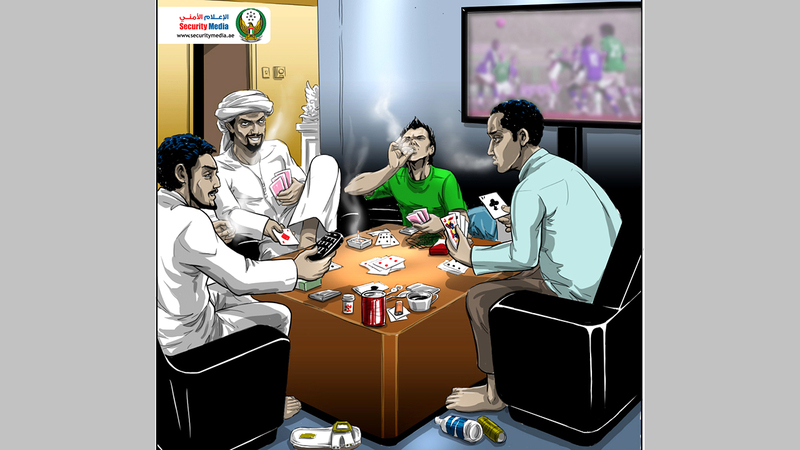
The National Rehabilitation Center has identified 10 signs that indicate the possibility of adolescents becoming addicted to drugs, including school problems such as a decline in academic performance, quarrels, theft and absence, deterioration of physical health (oversleeping, lethargy and laziness), lack of interest in appearance and personal hygiene, changes in behavior such as keeping one’s life and daily activities secret, lying, justification and making excuses, being late and spending long hours outside the home, increased spending of money such as insisting on asking for money without a clear reason, stealing money from the house, disappearance of medications prescribed for other people in the house, frequent acquisition of products containing volatile substances such as nail polish, glue, hairspray, and engine cleaners, and changing friends such as accompanying addicts and those who provide them with the substance and a safe place to use it.
Dr. Anas Mahmoud Fikry, Head of the Health Education Department at the National Rehabilitation Center in Abu Dhabi, said that it is sometimes difficult to differentiate between the behavioral changes that accompany adolescence and the signs of addiction to psychotropic substances in adolescents, noting that the symptoms of drug abuse and addiction depend mainly on the type of drug and the degree of addiction.
Fikri pointed out that “not all of these symptoms may appear on the addict or may not necessarily occur as a result of drug use alone, but may be the result of other health or psychological problems, so caution must be exercised when noticing them and avoiding wrong conclusions.”
He stated that “it is possible to discover that a person (a son, relative, friend, or co-worker) is using drugs based on the physical and behavioral symptoms of these substances. However, it should be noted that symptoms do not necessarily mean that the person has a disease.”
He explained that the general symptoms of drug abuse are the way of speaking (conversation), which manifests as slowness or speed in speaking, incomprehensible speech, hallucinations, in addition to frequent forgetfulness, extreme agitation, quick anger, loss of concentration, difficulty following conversations with others, frequent gesturing and drowsiness, redness of the eye, severe dilation or constriction of the pupil, paleness and yellowness of the face, weight loss, inability to balance or stagger while walking, excessive sweating, itchy and runny nose, and epistaxis (nosebleeds).
He also noted attempts to mask the smell of alcohol, smoking, excessive consumption of chewing gum, mouthwashes, flavoured drinks and perfumes, and the presence of many scars and marks on different parts of the body (as a result of injections and/or due to the person’s attempts to harm himself).
Fikri warned of the behavioral, psychological and social repercussions caused by drugs, as “there are symptoms and compulsive behaviors that accompany addiction, as these symptoms begin to appear gradually during the addiction stage, the most important of which is the feeling of a desire to use the substance regularly, and may reach daily use or several times a day, failure in attempts to stop using, keenness to possess a sufficient amount of the narcotic substance, wasting money in order to obtain the substance despite its high price, and engaging in dangerous and illegal acts and behaviors that a person does not usually do, to obtain the substance, such as stealing, feeling the need for the narcotic substance to be able to confront daily problems, and exposing oneself and others to danger due to the effect of the narcotic substance, including driving a vehicle under the influence of narcotics or alcohol, wasting time focusing on providing the narcotic substance and using it in an appropriate place, and hiding the fact of its use from family, friends and security personnel.”
He pointed out that “these symptoms help in identifying the addict. However, the medical diagnosis of the disease must be done under the supervision of specialist doctors and the necessary laboratory tests must be performed.”
General symptoms of drug abuse:
Slow or fast speaking and incomprehensible speech.
– Hallucinations and frequent forgetfulness.
– Extreme agitation and quick anger.
– Loss of concentration.
– Frequent nodding and drowsiness.
– Eye redness and severe dilation or constriction of the pupil.
– Paleness and yellowing of the face.
– Weight loss.
– Inability to balance, and staggering while walking.
– Excessive sweating, itching and nosebleeds.
The most dangerous means of dealing
The National Rehabilitation Center confirmed that the use of narcotic and psychotropic substances through injection is one of the most dangerous means of use and the most likely to transmit serious viral diseases, such as AIDS and viral hepatitis.
He added that addiction is a disease like any other disease.
He views the person suffering from it as a patient in need of help, indicating that he understands the circumstances that the addict is going through, and that requesting treatment from the patient is a big step towards achieving recovery.
Follow our latest local and sports news, and the latest political and economic developments via Google News
