
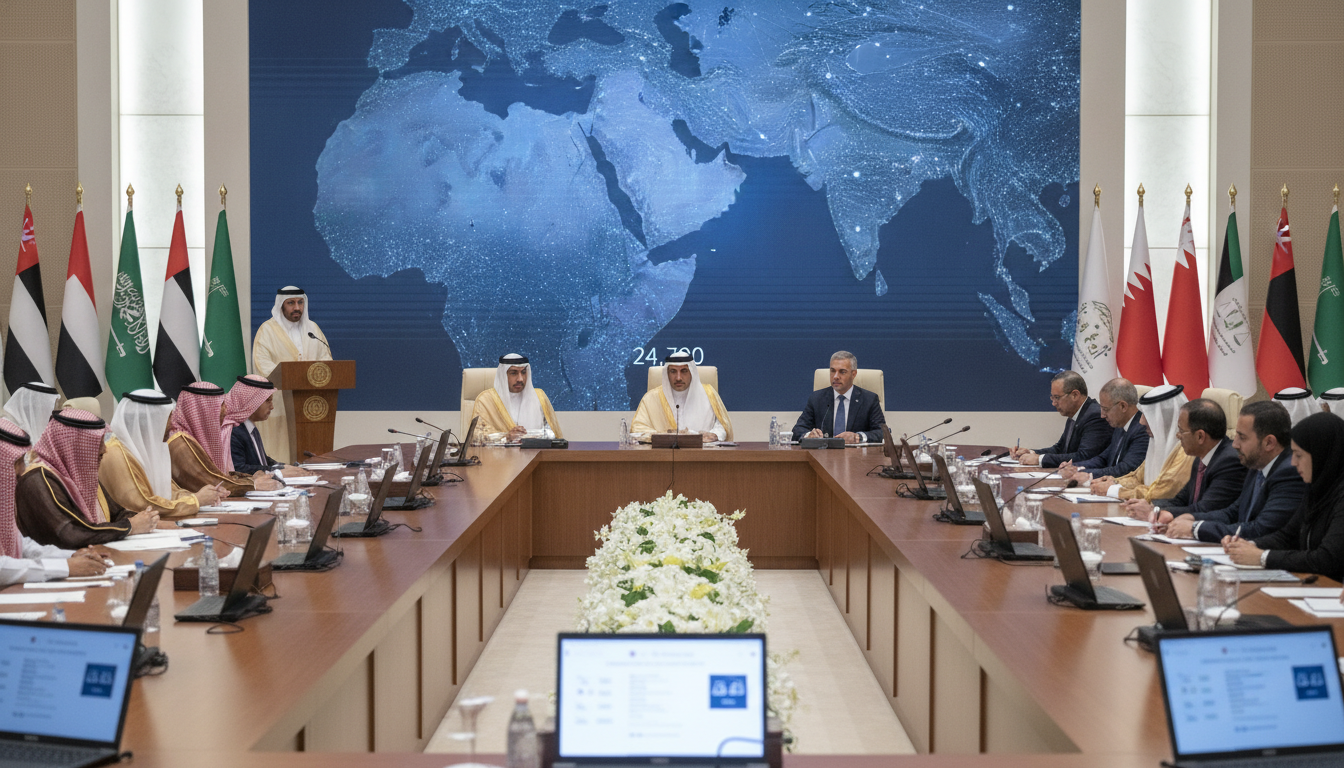
GCC launches Gulf Legislation Platform to centralise unified laws and legal research
Gulf Legislation Platform launched by GCC on June 14, 2026 centralises 24,700+ legal documents to streamline access, research and legislative coordination.
The Gulf Legislation Platform was officially launched on June 14, 2026 by Jasim Mohammed Al‑Budaiwi, Secretary‑General of the Gulf Cooperation Council (GCC), as a central digital repository for unified and national laws across member states. The platform aims to make Gulf legislation more accessible to governments, legal professionals and researchers by providing a single searchable reference for laws issued within the framework of GCC cooperation. Officials said the initiative is intended to accelerate legal harmonisation and support evidence‑based policymaking across the region.
Al‑Budaiwi leads inauguration of unified legal portal
The platform inauguration was announced by the GCC Secretary‑General at a public launch event, marking a key deliverable from the Permanent Committee of Legislative Affairs’ 19th meeting. The committee had approved the GCC General Secretariat’s proposal to create an electronic platform dedicated to compiling and presenting Gulf legislation alongside relevant national measures. Al‑Budaiwi described the portal as a practical tool to support the collective legislative agenda of the Council.
Platform index exceeds 24,700 legal and legislative documents
At launch the Gulf Legislation Platform includes more than 24,700 legal and legislative documents, spanning unified GCC instruments and national laws relevant to the Council’s work. The collection covers codes, regulations, decisions and other legal texts issued under GCC frameworks, assembled into a standardised electronic repository. System designers said the database was structured to allow rapid retrieval and cross‑referencing of documents for comparative legal work.
Advanced search tools designed for governments and legal specialists
The platform offers advanced search capabilities intended to serve government entities, legal departments, academics and independent researchers. Features include keyword and filter‑based search, document summaries and categorisation by subject matter and issuing authority to reduce retrieval time. GCC officials expect the search tools to facilitate the exchange of legal expertise and improve the efficiency of legislative drafting and review within member states.
Phase one links Bahrain and Oman with wider rollout to follow
Initial electronic linkage under the project’s first phase covers the Kingdom of Bahrain and the Sultanate of Oman, with plans to connect the remaining member states in subsequent stages. The phased rollout is designed to integrate national legislative registries into the central platform while ensuring technical interoperability and data governance standards. GCC sources said the approach will allow lessons from the first phase to be applied across the network as the platform grows.
Platform intended to strengthen legislative coordination and policy harmonisation
The Gulf Legislation Platform is presented as a practical mechanism to support coordinated lawmaking and policy alignment across the GCC, reducing fragmentation of regional legal frameworks. By providing a shared reference point for unified instruments and relevant national legislation, the platform is expected to aid legislators in drafting measures that are consistent with existing GCC agreements. Observers noted that easier access to consolidated texts can shorten consultation cycles and improve the quality of regulatory decisions.
Al‑Budaiwi and the GCC General Secretariat framed the platform as part of a broader modernisation drive for the Council’s legislative infrastructure, aimed at serving decision‑makers, legal practitioners and researchers. The initiative underscores a continued emphasis on digital tools to enhance cooperation and to make Gulf legal resources more transparent and usable.
The GCC has said ongoing development will prioritise user‑friendly functions and secure data exchange, and that technical and legal safeguards will be applied as more national registries are integrated. Stakeholders across the region will be watching the platform’s expansion and its impact on the pace and coherence of regional legislative work.
