
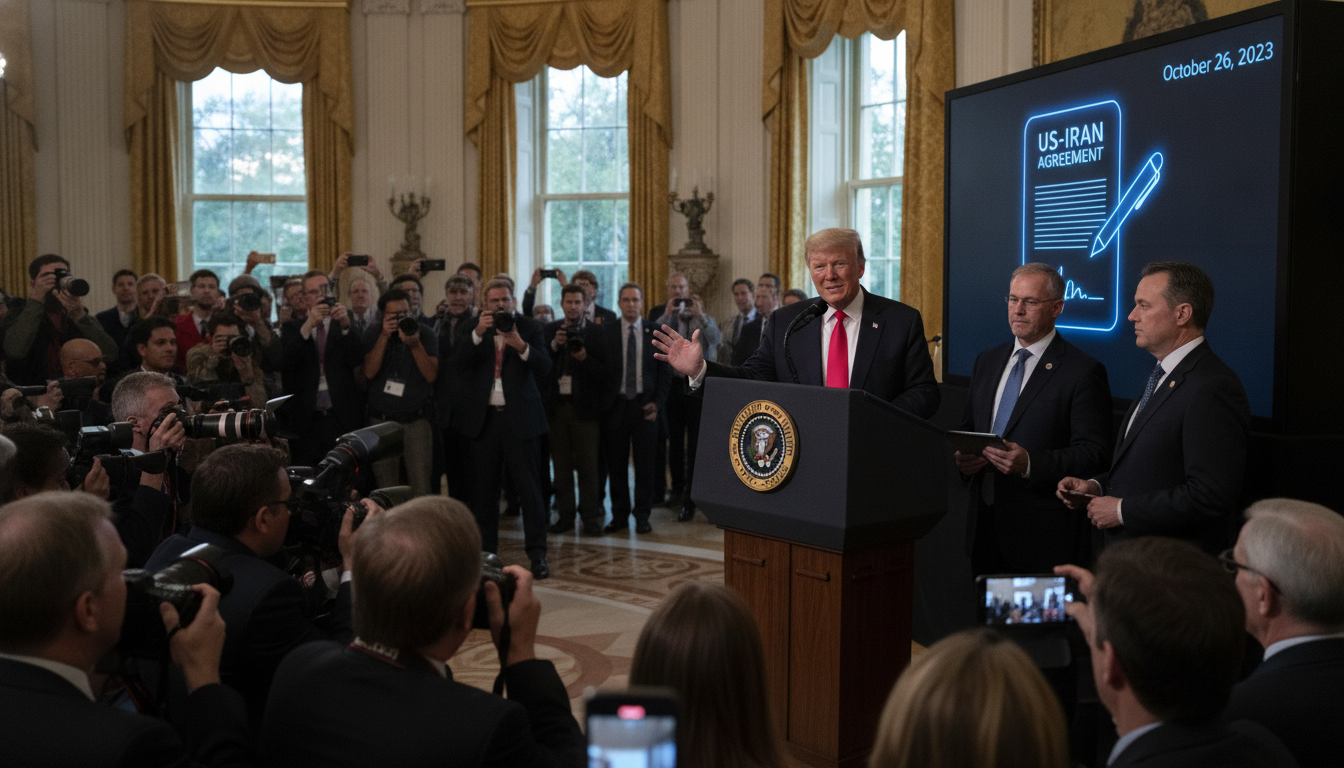
Trump says agreement with Iran could be signed electronically within hours
President Trump says an agreement with Iran could be signed electronically within hours, pledging to lift a naval blockade upon signature while urging de-escalation.
President Donald Trump told Fox News on Sunday that an agreement with Iran is “likely” to be signed electronically within the next two to three hours, signaling a sudden diplomatic opening amid heightened regional tension. He said he would ask Tehran not to respond militarily to a recent Israeli strike that struck Beirut, and he tied the immediate lifting of a naval blockade to the completion of the deal. The remarks add urgency to a negotiation process already shadowed by recent hostilities in Lebanon and wider concerns about escalation.
Trump says electronic signing is imminent
In remarks to Fox News, Trump described the prospect of an electronic signature as a near-term, practical step to finalize the deal quickly. He framed the timeline in hours, saying that an immediate exchange of electronic confirmations could conclude the understanding without the delays of formal in-person ceremonies. The president’s emphasis on speed reflects both political calculations and a desire to reduce the risk that sparks on the ground will derail the arrangement.
The administration’s public messaging makes clear that Washington views the mechanism of signing as flexible, provided both sides accept the final terms. Officials have not released a detailed timeline of follow-up steps, leaving open questions about how quickly implementation measures would take effect once an electronic signature is recorded.
Appeal to Tehran to refrain from striking Israel
Trump said he would ask Iranian leaders not to retaliate against Israel for a strike that hit Beirut, characterizing such restraint as essential to preserving the fragile window for diplomacy. The appeal appears designed to prevent a tit-for-tat escalation that could undo the nascent agreement before it is formalized. By publicly urging restraint, the president placed responsibility on Tehran to avoid actions that could broaden the confrontation.
Analysts note that such appeals can be fragile in practice, particularly where proxy groups or hardline elements feel compelled to respond. The administration’s capacity to influence Tehran’s decision-making remains limited, and the degree to which Iran heeds a direct U.S. request will be closely watched by regional capitals.
Immediate lifting of naval blockade pledged upon signature
A central element of Trump’s statement was a promised immediate end to the naval blockade of Iranian waters “upon signing,” which he said would be implemented “immediately” if the agreement is finalized. That assurance links a visible and tangible concession to the completion of the diplomatic step, signaling to Iran a swift payoff for cooperation. Lifting a blockade would also have practical implications for regional shipping and military postures.
The mechanics of how and when naval operations would be altered were not specified in detail, and military and diplomatic officials will need to coordinate to translate the pledge into operational directives. Observers will look for follow-on statements from defense authorities clarifying the scope and timing of any change to maritime restrictions.
Israeli strike in Beirut heightens regional stakes
The backdrop for the announcement is a recent Israeli strike that struck Beirut and raised fears of an expanded confrontation between Israel and Iran-backed forces. That attack has increased pressure on all parties to avoid miscalculations that could spiral into broader warfare. The prospect of a diplomatic agreement arriving amid such volatility underscores the narrowness of the window for de-escalation.
Regional governments and international partners are likely to weigh the benefits of a deal against the dangers that continuing hostilities could nullify diplomatic gains. The interplay between kinetic events on the ground and negotiations at the diplomatic table will shape how durable any agreement proves to be in the days ahead.
Diplomatic mechanics and verification challenges
Even if an electronic signature occurs, substantial technical and verification work typically follows to implement the terms of a complex agreement. Questions remain about sequencing, monitoring, and the role of third-party observers or international organizations in confirming compliance. The president’s statement tied the lifting of a blockade to signature, but other measures—such as sanctions relief or arms restrictions—usually require phased verification.
Governments and experts will look for specifics on inspection regimes, timelines for reciprocal steps, and dispute-resolution mechanisms to assess the likely longevity of the arrangement. Without clear verification protocols, any accord risks being vulnerable to accusations of noncompliance from skeptical actors.
Regional and international implications
A rapid agreement and the prospect of a lifted blockade would reverberate across the Middle East, affecting alliance calculations and commercial shipping patterns. U.S. partners, including Gulf states and European governments, will assess whether the deal enhances stability or leaves unresolved security concerns. Israel’s reaction and the responses of Iran’s regional proxies will be key determinants of whether the diplomatic opening reduces the likelihood of broader hostilities.
Markets and military planners will also monitor whether the deal eases tensions in shipping lanes that have seen increased patrols and interdictions. International actors may offer to support verification or confidence-building measures to consolidate any breakthrough.
If an electronic signature is recorded as described, it would mark a swift and unconventional step toward formalizing an understanding between Washington and Tehran. The coming hours and days will test whether the terms can be implemented without renewed violence and whether regional actors accept the arrangement as a basis for reduced tensions and clearer rules of engagement.
