
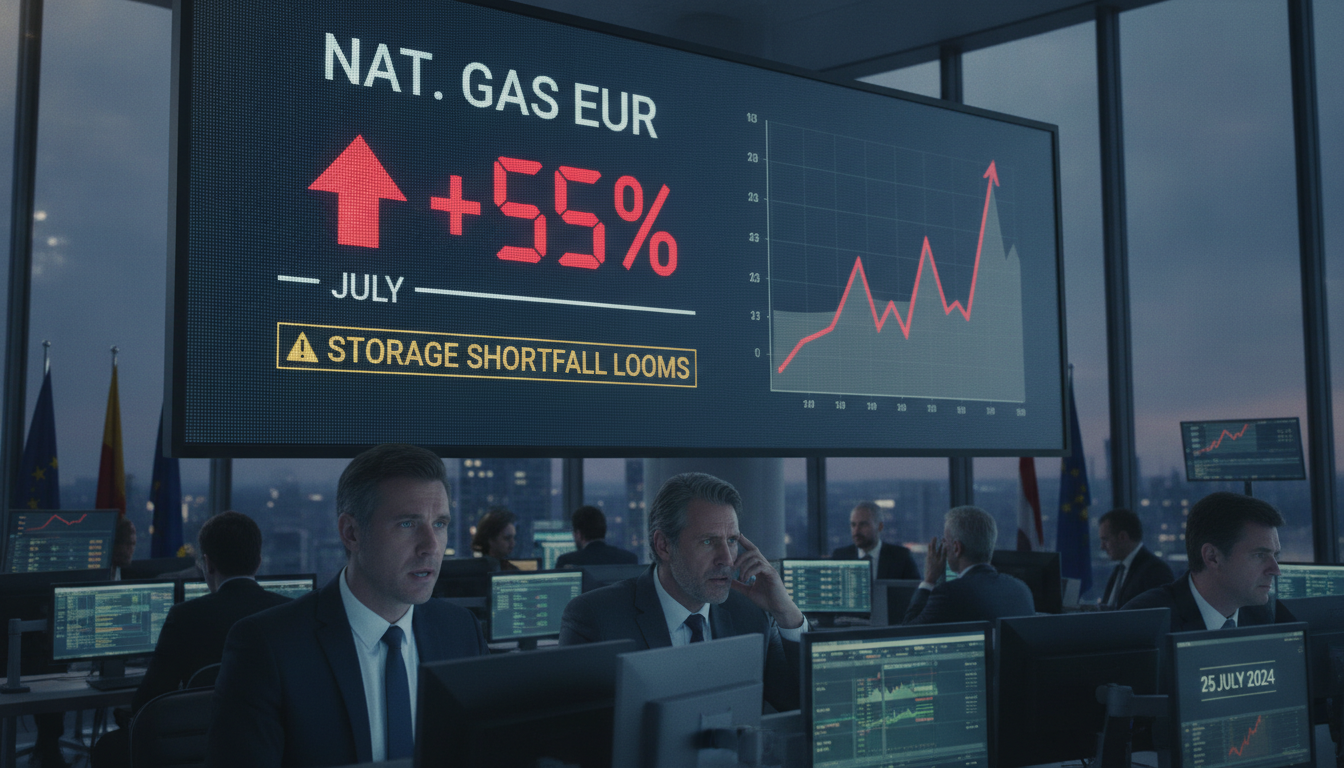
European natural gas prices surge 55% in July 2026 as futures climb to $709 per 1,000 m³
European natural gas prices jumped 55% in July 2026 to $637 per 1,000 m³, with futures rising to $709 as storage shortfalls and summer heat pushed demand higher.
European natural gas prices rose sharply in July 2026, recording a year‑on‑year increase of 55% with an average spot price of $637 per 1,000 m³. Futures traded at the end of July reached $709 per 1,000 m³, up 39% from the end of June, according to data from the London futures market. The summer average for the season climbed to $586 per 1,000 m³, underscoring sustained upward pressure on wholesale gas markets.
Prices Jumped Sharply in July 2026
Spot prices averaged $637 per 1,000 m³ in July, a sizable rise compared with July 2025 and a notable acceleration from spring levels. The London futures market recorded a futures settlement of $709 per 1,000 m³ at the end of July, reflecting heightened near‑term market anxiety. Traders and utilities appear to be recalibrating positions as the prospect of tight winter supplies grows.
Market participants said the monthly jump was driven by a combination of summer electricity demand and concerns over winter storage, leaving little room for complacency. The surge has already started to influence power generation costs across Europe, where natural gas remains a key fuel for balancing renewable intermittency.
Futures Movement and Monthly Comparisons
Futures rose 39% between the end of June and the end of July 2026, a rapid month‑on‑month advance that signalled rising expectations of tighter supply or stronger demand ahead. The gap between spot averages and front‑month futures narrowed and widened at different points in July as heat waves and storage updates altered short‑term sentiment. Market volatility increased, with traders bidding for cover as seasonal risks became more apparent.
The summer season average of $586 per 1,000 m³ highlights that the price rise was not confined to a single spike but persisted across June, July and early August trading sessions. Such persistence tends to feed through to industry procurement costs and can influence contract negotiations for later in the year.
Storage Estimates Fall Below EU Target Levels
Data cited by market observers indicate European storage sites may reach only 70–75% capacity by the start of the heating season, short of the 90% target set by EU policymakers. That projected shortfall is a central concern for governments and energy companies that rely on buffer stocks to cover cold snaps and supply interruptions. Lower-than-target storage reduces the margin for error and increases the potential for price spikes if winter demand proves stronger than expected.
Officials and regulators have been urging accelerated injections while supply remains available, but infrastructure, gas flows and market prices all influence how quickly storage can be refilled. The discrepancy between current trajectories and the 90% objective has prompted discussions in several capitals about contingency measures and potential demand management.
Heat Waves Amplified Cooling Demand and Power Use
Sustained heat waves across parts of Europe contributed to higher electricity consumption as households and businesses increased air‑conditioning use, lifting gas demand where gas‑fired power plants supply balancing energy. The unusual combination of strong cooling demand in summer and limited flexibility on storage reduced the season’s spare capacity. Analysts noted that rising summer gas consumption adds pressure on refill operations ahead of winter.
In some markets, peak electricity prices coincided with elevated gas prices, tightening margins for utilities that purchase gas on spot markets to fuel power plants. This dynamic has also increased interest in diversifying short‑term supply sources and accelerating bilateral procurement contracts for the autumn season.
Market Implications and Winter Risk Scenarios
The current price trajectory elevates risks for industrial consumers and households, particularly in energy‑intensive sectors that face higher input costs and possible interruptions to contracted gas supplies. Higher wholesale gas costs are likely to pass through to electricity markets and, in some jurisdictions, to retail energy bills, depending on regulatory frameworks and hedging strategies. Policymakers are monitoring developments closely given the economic sensitivity to sustained energy price inflation.
Looking ahead, market attention will focus on injection rates into storage, the availability of alternative supplies, and weather forecasts for the heating season. Any combination of rapid refill progress, increased imports, or a mild winter could alleviate pressure, while delays or a colder-than-expected winter would likely push prices higher and heighten the risk of supply squeezes.
European natural gas prices and futures movements in July 2026 have underscored the tight balance between supply, storage and seasonal demand, prompting renewed scrutiny of energy security and market resilience across the continent.
