
DEWA announces deployment of autonomous assistant AI to scale operations at The Sail
DEWA unveils autonomous assistant AI at The Sail, applying the technology across production, transmission and distribution to reinforce Dubai’s smart-city leadership.
DEWA announces deployment of autonomous assistant AI
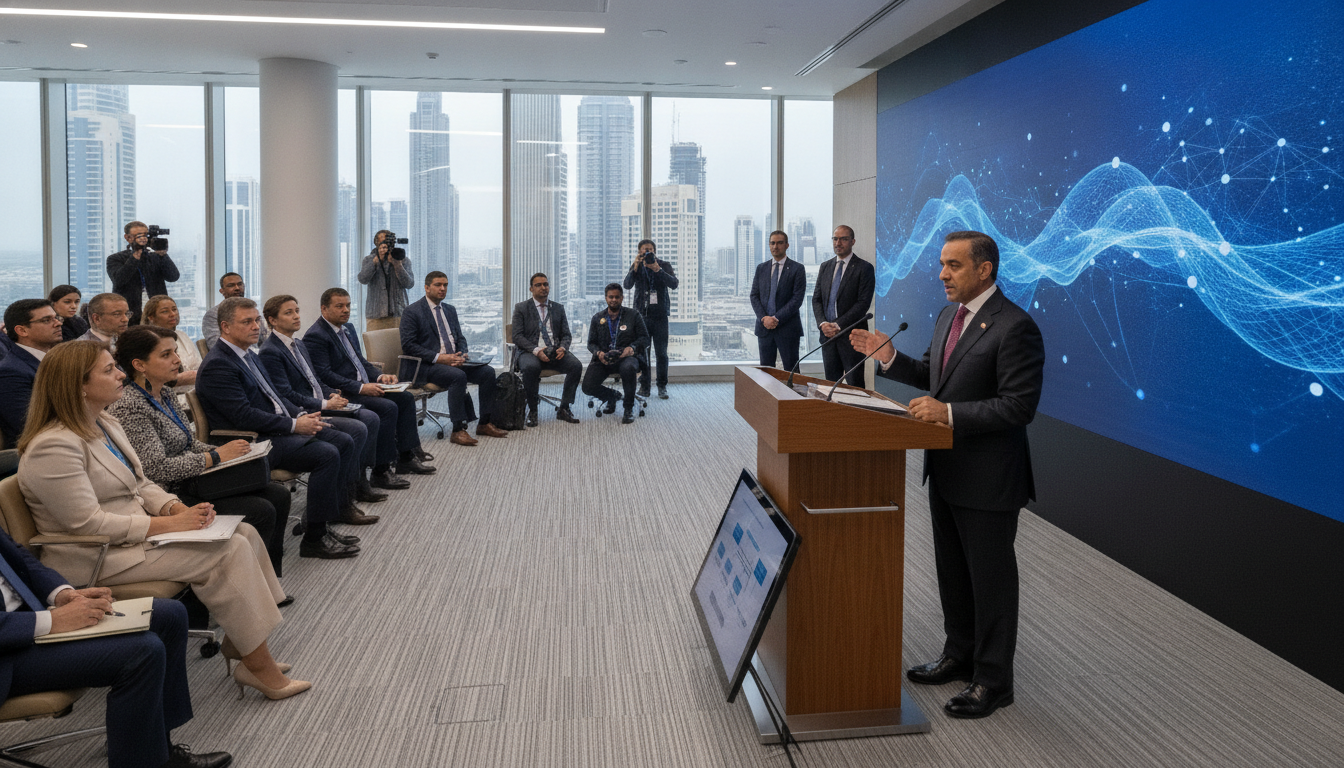
Saeed Mohammed Al Tayer, managing director and CEO of Dubai Electricity and Water Authority (DEWA), confirmed the authority is deploying the latest autonomous assistant AI to accelerate its digital transformation. He made the announcement during an internal “Assistant AI Retreat” held at DEWA’s new headquarters, The Sail, stressing the technology’s role in operational decision-making and service delivery.
The session gathered DEWA’s senior leadership, digital transformation and AI teams, alongside representatives from SAP and McKinsey, reflecting a cross-organisational push to embed autonomous systems. Al Tayer said the move aligns with DEWA’s long-term strategy to position Dubai as a global leader in smart-city infrastructure and utility services.
Executive retreat held at The Sail, DEWA’s positive-energy HQ
The retreat took place at The Sail, DEWA’s recently inaugurated headquarters described by the authority as the tallest, smartest and largest government positive-energy building in the world. The location underscores DEWA’s commitment to showcasing advanced sustainability and smart-building technologies as part of a broader innovation narrative.
Organisers used the forum to review governance, technical readiness and capability roadmaps necessary for safely scaling autonomous assistant AI in utility operations. Discussions included risk management, human oversight, and alignment with national policy frameworks that govern AI deployment across government entities.
DEWA traces AI integration back to 2017 with expanding scope
Al Tayer noted that DEWA’s AI journey began in 2017 and has since expanded across the authority’s service portfolio. The authority reported accumulated experience in applying AI to production, transmission and distribution functions, with pilots and projects that informed current readiness for autonomous assistant AI models.
This history of iterative deployment has, according to DEWA, produced a data and systems foundation that supports more advanced self-executing AI capabilities. The stepwise approach aims to mitigate operational risks by building on proven use cases and established digital platforms.
Alignment with UAE national models for autonomous AI
DEWA emphasised that its initiatives follow guidance from UAE leadership on autonomous and self-executing AI models that enable independent execution and decision-making. The authority framed its deployment as complementary to the UAE government’s ambition to be a global first mover in wide-scale application of such models.
Officials at the retreat reviewed how DEWA’s approaches map to national standards, including model validation, ethical safeguards and interoperability requirements. Participants underscored the need for clear accountability chains where autonomous systems assume decision authority in routine and emergency scenarios.
Operational applications and Fourth Industrial Revolution technologies
DEWA described a range of operational domains where autonomous assistant AI is expected to add value, including predictive maintenance, grid optimisation, outage response and customer-facing automation. These applications are being integrated alongside Fourth Industrial Revolution technologies such as IoT sensors, edge computing and advanced analytics.
The authority highlighted that autonomous assistant AI will not replace human expertise but will augment staff capabilities by automating routine decisions and surfacing insights faster. Pilots will test the balance between automated execution and human intervention to ensure safety, reliability and regulatory compliance.
Partnerships with SAP and McKinsey to guide rollout and governance
DEWA signalled close collaboration with technology and consulting partners, naming SAP and McKinsey as contributors to technical design, change management and governance frameworks. These partnerships are intended to accelerate implementation while ensuring industry best practices shape the authority’s approach.
Workstreams presented at the retreat covered vendor integration, model lifecycle management and the development of internal skills to operate and audit autonomous assistant AI systems. DEWA aims to institutionalise knowledge transfer so that governance and operational teams can independently manage the technology over time.
DEWA framed the initiative as a measured but ambitious step toward a future utility model that harnesses autonomous assistant AI at scale. The authority intends to move from controlled pilots to phased deployment across assets and customer services, with continued emphasis on safety, sustainability and alignment with national digital transformation priorities.
