
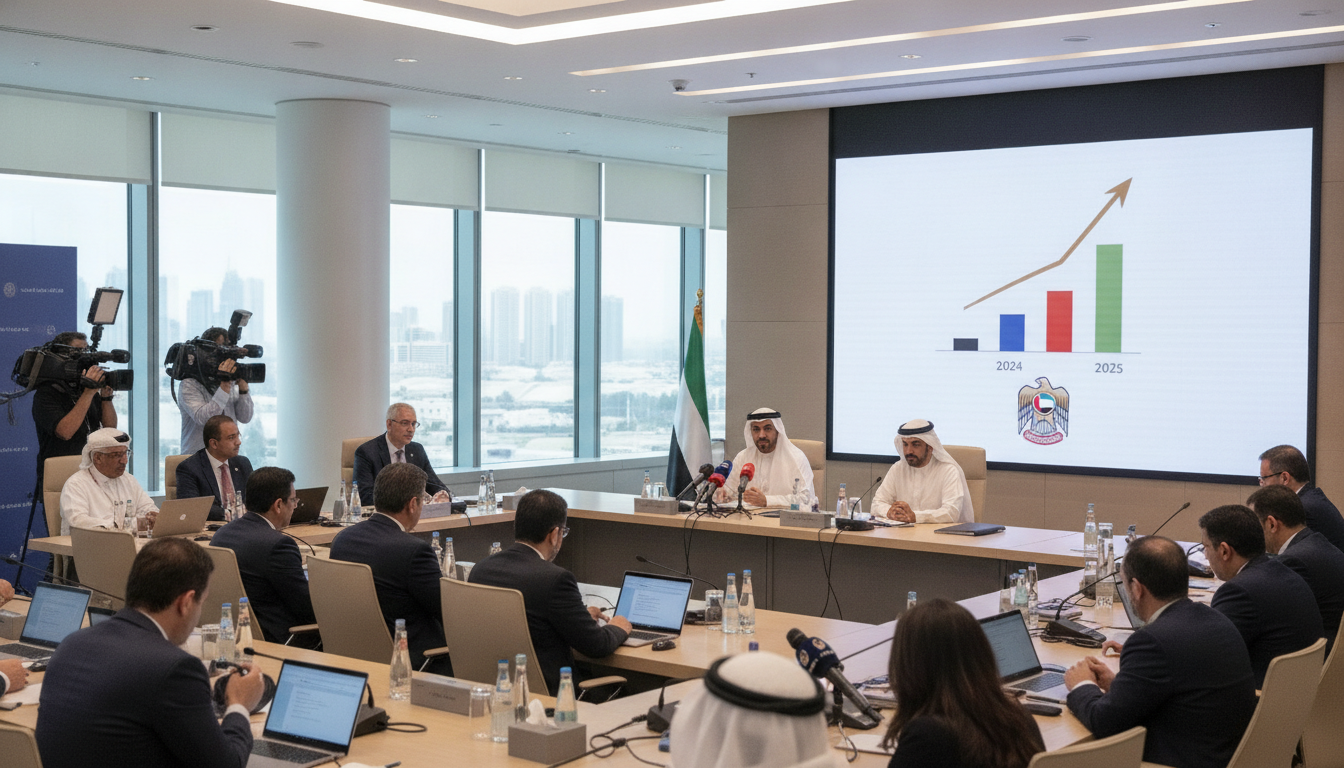
UAE tax revenues top AED 46 billion in 2025, driven by VAT and excise gains
UAE tax revenues topped AED 46 billion in 2025, a 15% rise from 2024, the Ministry of Finance reported, crediting stronger fiscal discipline, transparency and improved revenue management.
The Ministry of Finance said total tax revenues collected from value‑added tax and excise duties, distributed between federal and local authorities, exceeded AED 46 billion in 2025 compared with about AED 41 billion in 2024. The increase — roughly 15 percent year‑on‑year — reflects higher consumption‑related collections as well as sharpened administrative processes across government. Officials framed the outcome as evidence of the UAE’s resilient fiscal approach and its capacity to support stable public resources while aligning with development priorities.
Tax receipts surpass AED 46 billion in 2025
The Ministry confirmed that combined receipts from VAT and selective taxes reached above AED 46 billion for the year 2025. This represents an increase from approximately AED 41 billion recorded in 2024, signalling steady growth in non‑oil revenue streams. Financial authorities said the rise supports broader efforts to diversify government income and reduce reliance on hydrocarbon revenue over time.
VAT and excise taxes drive the increase
Officials attributed the bulk of the growth to stronger collections of value‑added tax and excise levies, which respond directly to domestic consumption patterns. VAT collections benefit from broad application across goods and services, while excise duties target specific high‑harm or luxury items and have grown in line with imports and local demand. Authorities also noted improvements in compliance and taxpayer services that have reduced leakages and accelerated revenue recognition.
Federal and local distribution of funds
The Ministry emphasised that the reported figure reflects revenues distributed between the federal government and local emirate authorities. This distribution mechanism ensures that both central and local budgets receive allocated shares to meet public spending needs. According to the statement, the arrangement is governed by clear institutional roles and coordination processes designed to maintain fiscal balance and transparency across levels of government.
Minister highlights fiscal resilience and transparency
Mohamed bin Hadi Al Husseini, Minister of State for Financial Affairs, said the tax revenue performance underscores the maturity of the UAE’s fiscal and tax framework. He argued that disciplined resource management and transparent financial reporting bolster public confidence and enable longer‑term planning. The minister added that continued coordination with federal and local entities is central to sustaining high‑quality public finances amid evolving economic conditions.
Implications for public finances and development priorities
Authorities said the expanded tax base and stronger revenue flows provide a dependable funding channel for the UAE’s economic and social programmes. Stable tax revenues can help finance infrastructure, public services and development initiatives without placing disproportionate pressure on government borrowing. The finance ministry framed the additional revenue as aligning with national priorities while preserving fiscal space to respond to future economic shifts.
Steps to enhance revenue management and policy readiness
The Ministry of Finance indicated ongoing work to refine revenue management and institutional coordination to raise performance quality. Measures include enhancing systems for collection and reporting, improving intergovernmental coordination, and strengthening compliance and taxpayer engagement. Officials said these steps will position fiscal policy to better support growth and competitiveness as the economy adapts to global and regional changes.
The ministry’s release frames the 2025 tax revenue outcome as both a fiscal milestone and a stepping stone to deeper fiscal reform, with VAT and excise receipts forming a growing and predictable element of public finances. Continued emphasis on transparency, discipline and integrated revenue management will be central to how policymakers translate these receipts into sustained development outcomes.
