
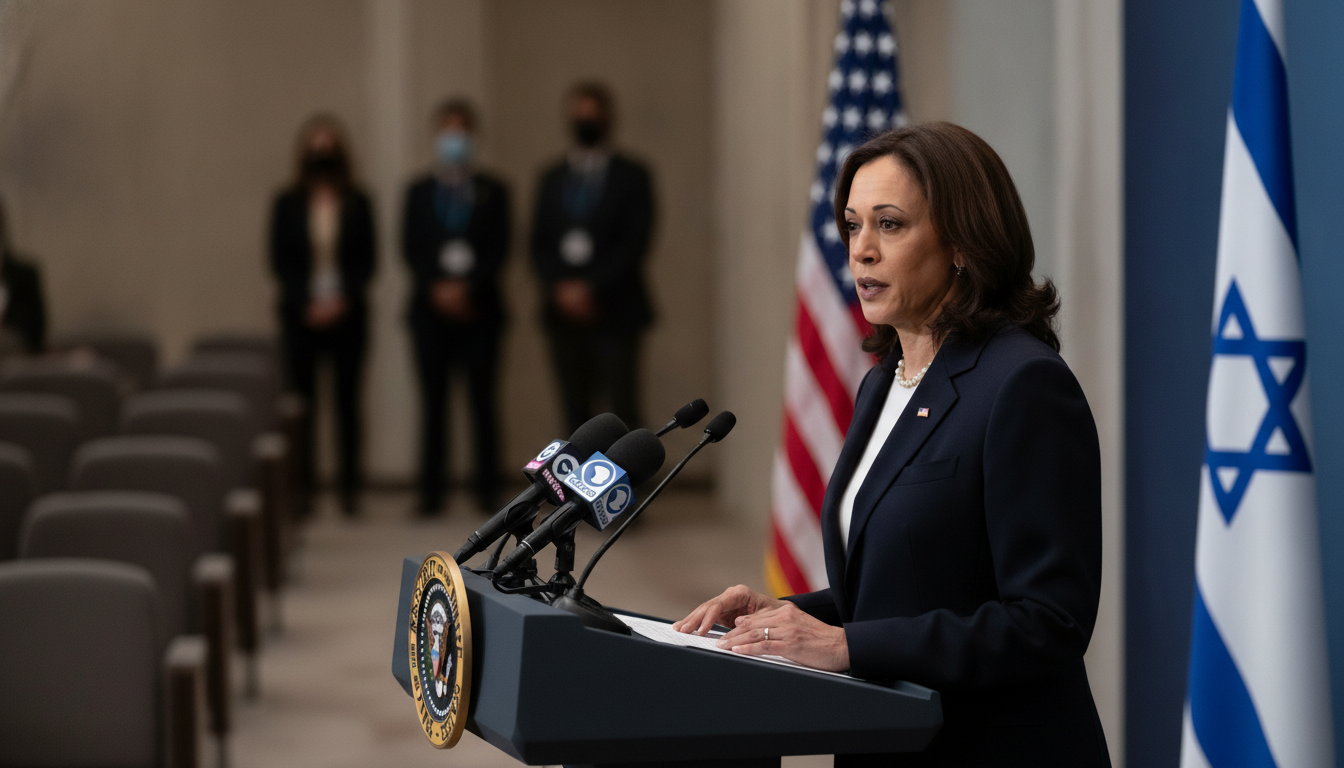
Vance Draws Clear Lines on US-Israel Relations, Warns Against Politicising Antisemitism
US Vice President JD Vance said US-Israel relations are not identical, outlined disagreements with Netanyahu over the Iran war and cautioned against weaponising accusations of antisemitism.
The remarks by Vice President JD Vance set out a pragmatic definition of US-Israel relations, stressing that American and Israeli interests do not always coincide and that the two countries are partners rather than mirror-image allies. Vance framed Israel as a close partner comparable to Britain or France while rejecting the notion of a complete overlap in strategic aims. (1-e8259.azureedge.net)
Vance frames US-Israel relationship
Vance told reporters and interviewers that characterising the U.S.-Israel relationship as one of absolute alignment misrepresents the reality of American foreign policy. He emphasised that Washington treats Israel as a traditional ally and a “good partner,” but not as a nation whose interests automatically match those of the United States. (1-e8259.azureedge.net)
The vice president’s language marks a deliberate attempt to temper expectations in both capitals and to signal Washington’s independence in making strategic choices. His comments also appear designed to recalibrate political discourse around the bilateral partnership amid heightened regional tensions.
Disagreements with Netanyahu over ending the Iran war
Vance acknowledged clear policy differences with Israel’s leadership, saying the Trump administration and Prime Minister Benjamin Netanyahu do not always agree on how to conclude the conflict with Iran. He noted that President Donald Trump has been explicit about those disagreements, underscoring a divergence over the path to de-escalation and the terms of any settlement. (apnews.com)
Those remarks came days after the administration moved forward with a memorandum of understanding aimed at ending hostilities with Tehran, a development that has unsettled some officials in Jerusalem. The contrast between Washington’s negotiating approach and the positions of hardline elements in the Israeli government has become a focal point of diplomatic friction.
Rejection of politicising accusations of antisemitism
Vance delivered an unequivocal message that criticism of Israeli government policy should not automatically be equated with antisemitism, warning against the instrumental use of such allegations for political ends. He argued that equating all criticism of Prime Minister Netanyahu’s decisions with Jew-hatred is inaccurate and dangerous when used as a tool to silence dissent. (jpost.com)
The vice president urged careful, principled distinctions between legitimate policy debate and genuine antisemitic rhetoric, saying that mislabeling political opponents corrodes both domestic discourse and the integrity of efforts to combat real hate. His comments aim to draw clearer lines that protect both free debate and the fight against discrimination.
Israeli responses and political fallout
Vance’s commentary has prompted sharp reactions among Israeli politicians, with some cabinet members rejecting his characterisation and urging a tougher stance toward Iran. Elements of the Israeli right, including outspoken ministers, criticised the administration’s approach and suggested that Washington was misreading Israel’s security imperatives. (theweek.in)
Those responses reflect growing tensions between Jerusalem and Washington over tactics and ends in the wider regional campaign against Iran and its proxies. Israeli public opinion is divided, and the pushback highlights the domestic political pressures facing Netanyahu’s government as it contends with both international diplomacy and internal hardline voices.
Diplomatic context and immediate implications
The vice president’s statements arrived as U.S. diplomatic activity around Iran was intensifying, including preparations for talks that were at times adjusted and postponed as negotiations unfolded. Washington’s handling of the process — from memoranda of understanding to the timing of delegations — has become part of the larger conversation about who sets the tempo and terms for peace. (axios.com)
Vance’s remarks are likely intended to reassure American constituencies that U.S. policy will remain autonomous while also signalling to regional partners that Washington expects measured, collaborative behavior. The administration faces the dual challenge of maintaining allied relationships and executing a foreign policy it describes as centred on American interests.
The vice president’s public delineation of the U.S.-Israel relationship underscores a transitional moment in regional diplomacy, where alliance statements are being balanced against concrete policy choices. His call to avoid weaponising accusations of antisemitism adds a domestic dimension to that diplomacy, emphasizing the need for careful political language as the region navigates a fragile path toward de-escalation.
