
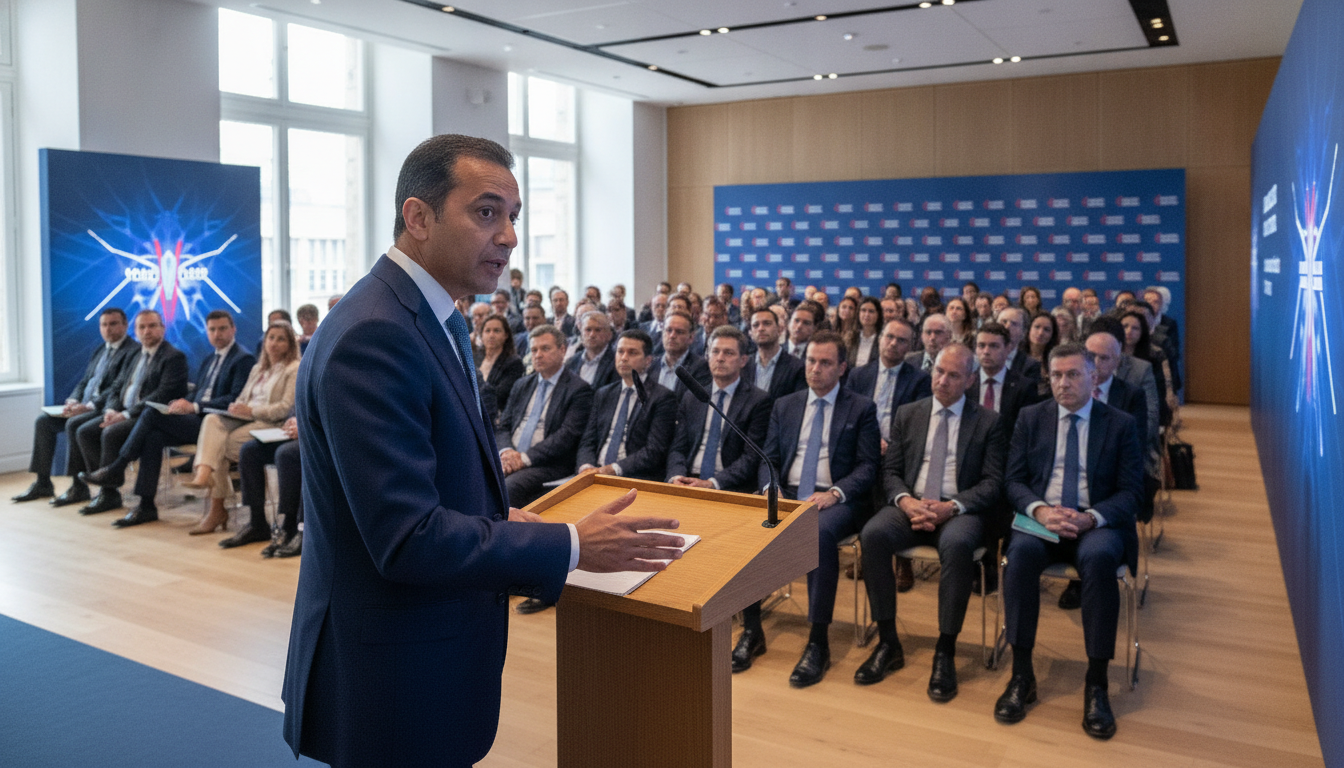
Badr Jafar Opens Giving and Impact Summit at London Stock Exchange
Badr Jafar opened the Giving and Impact Summit at the London Stock Exchange, calling for more disciplined philanthropic capital and strategic partnerships. The summit gathered more than 140 donors, wealth advisers, charity leaders and policymakers to discuss strengthening both the quantity and quality of giving. The Giving and Impact Summit set out to reframe philanthropy as targeted, accountable capital rather than occasional charity.
High‑profile attendance at the trading floor
The event took place on the trading floor of the London Stock Exchange and featured a cross‑sector lineup of speakers and guests. Attendees included Princess Beatrice, UK civil society minister Stephanie Peacock and London Stock Exchange chair Luke Manning, alongside charity executives and international advisers. The summit opening also included a keynote from Sarah Brown and a closing address by Lord Karan Bilimoria.
Argument for rigour and long‑term strategy
In his address, Badr Jafar warned that the principal barrier to more effective giving is not the scarcity of funds but weaknesses in governance and strategy. He noted that global giving now approaches an unprecedented scale yet much of it is fragmented and lacks follow‑through and impact measurement. Jafar urged philanthropists and institutions to adopt the same accountability and discipline applied to other forms of capital.
Economic framing of philanthropy
Jafar advanced a conceptual shift by describing charitable capital as a flexible economic instrument that can absorb early losses and de‑risk investments for the public and private sectors. He outlined a model he called the “impact wheel,” in which policy provides direction, philanthropy reduces risk and private capital scales proven solutions. The approach aims to channel philanthropic resources toward long‑term interventions administered by qualified, accountable organisations.
UAE initiatives highlighted as practical example
The summit showcased recent UAE responses as practical examples of rapid, coordinated giving at scale. Jafar cited the Hadd al‑Hayat campaign launched by Sheikh Mohammed bin Rashid Al Maktoum this spring, which raised more than 2.8 billion dirhams in weeks to address severe child hunger. He presented the campaign as evidence of how national identity and institutional coordination can convert generosity into immediate life‑saving impact.
AI funding and global connectivity gap
Speakers devoted significant attention to the role of technology and artificial intelligence in shaping future philanthropic priorities. Jafar observed that while AI investment exceeds one trillion dollars globally, only about one percent of that sum is currently directed to social purposes. Delegates also noted that roughly one third of the world remains offline, reinforcing the case for philanthropic investment that expands connectivity and ensures technology delivers inclusive benefits.
UK‑UAE collaboration model
A recurring theme at the Giving and Impact Summit was partnership rather than competition between the United Kingdom and the United Arab Emirates. Jafar urged the two countries to act as complementary platforms that coordinate capital and harmonise grantmaking approaches across strategic regions. The proposal calls for pooled funding mechanisms, shared due diligence standards and joint initiatives that leverage the strengths of both jurisdictions.
Panel discussions and policy takeaways
Two main panel tracks examined national and sectoral questions shaping modern philanthropy. The first asked how the United Kingdom can convert latent wealth into measurable social outcomes, including the role of government in incentivising large‑scale giving. The second explored the next wave of philanthropic practice, from generational shifts to unrestricted funding models and the amplified use of AI for monitoring and scaling impact.
Expert contributions and institutional voices
The summit featured a wide range of institutional voices from the charitable and financial sectors. Participants included representatives from CIFF, UNICEF and Save the Children, philanthropists and advisers such as Julia Onuein, Dr Rasha Saeed, James Reed and Philip de Backer, as well as leaders from KKR, Renaissance Philanthropy and PATH. Discussions stressed better evaluation, multi‑year commitments and the need to fund intermediary organisations that translate resources into durable results.
The Giving and Impact Summit at the London Stock Exchange closed with renewed calls for coordinated, long‑term philanthropy that is measured, accountable and strategically deployed. Delegates left with a clear agenda: align policy and private capital, expand funding for technology that serves the vulnerable, and institutionalise practices that turn generosity into sustained social change.
