
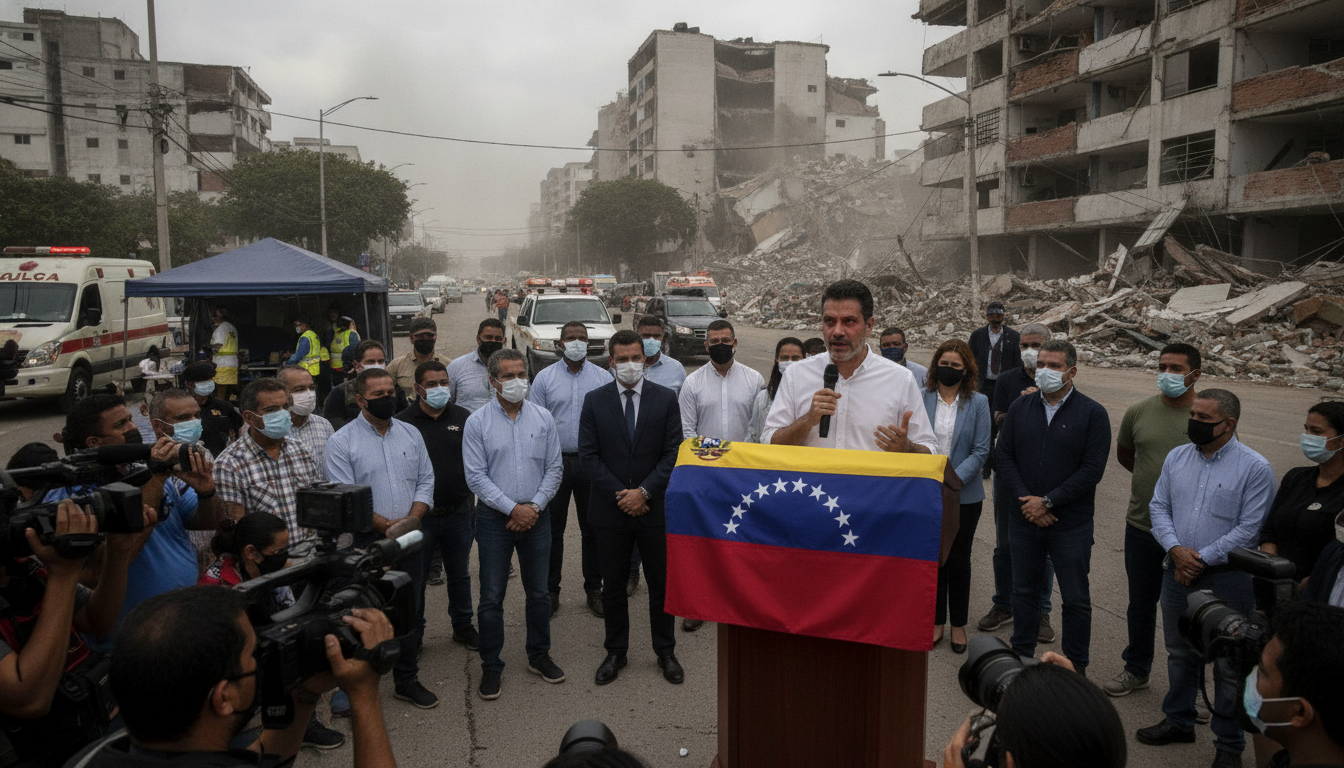
Venezuela earthquake toll rises to 589 with 2,980 injured, interim government says
Two powerful Venezuela earthquakes have killed 589 people and injured 2,980, interim president Delcy Rodríguez announced, as search-and-rescue teams mobilize amid extensive damage. The Venezuela earthquake emergency has left communities cut off and authorities racing to assess needs.
Official figures and government statement
Delcy Rodríguez reported the death toll of 589 and 2,980 injured in an official statement, attributing the figures to consolidated reports from emergency services. Authorities warned the numbers could change as rescue crews reach more isolated communities and hospitals continue to register casualties.
Emergency agencies said casualty figures reflect reports from multiple states and municipal health services, and urged citizens to rely on official channels for updates. Officials also asked for calm while response operations are coordinated across affected areas.
Scope of damage across affected communities
Local officials and first responders described widespread damage to residential buildings, public infrastructure and transport links in towns and cities near quake epicentres. Communications and utility interruptions were reported in several municipalities, complicating efforts to confirm the full extent of destruction.
Residents in hardest-hit neighbourhoods reported collapsed homes and blocked roads, while municipal teams prioritized clearing access routes for ambulances and relief convoys. Authorities warned that damage assessments remain preliminary and will be refined as engineers inspect structures.
Search-and-rescue and medical response
Search-and-rescue teams, emergency medical personnel and volunteer groups have been deployed to prioritise search operations and urgent medical care. Hospitals in regional centres are treating large numbers of injured; field triage points have been established where capacity is strained.
Medical authorities are focusing on critical cases while coordinating patient transfers to facilities with available beds and specialised services. Emergency responders emphasised the need for medical supplies, blood donations and additional personnel as aftershocks continue to pose risks.
Government coordination and emergency measures
National and local authorities have activated emergency protocols to coordinate response, logistics and security operations across affected jurisdictions. Command centres were set up to streamline information flow between civil defence, health services and municipal administrations.
Officials appealed for public cooperation with evacuation orders and safety advisories, and advised residents to avoid damaged structures and follow guidance from emergency teams. The government has pledged to prioritise delivery of food, water and temporary shelter to displaced families.
Humanitarian needs and shelter arrangements
Relief agencies and municipal services are establishing temporary shelters in schools, community centres and other public buildings to house displaced residents. Organisers report urgent needs for clean water, sanitation, bedding and medical supplies to support the growing number of people without homes.
Local charities and community groups have mobilised to provide meals and basic aid, while authorities assess longer-term housing requirements for those whose homes are uninhabitable. Officials cautioned that restoring utilities and repairing infrastructure will take time, increasing the immediate humanitarian burden.
Regional concern and offers of assistance
Regional neighbours and international observers have expressed concern over the scale of the disaster and signalled readiness to provide technical assistance and relief if requested. Diplomatic channels are expected to coordinate offers of support with national authorities in the coming days.
Experts say rapid external support for search-and-rescue capabilities, emergency medical teams and logistics can be decisive in the first 72 hours following major quakes. Officials stressed that any international assistance will be channelled through government coordination mechanisms to ensure its effective use.
The situation remains fluid as authorities continue search operations and damage assessments across multiple communities. Emergency teams are urging residents to follow official instructions, and reiterated that casualty and injury figures may be updated as responders reach more areas and collect verified data.
