
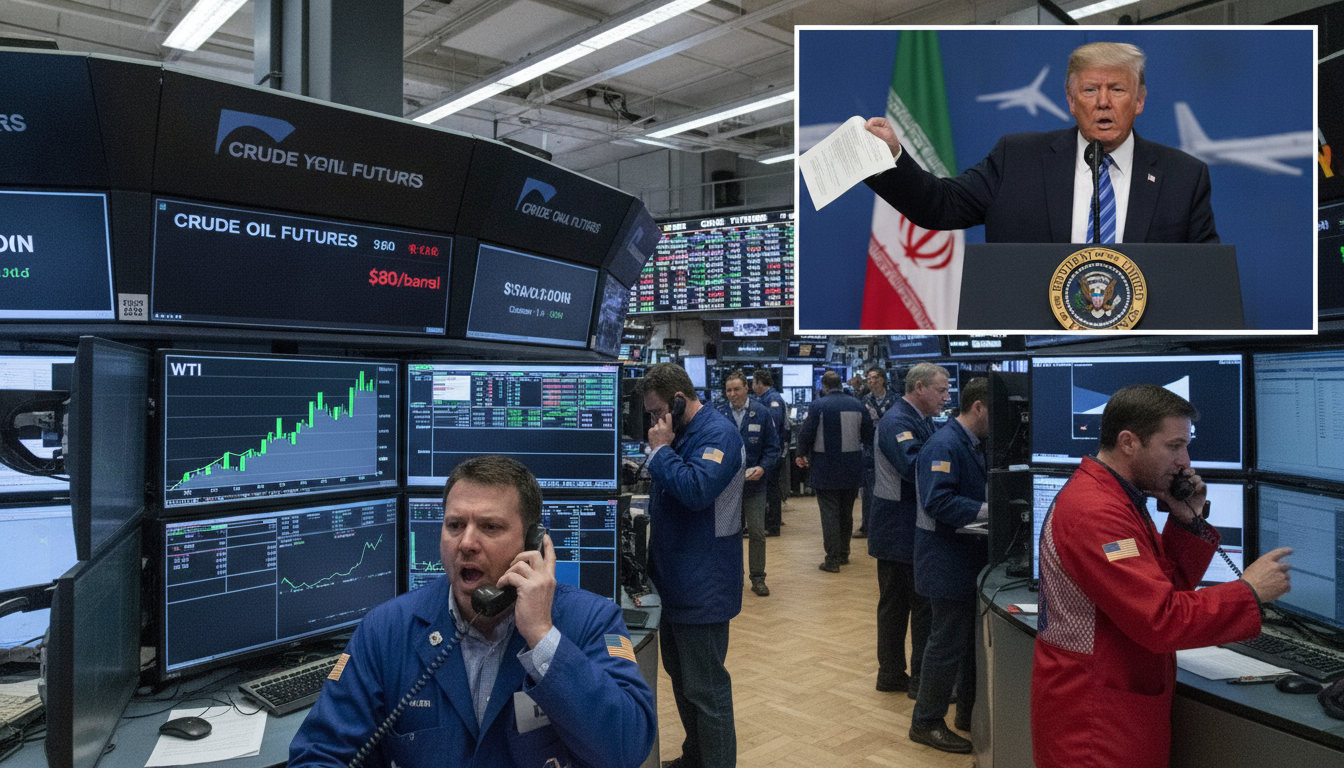
Crude oil prices surge after Trump says Iran memorandum ‘ended’ and hints at strikes
Crude oil prices surged after President Trump’s declaration that the Iran memorandum “ended” and threats of strikes sent Brent above $78 and WTI to $73.52.
U.S. statement triggers immediate market spike
The market moved sharply after U.S. President Donald Trump announced that the memorandum of understanding with Iran had “ended” and warned that new strikes could begin imminently. Traders reacted to the heightened geopolitical rhetoric by lifting oil prices to their highest levels in more than two weeks.
Crude oil prices rose robustly on the session, reflecting traders pricing in a greater risk premium for potential supply disruptions. The announcement intensified concerns over stability in a region that produces a significant share of the world’s oil.
US crude and Brent settle higher
Front-month West Texas Intermediate futures closed up $3.08, or 4.37%, settling at $73.52 a barrel at the session’s end. Brent crude futures climbed $3.86, or 5.2%, to finish at $78.02 a barrel, marking the largest daily gain in recent sessions.
The simultaneous rise in both benchmarks underscores investors’ sensitivity to geopolitical headlines. Markets typically react with rapid repricing when there is any credible risk to Middle East flows or to broader market access.
Security concerns elevate supply risk
The President’s comment about potential strikes revived fears that military action could disrupt shipping lanes or production facilities in the Gulf. Regional flare-ups can constrain crude flows quickly, prompting traders to add a precautionary premium to prices.
Energy firms, shipping operators and regional governments monitor such developments closely because supply-side interruptions often ripple through physical markets within days. Even the prospect of tightened insurance conditions and higher freight costs can feed into the overall risk assessment.
Traders reassess risk premium and inventories
Market participants said the announcement prompted portfolio managers and hedge funds to boost long positions and reduce short exposure. Risk-sensitive flows into oil futures and related financial instruments helped magnify the price move on the day of the statement.
Analysts also pointed to inventory and demand metrics as secondary drivers that amplified the reaction. With global stocks and seasonal demand patterns still under assessment, any geopolitical shock tends to push prices higher while traders await data that might temper the move.
Potential impact on Gulf producers and UAE markets
Higher crude prices generally benefit Gulf producers through improved export revenues and government receipts. For the UAE and neighboring states, a sustained uplift in oil prices can strengthen fiscal positions and support public spending plans already anchored to hydrocarbon receipts.
However, rapid price swings can also raise costs elsewhere in the economy, including transport and inflationary pressures. Policymakers in the region typically weigh these trade-offs when responding to volatile international energy markets.
Market outlook and near‑term drivers to watch
Analysts said near-term direction will hinge on subsequent official statements, any confirmation of military actions, and incoming data on global supply and demand. Market volatility is likely to persist until clarity emerges on whether the rhetoric escalates into tangible operations.
Investors will also watch weekly inventory reports and shipping activity for signs of tightening or easing in available supply. Central bank policy and macroeconomic indicators remain important background factors that could either amplify or dampen the price response to geopolitical news.
The immediate market reaction shows how quickly crude oil prices can be repriced when geopolitical risk appears to rise, and traders will be watching developments closely as the situation unfolds.
