
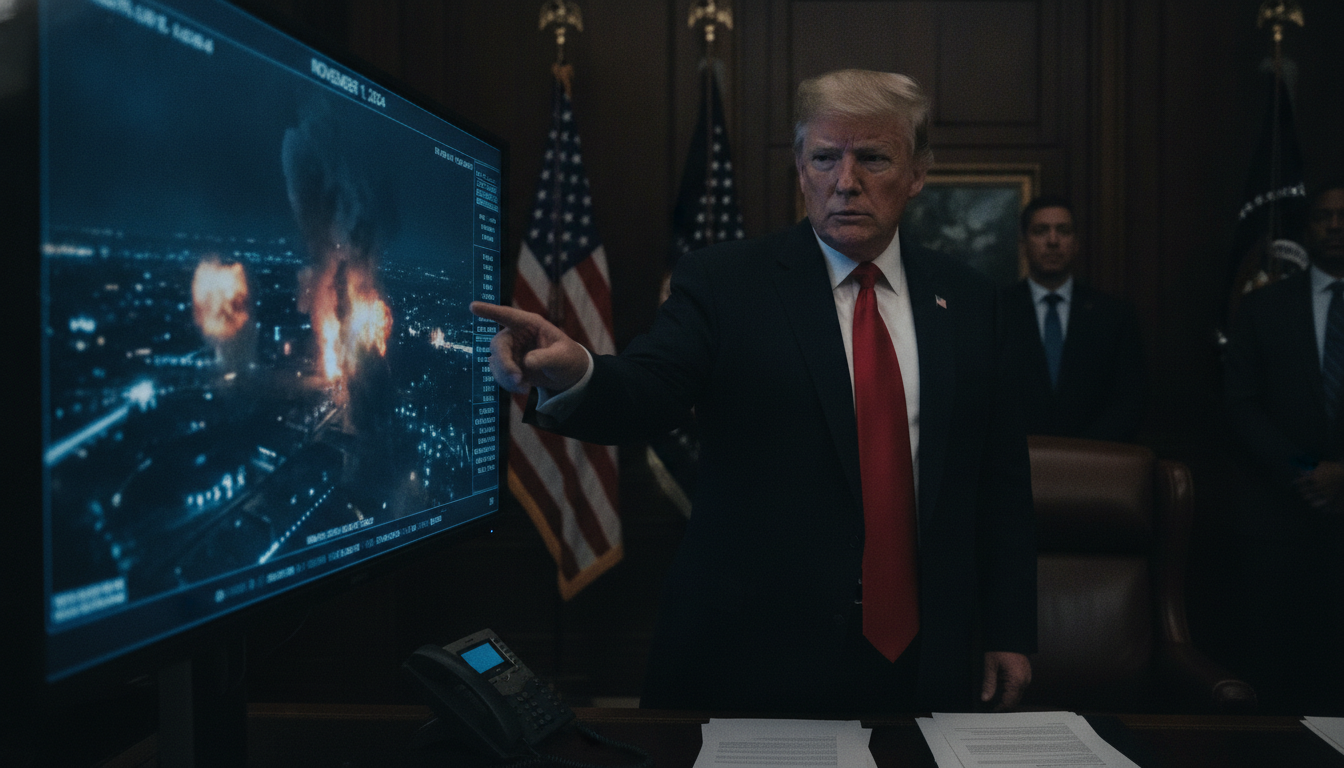
Trump Posts Image of Damage After US Strikes on Iran, Warns of Harsher Response
Donald Trump posted on Truth Social an image of damage from US strikes on Iran, calling them retaliation for attacks on vessels and warning of tougher action.
Former President Donald Trump posted an image on Truth Social showing the aftermath of US strikes on Iran, saying the strikes were conducted in response to attacks on ships earlier this week.
In his post, Trump framed the strikes as a direct reprisal and warned that repeated actions would provoke a more severe response.
The message and image circulated rapidly across social platforms, drawing attention to rising tensions in the Gulf and the wider implications for regional security.
Trump shares image and brief statement on Truth Social
Trump uploaded a photograph purportedly depicting destruction attributed to the US strikes and accompanied it with a short statement on Truth Social.
He wrote that the strikes were a response to Iran’s alleged shelling of ships on Tuesday and cautioned that any recurrence would lead to a much stronger reaction.
The post did not include further operational details, timelines or official military confirmation beyond the former president’s public statement.
Administration framing: strikes described as retaliation for attacks on vessels
The post presented the strikes as a retaliatory measure tied to reported attacks on commercial or naval vessels earlier in the week.
By linking the military action to maritime incidents, the message emphasized a cause-and-effect rationale for the use of force.
Officials and analysts will likely seek independent verification of both the initial attacks on the vessels and the specific targets and effects of the strikes referenced in the image.
Security analysts warn of escalation risks in the Gulf
Security experts caution that publicizing images of battlefield damage and issuing blunt warnings can heighten tensions in an already fragile maritime environment.
Such communications may complicate diplomatic channels and could increase the likelihood of miscalculation between regional and external powers.
Observers note that the Gulf is a strategic route for global shipping, and any sustained confrontation risks disrupting commercial traffic and energy markets.
Maritime commerce and regional governments monitor developments
Commercial shipping companies and regional authorities routinely monitor incidents that threaten transit through key waterways, and flare-ups have immediate commercial consequences.
Insurance premiums for vessels, rerouting decisions and port operations can all be affected by perceptions of increased risk after reports of military action.
Regional governments and international bodies typically call for de-escalation and safeguards to protect civilian and commercial maritime traffic in such circumstances.
Diplomatic channels and international legal questions likely to follow
Public statements tied to military action frequently trigger diplomatic exchanges, demands for clarification, and requests for independent investigations.
Questions about the legal basis for strikes, adherence to international law, and the evidence linking attacks on vessels to specific actors often form the basis of multilateral discussions.
International organizations and neutral states sometimes play mediating roles to prevent further escalation and to facilitate transparent fact-finding.
Implications for broader regional stability and policy debates
The social-media disclosure and its framing may influence domestic political debates as well as international policy discussions on deterrence and maritime security.
Policymakers will weigh the operational advantages of a visible response against the strategic risks of a cycle of retaliatory measures.
The incident underscores how rapidly public communications can intersect with military actions to shape narratives and political calculations.
The image posted on Truth Social and the accompanying warning by Donald Trump add a visible public dimension to a complex set of security, legal and diplomatic issues surrounding recent strikes described as retaliation for attacks on ships.
How regional actors, international institutions and commercial interests respond in the days ahead will determine whether the episode subsides or contributes to an extended period of heightened tension in the Gulf.
