
Trump Warns Iran of “Powerful” Strike After Five Missiles Launched
Donald Trump warned Iran of a powerful strike after five missiles were reportedly launched and intercepted, saying Washington may still seek a broader diplomatic agreement.
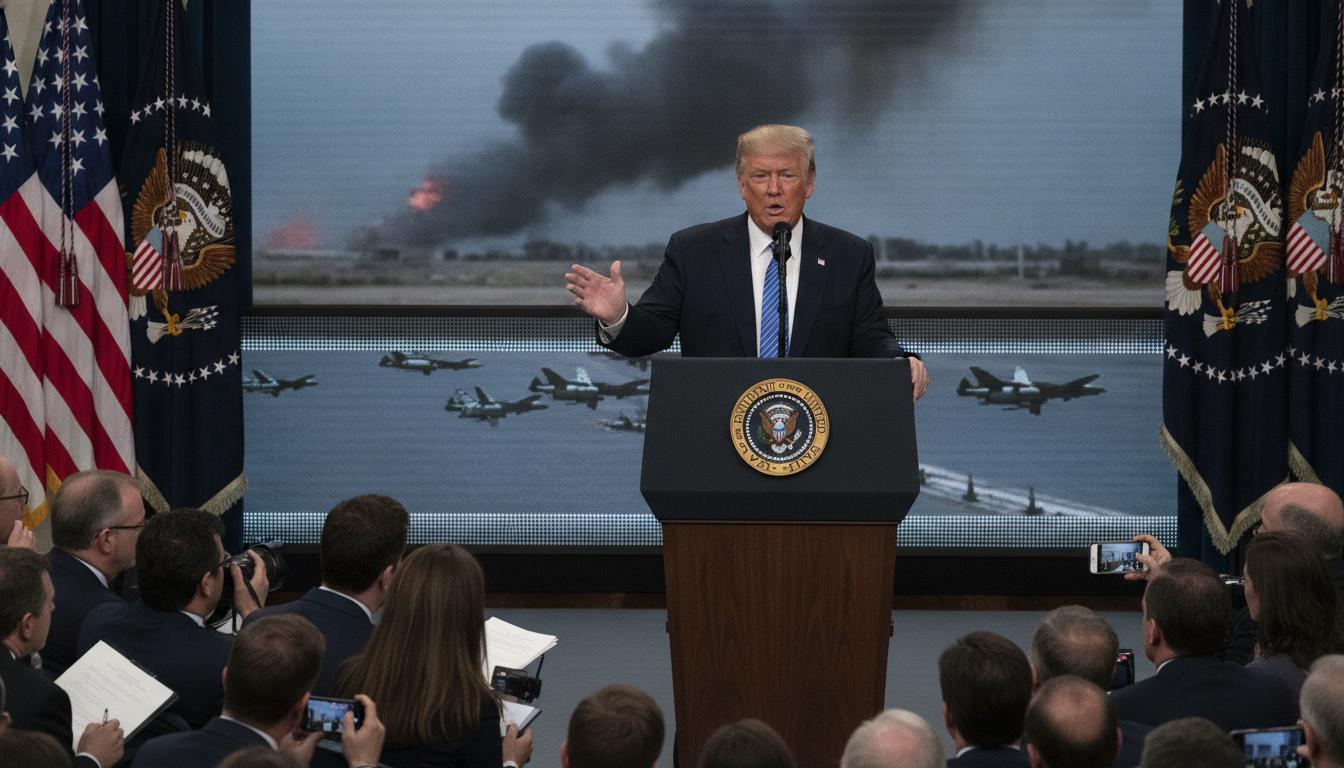
President Donald Trump warned Iran on Wednesday that the United States would hit back “hard” if provoked, after saying five missiles were launched overnight and were shot down. Trump’s remarks combined a stern military warning with an open door to negotiations, reflecting a mix of pressure and diplomacy in Washington’s response. The comments mark an escalation in rhetoric that regional capitals and Gulf states are watching closely.
Presidential statement and quoted remarks
President Trump told reporters on Wednesday that “we will strike Iran hard” and asserted that Tehran “knows that,” according to his public comments. He added that the five missiles launched overnight had been intercepted and that the United States would “see if we can reach an agreement.”
The language underscored a willingness to use force while keeping diplomatic options on the table, a dual-track approach that officials have used in recent crises. Trump framed the response as calibrated but decisive, suggesting any further escalation would prompt a robust military reply.
Details of the missile launches
According to the president’s account, Iranian forces launched five missiles during the night and all were intercepted and destroyed. The short statement did not provide further operational details such as launch locations, times, or which defensive systems were used to neutralize the threat.
Independent confirmation of the interception and information on the missiles’ targets were not included in the remarks, leaving gaps that governments and analysts will seek to clarify. Military and intelligence officials typically provide follow-up briefings when kinetic events of this scale occur.
U.S. posture and potential military options
Trump’s warning emphasized a credible threat of military action if Iran continued hostile operations, reinforcing a posture of deterrence. The president’s phrasing suggested the United States retains a range of military options that it could employ should further strikes or provocations unfold.
At the same time, his reference to pursuing an agreement signaled that Washington is keeping diplomatic channels open, creating ambiguity about whether the emphasis will shift toward negotiations or force. That ambiguity can serve as leverage but also raises risks if expectations among regional partners and adversaries diverge.
Diplomatic signals and the prospect of talks
Alongside the military rhetoric, the president said the U.S. would “see if we can reach an agreement,” indicating an interest in diplomacy despite the heightened tensions. The remark leaves room for future negotiations, but it does not specify the framework, interlocutors, or conditions for talks.
Diplomatic engagement would likely require coordination with allies and regional stakeholders, and would hinge on whether Iran signals a readiness to de-escalate. For now, the public messaging balances pressure with an offer of possible negotiation.
Regional implications for the Gulf and the UAE
Heightened U.S.–Iran tensions have direct implications for Gulf security, trade routes, and energy markets, concerns that are especially salient for the United Arab Emirates. Any military exchange in the region could disrupt shipping lanes in the Strait of Hormuz and raise insurance and logistics costs for oil and cargo transits.
UAE officials and business leaders typically monitor such developments closely, assessing risks to ports, aviation, and expatriate communities. Regional states often seek to deter escalation while urging diplomatic resolution, reflecting the economic and security stakes at play.
Uncertainty and international response
As of the president’s brief remarks, detailed reactions from other capitals and international organisations were not part of the public record. Allies and partners commonly call for restraint and clarification in the immediate aftermath of missile incidents, even as they consult on security posture.
Analysts stress that transparent, verified reporting is essential to avoid miscalculation, and they expect follow-up statements from defence and diplomatic channels in the coming hours or days. The situation’s trajectory will depend on Iran’s next actions and the coordination among the U.S., regional states, and allies.
The president’s combination of a pointed military warning and an openness to negotiation sets a tense but flexible framework for the coming period, with both deterrence and diplomacy in play as actors in the Gulf watch closely.
