
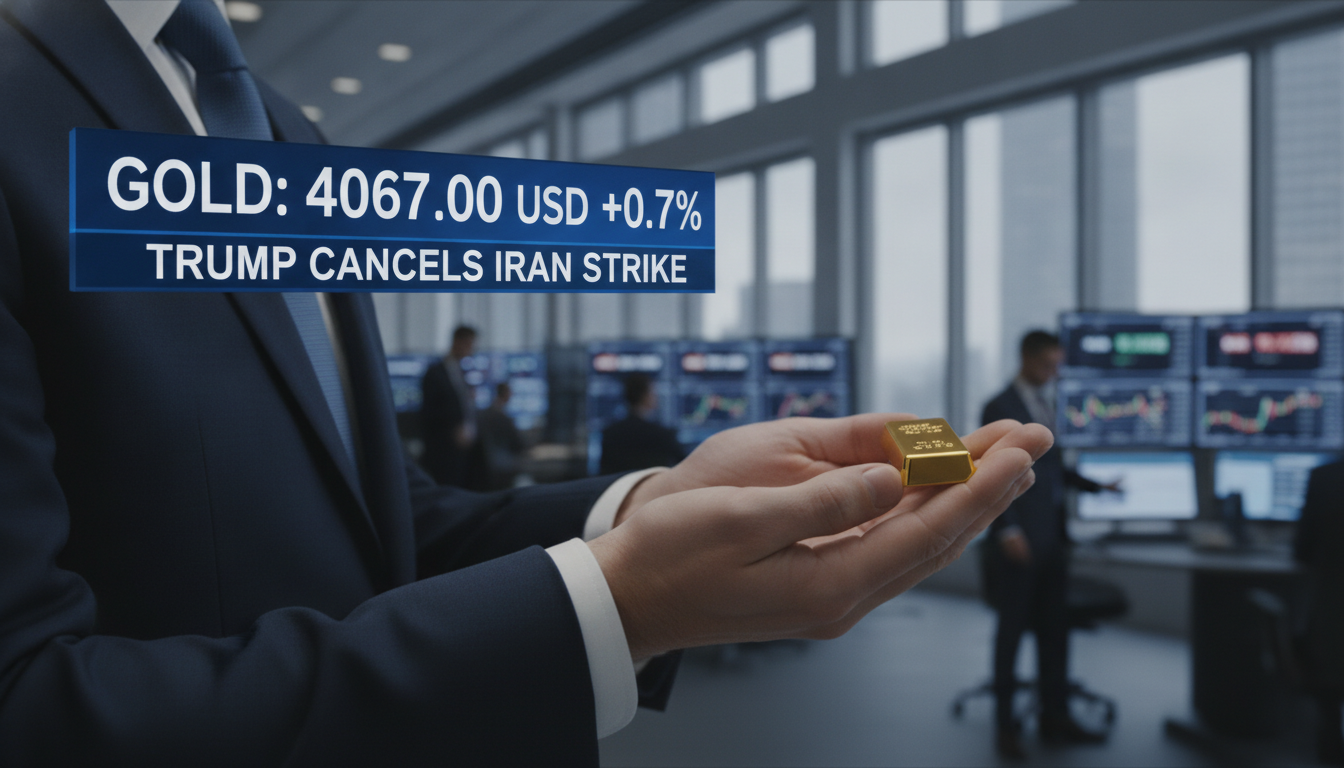
Gold prices climb as US cancels planned Iran strike; spot gold tops $4,067/oz
Gold prices rose after the United States called off a planned strike on Iran, easing immediate geopolitical tensions and tempering inflation and interest rate concerns. Spot gold advanced to $4,067.06 per ounce, while US futures also moved higher amid calmer market sentiment. The shift in risk perception lifted demand for safe-haven assets and sent other precious metals higher across global trading.
Market reaction to the US decision
Global markets reacted quickly after President Donald Trump decided against a fresh military strike on Iran, a move traders said reduced near-term geopolitical risk. The cancellation prompted a reassessment of inflation expectations and the pace of central bank rate increases. That reassessment supported bonds and curbed some of the upward pressure on yields that had weighed on non-yielding assets like gold.
Price moves: spot and futures levels
Spot gold increased about 0.7% to $4,067.06 per ounce, according to market reports, while US gold futures rose roughly 0.9% to $4,065.60 per ounce. Those gains reflected a modest flight back into bullion as investors priced in a lower probability of sustained geopolitical escalation. Volume indicators suggested selective buying rather than broad-based risk-on flows.
Other precious metals post gains
Silver in spot trading rose about 0.7% to $58.02 per ounce, mirroring the bullion move but remaining sensitive to industrial demand prospects. Platinum climbed roughly 0.7% to $1,653.78 per ounce, while palladium staged a larger advance of about 1.5% to $1,293.00 per ounce. Traders noted that palladium’s bigger uptick likely reflected tighter market mechanics and a shorter supply cushion compared with the other metals.
Inflation and interest-rate dynamics
Market participants said the hope for a rapid diplomatic resolution eased immediate inflationary fears, which in turn reduced speculation about aggressive central bank tightening. Lower expectations for near-term rate hikes typically support gold, as the metal bears no yield and becomes relatively more attractive when real yields fall. Economists cautioned, however, that sustained gains in bullion would depend on the persistence of lower inflation expectations and central bank guidance.
Analysts’ near-term outlook
Analysts described the latest move as a consolidation rather than a breakout, noting that gold’s momentum will remain linked to macroeconomic data and policy signals. Some strategists pointed to technical levels around $4,000 as a key short-term support, with resistance near prior intraday highs. Others warned that any resurgence in risk appetite or a pickup in US Treasury yields could cap further upside for the metal.
Implications for regional and institutional investors
For investors in the Gulf and the UAE, the rally underscores the role of bullion as a geopolitical hedge amid Middle East tensions. Wealth managers said gold remains a strategic allocation for portfolios seeking protection against sudden spikes in risk or inflation. Physical demand patterns in the region, including a seasonal tilt toward coins and bars, could amplify price sensitivity if risk perceptions shift again.
Safeguards and monitoring remain central for market participants as conditions evolve. The interplay of diplomacy, macro data, and central bank communications will likely determine whether gold consolidates gains or returns to defensive trading patterns.
