
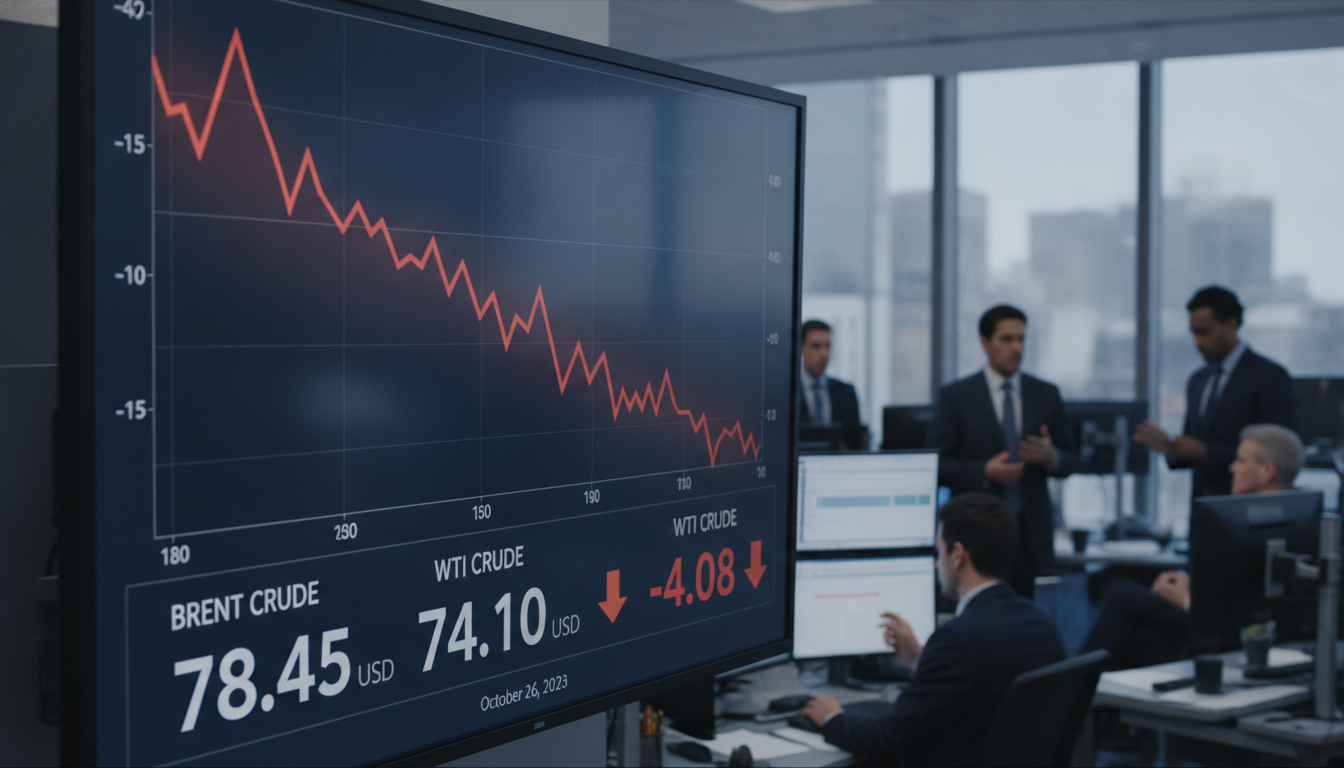
Oil prices tumble $4 as Brent falls to $83.85 and WTI to $80.66
Oil prices fell about $4 per barrel as Brent dropped to $83.85 and WTI to $80.66, reversing part of last month’s gains and raising market uncertainty now.
Global oil market reaction
Brent crude futures declined $4.08, or about 4.6 percent, to $83.85 a barrel, while US West Texas Intermediate lost $4.01, or roughly 4.7 percent, settling at $80.66. The move marked a sharp one-day retreat after both benchmarks had risen more than 20 percent in the previous month.
Traders and exchanges registered heavier selling volumes as investors trimmed exposure to petroleum contracts. The sudden pullback underscored the market’s sensitivity to short-term demand signals and profit-taking after the rapid rally.
Recent price moves and benchmarks
The losses erased a significant portion of the recent advance that had pushed benchmarks substantially higher in the prior month. Brent and WTI both recorded gains exceeding 20 percent before today’s sell-off, reflecting a period of heightened volatility for crude markets.
Benchmarks across the curve showed similar downward pressure, with front-month contracts most affected by the correction. Refining margins and shipping rates also reacted, increasing scrutiny on near-term supply-demand balances.
Drivers behind the decline
Market participants cited a mix of profit-taking and renewed concerns about global demand as primary drivers of the slide in oil prices. Macroeconomic indicators in some advanced economies and signals of slowing activity raised questions about consumption growth in the months ahead.
Other contributing factors included short-term inventory reports and shifts in currency markets that can influence commodity flows. Analysts noted that when prices have climbed rapidly, even small changes in sentiment can trigger outsized moves as leveraged positions are unwound.
Regional implications for Gulf producers and UAE markets
For Gulf producers, including the UAE, swings in oil prices continue to carry fiscal and market implications despite ongoing diversification efforts. A pullback from recent highs reduces immediate upside to state energy revenues but also alleviates some inflationary pressure that can affect domestic costs.
Local equity and energy-linked sectors may see increased volatility following international crude moves. Authorities and sovereign wealth managers typically monitor such shifts closely, but policy responses tend to reflect medium-term objectives rather than one-day price swings.
Analyst commentary and market outlook
Analysts described the drop as a classic correction following an extended rally, stressing that volatility is likely to persist. Some forecasters highlighted the potential for renewed upward pressure if geopolitical risks or tighter supply conditions re-emerge, while others warned that demand fragility could cap gains.
Market watchers emphasized the importance of upcoming economic data, OPEC+ production statements, and inventory releases in determining the next leg of price action. Many investors now expect trading to be driven by a balance of headline risks and fundamental data rather than a single dominant theme.
Supply-side and demand-side considerations
On the supply side, production policies among major exporters remain a central factor in market direction, with any shifts to output plans likely to be closely parsed by traders. Conversely, demand-side indicators such as industrial activity and travel patterns will influence how quickly markets can absorb supply changes.
Short-term logistics, including tanker flows and refinery turnarounds, can also amplify price swings by creating temporary mismatches. The interaction of these supply and demand variables means oil prices may continue to move sharply in response to incremental news.
What consumers and businesses may expect
A step down in crude prices can ease pressure on fuel and energy-related costs for businesses and households, though the transmission to pump prices and utility bills is rarely immediate. Companies with direct exposure to energy inputs may see modest relief if the correction endures, while exporters dependent on oil revenue will reassess budgets in light of the move.
Businesses involved in logistics, refining, and petrochemicals will watch market developments for signs of stabilization or further declines. Consumers are likely to notice changes gradually, depending on tax regimes and domestic pricing structures.
Outlook for traders and policymakers
Traders are preparing for continued choppy conditions, positioning portfolios to manage risk around key economic releases and policy announcements. Policymakers in oil-producing countries will monitor developments but are unlikely to alter strategic plans on the basis of a single trading day.
The broader market takeaway is that recent gains had left prices vulnerable to a correction, and today’s decline reflects a recalibration rather than a definitive trend reversal. Observers caution that the next significant directional move will depend on a combination of data, policy actions, and geopolitical developments.
Market participants will be watching the coming sessions for evidence that buyers are ready to re-enter after profit-taking, or whether selling momentum will extend and test lower support levels.
