
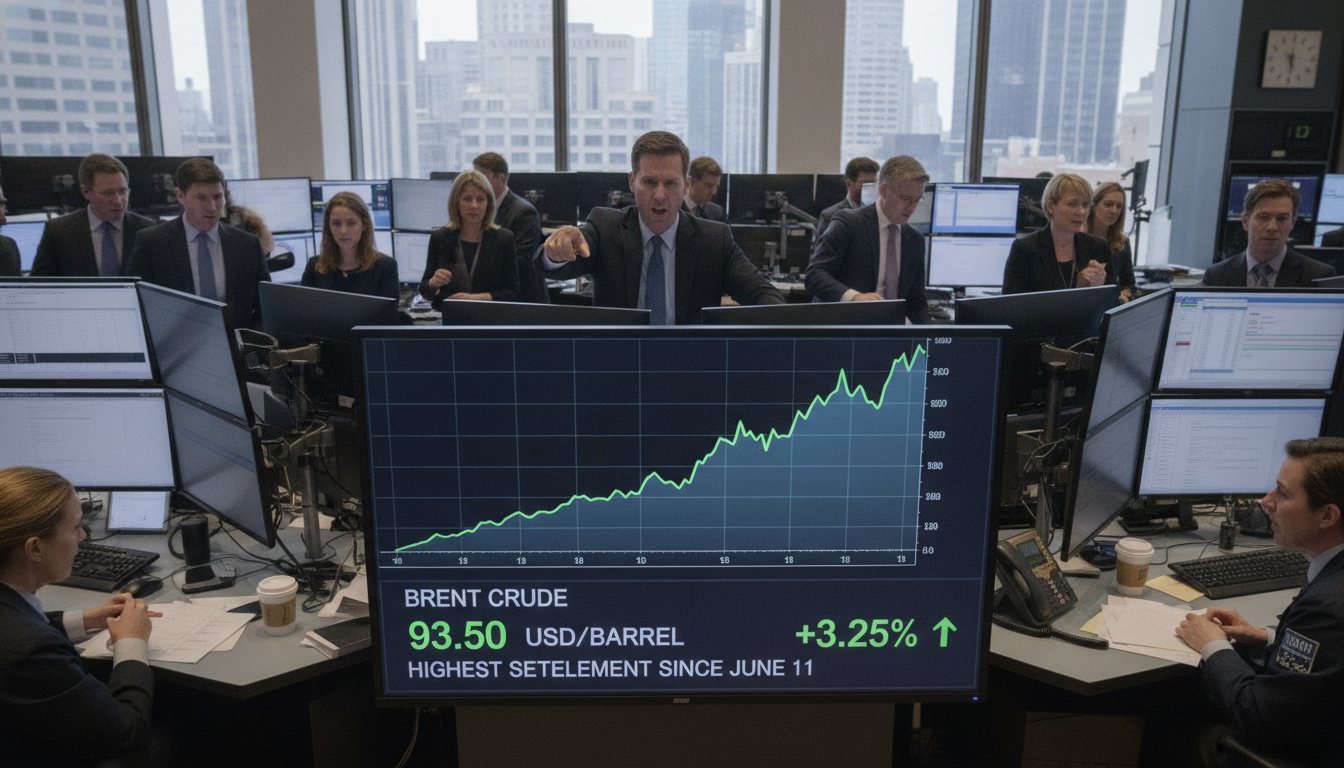
Oil prices climb to highest settlement since June 11 as Brent nears $95
Oil prices rose as Brent settled at $94.07 and WTI at $86.83, while Brent’s three-month contango widened to $9.26, signaling tighter near-term supply this session.
Global oil prices jumped sharply on Wednesday, with Brent crude settling at $94.07 a barrel and U.S. West Texas Intermediate at $86.83. The strength in oil prices was accompanied by an unusually large front-month premium for Brent versus contracts three months out, as traders signalled tighter supplies in the near term. Market participants pointed to a mix of inventory dynamics, physical market tightness and continued demand resilience as key factors behind the move.
Brent and WTI settle sharply higher
Brent futures gained $3.06, or about 3.36%, to finish at $94.07 per barrel after trading intraday near $95.47. U.S. crude rose $2.49, or roughly 2.95%, to close at $86.83 per barrel. These settlements marked the strongest closing levels for both benchmarks in several weeks.
Traders highlighted that the rally was broad-based, with both benchmarks advancing as oil markets absorbed data showing limited near-term availability and persistent consumption. The move represented renewed confidence among speculators and physical buyers that supply constraints could persist.
Contango structure signals near-term tightness
The Brent curve shifted into a pronounced contango, with the spread between the prompt contract and the contract three months forward widening to $9.26 per barrel. That gap is the most substantial widening since late May and reflects stronger demand for immediate delivery relative to later months.
A widened contango typically encourages holders to sell later-dated paper and incentivizes storage or prompt buying for physical barrels. Market sources said the shape of the curve is encouraging trading flows that prioritize near-term supply, reinforcing the impression of tightness in seaborne and onshore inventories.
Physical market and inventory dynamics
Analysts cited a combination of lower available inventories at key trading hubs and active buying from refiners and traders as drivers for the premium on prompt barrels. Shipping and logistics constraints in certain regions are also adding friction to timely deliveries, amplifying pressure on spot markets. Meanwhile, seasonal maintenance patterns and regional refiners’ turnarounds have tightened product balances in some centers, further supporting crude demand for immediate shipments.
Industry participants noted that while global crude stockpiles remain a composite of diverse regional positions, the concentration of lower-than-expected supplies in major hubs can be enough to push prompt prices higher. This week’s flows and inventory reads suggested that localized shortages were exerting outsized influence on futures pricing.
Geopolitical and macroeconomic considerations
Geopolitical tensions in supply-sensitive regions and ongoing production discipline among some exporters were cited by traders as supplementary factors behind higher oil prices. Although no single new supply disruption was identified as the primary catalyst, market sentiment remains sensitive to political developments that could affect exports or shipping. At the same time, resilient demand indicators from major importing economies underpinned confidence that consumption would remain firm in the near term.
Macro factors such as stronger-than-expected economic data and a relatively resilient pace of industrial activity in several economies also supported crude. Investors treating oil as a hedge against inflationary pressures and currency moves added to the buying momentum in futures markets.
Market reaction and trading flows
Hedge funds and speculative funds were reported to be increasing long positions amid the rally, contributing to higher open interest and trading volumes on the futures exchanges. Physical traders and refiners were active in the spot and forward markets, with some seeking to secure prompt deliveries as spreads widened. The contango structure encouraged certain market players to consider storage and timing plays where economically viable.
Refiners’ purchasing patterns, particularly in regions where product demand remains strong, have lent support to prompt crude values. Brokers said that the premium for near-term barrels made sellers reluctant to part with available cargoes without significant compensation, reinforcing upward pressure on benchmarks.
Analyst views and near-term outlook
Market analysts said the immediate outlook for oil prices will depend on developments in supply logistics, inventory releases, and demand indicators over the coming weeks. Several analysts highlighted that a prolonged or widening contango could encourage additional storage and trading strategies that further distort the term structure. Others warned that any swift improvement in flows or a pickup in production could relieve short-term stress and temper the recent gains.
Investors and market-watchers will closely monitor forthcoming inventory reports, shipping data and regional supply notices for signs of easing or further tightening. For now, the prevailing view among many traders is that the market remains finely balanced, with a bias toward prompt tightness that supports prices.
The rise in oil prices and the signal from the Brent curve underscore the market’s sensitivity to near-term supply-demand mismatches, and they will remain central considerations for traders, refiners and policymakers as conditions evolve.
