
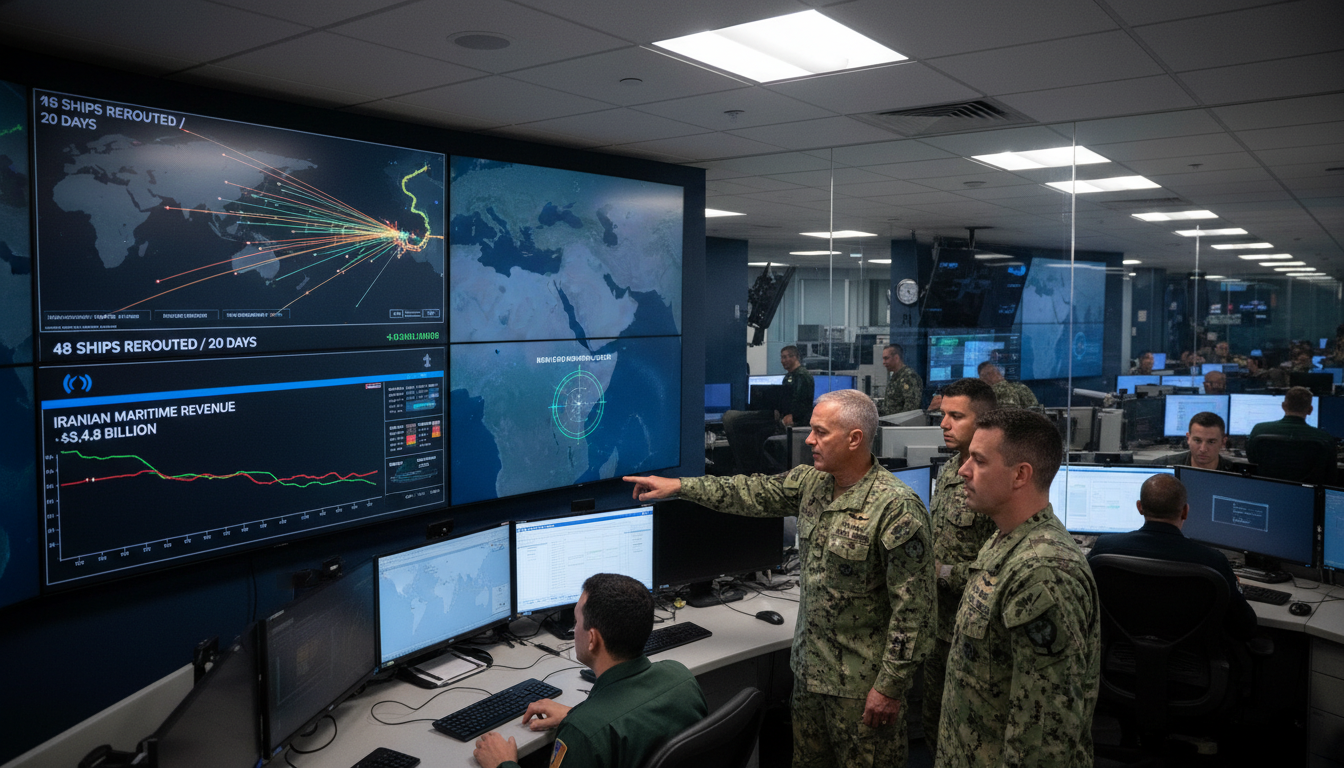
CENTCOM Reroutes 48 Ships in 20 Days Amid Blockade on Iranian Ports
CENTCOM rerouted 48 vessels over a 20-day operation to enforce a blockade on Iranian ports, the U.S. military announced May 2, 2026. The action, intended to ensure compliance with maritime restrictions, came alongside a Pentagon estimate that Iran incurred $4.8 billion in losses. The developments have prompted renewed attention to shipping patterns and regional economic fallout.
The U.S. Central Command (CENTCOM) said the course changes were carried out to uphold restrictions on access to specified Iranian harbors. CENTCOM provided the figure of 48 ships and the 20-day time frame but offered limited operational detail in its public statement. The Pentagon separately provided the economic estimate attributed to the blockade.
CENTCOM reports 48 vessels rerouted
CENTCOM said its forces intervened to alter the navigation of 48 ships during the 20-day window cited in its announcement. The statement framed the maneuvers as measures to secure compliance with the blockade on Iranian ports and to reduce the risk of prohibited maritime activity. Officials did not provide a ship-by-ship breakdown or identify the national registry of the vessels involved.
The military’s account emphasized coordination with commercial shipping operations without naming specific companies or traffic corridors. CENTCOM’s public release focused on the numerical results of the operation rather than on rules of engagement or the authorities invoked. The lack of granular detail leaves questions about the precise nature of the directives given to masters and operators at sea.
Pentagon places $4.8 billion cost on Iran
The Pentagon estimated that Iran suffered $4.8 billion in losses as a direct result of the blockade, according to the briefings accompanying the naval update. That figure, presented by the U.S. Department of Defense, was given as an aggregate economic impact without a public breakdown by sector or timeframe. Officials did not immediately release supporting documentation that would clarify how the estimate was calculated.
Analysts said such estimates typically factor in lost export revenue, disrupted logistics and the cost of redirected shipments. The Pentagon’s number therefore frames the blockade as having measurable economic consequences for Tehran. The announcement aligns military enforcement activity with broader U.S. messaging on the strategic pressure being applied to Iranian maritime commerce.
Enforcement actions and navigation changes at sea
CENTCOM’s reference to ships “changed course” indicates direct intervention in vessel navigation, a step that naval forces often take to manage compliance in contested or restricted waters. The command did not disclose whether changes were implemented through radio orders, maritime notices or physical escorts. Without further operational detail, observers must rely on the confirmed outcome — 48 vessels rerouted — to assess the scope of the campaign.
Naval commands normally aim to minimize risk to civilian mariners while carrying out enforcement actions, and statements emphasized that commercial traffic was managed to ensure safety. CENTCOM’s announcement did not report any accidents, confrontations, or detentions connected to the rerouting. The absence of such reports suggests the phase of the operation was limited to navigational adjustments rather than kinetic measures.
Implications for regional shipping and trade
The rerouting of ships to comply with a blockade on Iranian ports can increase transit times and costs for maritime trade across the Gulf and beyond. Shippers may face higher insurance premiums and altered schedules when established routes are disrupted, affecting supply chains that rely on timely deliveries. Regional hubs and transshipment centers could see shifts in cargo volumes as carriers seek alternative ports and corridors.
Commercial operators will monitor whether the measures become routine or remain temporary, as persistent restrictions tend to produce long-term adjustments in trade patterns. For Gulf economies that depend heavily on maritime trade, the broader economic ripple effects could touch freight, fuel consumption and port revenues. Market reactions will likely depend on clarity from authorities about the duration and geographic scope of the blockade.
Legal questions and diplomatic reactions expected
The enforcement of a blockade on ports raises legal and diplomatic issues related to freedom of navigation, sovereign rights and the application of international maritime law. Governments with commercial interests in the region are likely to seek clarifications from both Washington and Tehran about legal justifications and the criteria used to direct vessel movements. Multilateral forums and diplomatic channels may be used to address concerns and reduce the risk of escalation.
Regional states and trading partners often balance commercial imperatives with security considerations, and the announcement is expected to prompt consultations among affected capitals. Any prolonged enforcement posture could bring diplomatic protests or calls for third-party monitoring. For now, official responses from other governments have not been included in CENTCOM’s public release.
The CENTCOM operation and the Pentagon’s economic estimate were announced on May 2, 2026, and officials indicated monitoring will continue as necessary to maintain compliance and maritime safety. Observers will watch for further updates from U.S. military and defense officials as well as any formal reaction from Iranian authorities.
