
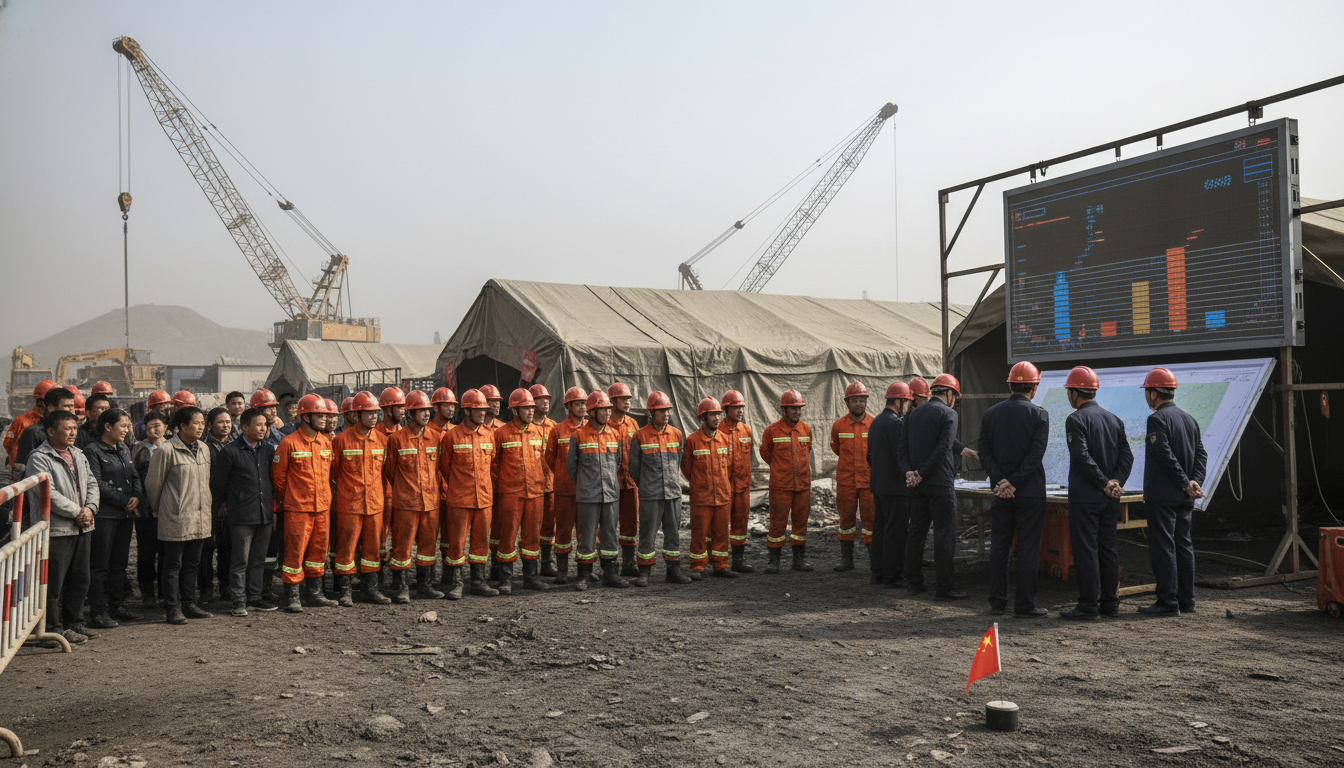
China coal mine explosion at Liushenyu in Shanxi kills at least 90, rescue ongoing
China coal mine explosion at Liushenyu in Shanxi kills at least 90; 247 workers were underground and rescue teams continue searching amid elevated CO levels.
A gas explosion at the Liushenyu coal mine in Qinyuan County, Changzhi City, Shanxi province, has killed at least 90 people and left dozens more unaccounted for, state media reported Saturday. The China coal mine explosion occurred late Friday when 247 workers were on duty underground, triggering a major rescue operation and a nationwide response. (apnews.com)
Blast timeline and casualty figures
The explosion happened Friday evening and state news agency Xinhua initially reported that dozens were trapped as carbon monoxide levels rose beyond safe limits. By early Saturday officials had confirmed a rapidly increasing death toll as rescue teams recovered victims and worked to locate the missing. (english.news.cn)
Local authorities gave staggered counts as the situation evolved, first reporting a handful of fatalities and later revising the figure upward to at least 90 following continued recovery operations. Officials said 157 people had been brought to the surface within hours of the blast, with others remaining underground in perilous conditions. (english.news.cn)
Site and mine details in Qinyuan county
The Liushenyu mine is located in Qinyuan County of Changzhi City in Shanxi, a province that produces a significant share of China’s coal output. State reporting placed the mine inside a region dense with coal operations and described the facility as being one of several that supply both local and national energy needs. (aljazeera.com)
Shanxi’s coal industry is central to China’s energy mix, producing around a third of the nation’s coal in recent years and employing hundreds of thousands across hundreds of mines. The province’s scale and the concentration of underground workings increase the operational and safety challenges facing emergency responders. (apnews.com)
Rescue operations and underground hazards
Rescue crews descended into shafts and worked through damaged tunnels while monitoring toxic gas levels that hampered access to trapped workers. Authorities reported elevated carbon monoxide readings and said many of the injured were affected by toxic gas rather than direct blast injuries. (english.news.cn)
Teams used specialized breathing apparatus and ventilation measures where possible, but rescuers warned the hazardous atmosphere and damaged infrastructure slowed progress. Officials described continuous, round-the-clock efforts to reach remaining underground workers and to stabilize those already brought to the surface. (english.news.cn)
Government response and accountability measures
President Xi Jinping called for an “all-out effort” to rescue the missing, ordered a thorough investigation into the cause of the explosion and urged that those responsible be held to account. Central and provincial emergency coordination bodies were mobilized and local officials reported that company supervisors were being investigated as part of the early inquiry. (apnews.com)
State media also reported that local authorities had detained or placed under control certain individuals connected to the mine’s management as investigators worked to determine whether safety protocols had been followed. The government response emphasized both rescue priorities and a quick probe into possible regulatory or operational failings. (aljazeera.com)
Industry safety record and broader context
China’s coal mining sector has long been scrutinized for safety issues, with periodic high-casualty incidents prompting both regulatory crackdowns and calls for stronger oversight. Analysts say the combination of deep, extensive underground networks, production pressure and lapses in enforcement can raise the risk profile of operations in major coal-producing provinces. (aljazeera.com)
The Liushenyu explosion is being hailed by some media as one of the deadliest mining disasters in China in over a decade, renewing attention on workplace safety standards and the enforcement of gas-monitoring systems. Industry observers expect official investigations to examine equipment, emergency procedures and prior safety records at the site. (apnews.com)
Local impact and next steps for families and community
Local hospitals reported receiving dozens of injured workers and authorities set up hotlines and coordination centers to register relatives and share information on the status of trapped or rescued miners. Community leaders and provincial officials pledged support for victims’ families and said compensation and medical aid arrangements would follow legal procedures. (apnews.com)
Investigators will piece together a timeline of events and inspect monitoring logs, ventilation records and maintenance documentation to establish cause and responsibility. Meanwhile, rescue teams said operations would continue until all underground areas had been cleared and the fate of every worker was determined. (english.news.cn)
Emergency crews and local officials continue to press efforts at the scene while inquiries proceed, as communities and authorities brace for the full scope of the human and operational consequences of the Liushenyu coal mine disaster.
