
Shanxi mine explosion at Liushenyu coal mine kills at least 90
Shanxi mine explosion at Liushenyu coal mine kills at least 90; rescue teams search for survivors as authorities launch probe and order national safety checks.
A gas explosion at the Liushenyu coal mine in Qinyuan county, Shanxi province, has killed at least 90 people, officials said, marking one of the deadliest mining accidents in China in more than a decade. The Shanxi mine explosion occurred on Friday while 247 workers were reported to be on duty underground, and rescue teams have continued round-the-clock operations to reach trapped miners. State media reports and broadcaster accounts indicated elevated gas readings and a carbon monoxide alert shortly before the blast. Authorities have launched an investigation and moved quickly to detain those responsible as national leaders called for tighter safety oversight.
Confirmed fatalities and rescue operations
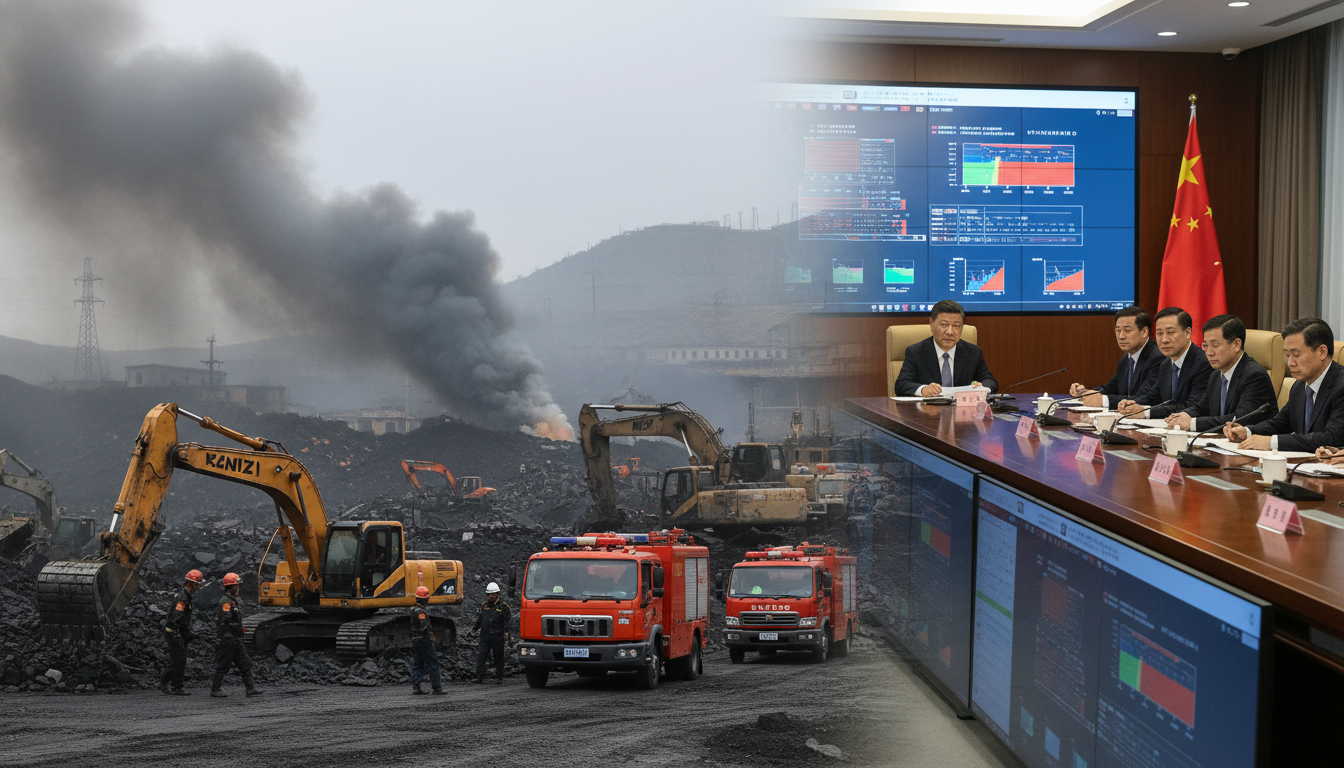
State-run outlets reported at least 90 confirmed deaths after emergency crews recovered victims from the site of the Shanxi mine explosion. Rescue teams equipped with breathing apparatus and detection equipment have been conducting continuous searches for survivors amid unstable underground conditions. Local hospitals received injured miners, and ambulances were filmed arriving at the scene as crews worked to ventilate tunnels and clear debris. Officials cautioned that casualty figures could change as operations continue and as access to deeper sections of the mine is secured.
Sequence of events and gas alarm
According to preliminary accounts, the blast followed a carbon monoxide alarm triggered in the Liushenyu mine, suggesting hazardous gas accumulation before the explosion. Witnesses and footage from the area showed a rapid mobilization of rescue personnel and emergency vehicles in the hours after the incident. Investigators are examining ventilation records, monitoring logs and worker testimony to reconstruct the immediate timeline leading to the blast. Determining whether mechanical failure, human error or regulatory lapses contributed will be central to the inquiry.
Investigation and arrest of mine supervisor
State broadcaster reports said the mine supervisor has been arrested as part of the criminal investigation into the accident. Authorities have opened formal probes to identify accountability across the mine’s management and oversight chain, including operator practices and safety compliance. Investigators are expected to review inspection reports, maintenance records and any prior warnings about gas levels at the facility. Officials have signaled that criminal liability will be pursued where negligence or violations are established.
Shanxi’s coal industry and safety record
Shanxi province is China’s principal coal-producing region, responsible for a significant share of the country’s annual output and central to national energy supplies. The province’s mines have a history of safety challenges, and industry analysts point to rapid expansion, complex underground conditions and lapses in enforcement as persistent risks. In recent years, Beijing has sought to reduce accident rates through stricter inspections and consolidation of smaller, high-risk operations, but progress has been uneven across regions and operators. The scale of the Liushenyu blast underscores ongoing vulnerabilities in a sector that remains vital to the national economy.
Government response and Xi’s directive
President Xi Jinping urged authorities nationwide to draw lessons from the Liushenyu disaster and to intensify prevention measures to avert major accidents. State notices called for immediate rectification of hazards, comprehensive inspections and heightened vigilance across mines and other high-risk workplaces. Central and provincial agencies have dispatched teams to coordinate the investigation, oversee rescue efforts and enforce safety protocols. Officials emphasized that both administrative and criminal follow-up would be used to address any negligence discovered.
Local impact and broader energy implications
The accident has heightened concern about worker safety and the human cost of coal production in China, even as the country balances energy security with emissions commitments. For families in Qinyuan county and neighbouring communities, the immediate priorities remain recovery, medical care and support for the bereaved. At a national level, such incidents can prompt temporary output disruptions and renewed scrutiny of coal operations, with potential ripple effects on regional supply and market sentiment. Observers note that any long-term policy shifts will depend on findings from the current investigations and political will to enforce reforms.
China remains the world’s largest producer and consumer of coal, and accidents like the Liushenyu blast place renewed focus on the tension between energy demand and workplace safety. As investigators piece together the causes, industry stakeholders and regulators face pressure to deliver tangible improvements in mine monitoring, emergency response and corporate accountability.
The coming days will determine whether the inquiry leads to systematic changes or targeted enforcement actions at individual sites, while families and communities affected by the Shanxi mine explosion await definitive information and support.
