
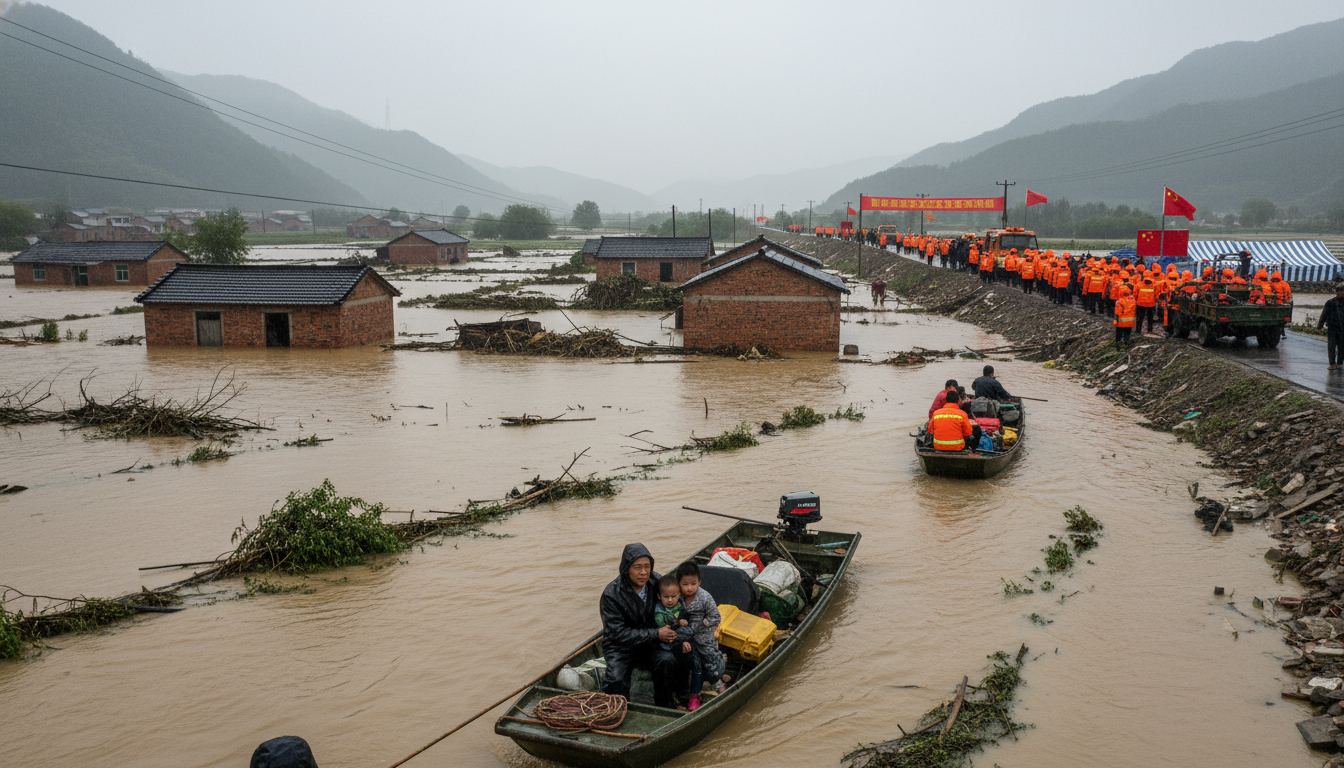
China floods kill 22 as record heavy rains batter central and southern provinces
China floods kill 22 in central and southern provinces as record heavy rains close schools, sever communications and trigger a 120 million yuan relief fund.
A surge of heavy rains and flooding across central and southern China has left at least 22 people dead and dozens missing, state media reported. The China floods have disrupted daily life, closed schools and prompted emergency funding from Beijing as rescue teams work to reach isolated communities.
Death Toll and Missing Persons
Official accounts from state media indicated 22 confirmed fatalities with multiple people still unaccounted for in affected areas. The casualty figures were compiled from reports issued by Xinhua News Agency and the state broadcaster CGTN.
Authorities reported dozens more missing or displaced, and local governments continue search operations in mountainous and riverside communities. Recovery teams are focusing on areas where communications and transport links have been severed.
Hardest-hit Provinces and Incidents
Hunan province, with large mountainous tracts, suffered significant damage where five people were confirmed killed and 11 were listed as missing. In one Hunan township more than 61,000 residents were recorded as affected, according to official reports.
In Guangxi, a fatal incident occurred when a truck was swept into a swollen river, killing 10 people, Xinhua reported. Guizhou also recorded heavy losses with four confirmed dead and five missing amid widespread inundation.
Government Relief and Funding
China’s ministries of finance and emergency management announced a combined allocation of 120 million yuan to support relief and recovery efforts. The funds are designated for affected provinces including Hubei, Hunan, Chongqing, Guizhou and Guangxi.
Officials said the emergency package will be used for immediate rescue logistics, temporary shelters and restoration of essential services. Local authorities have been instructed to prioritize lifesaving measures and rapid assessment of infrastructure damage.
Disruptions to Daily Life
Schools in multiple districts were ordered closed as precautionary measures while roads and businesses experienced interruptions. Communications were cut to several villages in Hubei after floodwaters damaged lines and blocked access routes.
Agricultural communities reported inundated fields and livestock losses, compounding the humanitarian impact of the floods. Urban utilities also faced strain where drainage systems were overwhelmed by unusually high rainfall totals.
Rescue Operations and Emergency Response
Emergency services mobilized teams to evacuate residents from low-lying areas and transport supplies into isolated towns. Heavy equipment and temporary bridges were deployed where roads were washed out or rendered impassable by landslides.
Local emergency-management bureaus coordinated with provincial authorities to map priority zones, focusing on densely populated settlements and critical infrastructure. Volunteer groups and neighbourhood committees joined official efforts to account for vulnerable residents, including the elderly and those with limited mobility.
Hydrological Risks and Forecasts
State media described the recent storms as delivering “record” rainfall in some monitoring stations, with rivers rising rapidly across catchments. Meteorological agencies are continuing to monitor water levels and issue warnings to communities downstream of major rivers.
Experts caution that saturated soil and swollen riverbanks increase the risk of further landslides and flash floods if heavy precipitation persists. Authorities have urged residents in at-risk areas to heed evacuation orders and avoid travel until conditions stabilise.
Relief teams and provincial governments are concentrating on restoring communications and transport links to ensure ongoing assessments and aid deliveries. The immediate priority remains search and rescue, while short-term recovery planning is under way to repair damaged infrastructure and support displaced families.
