
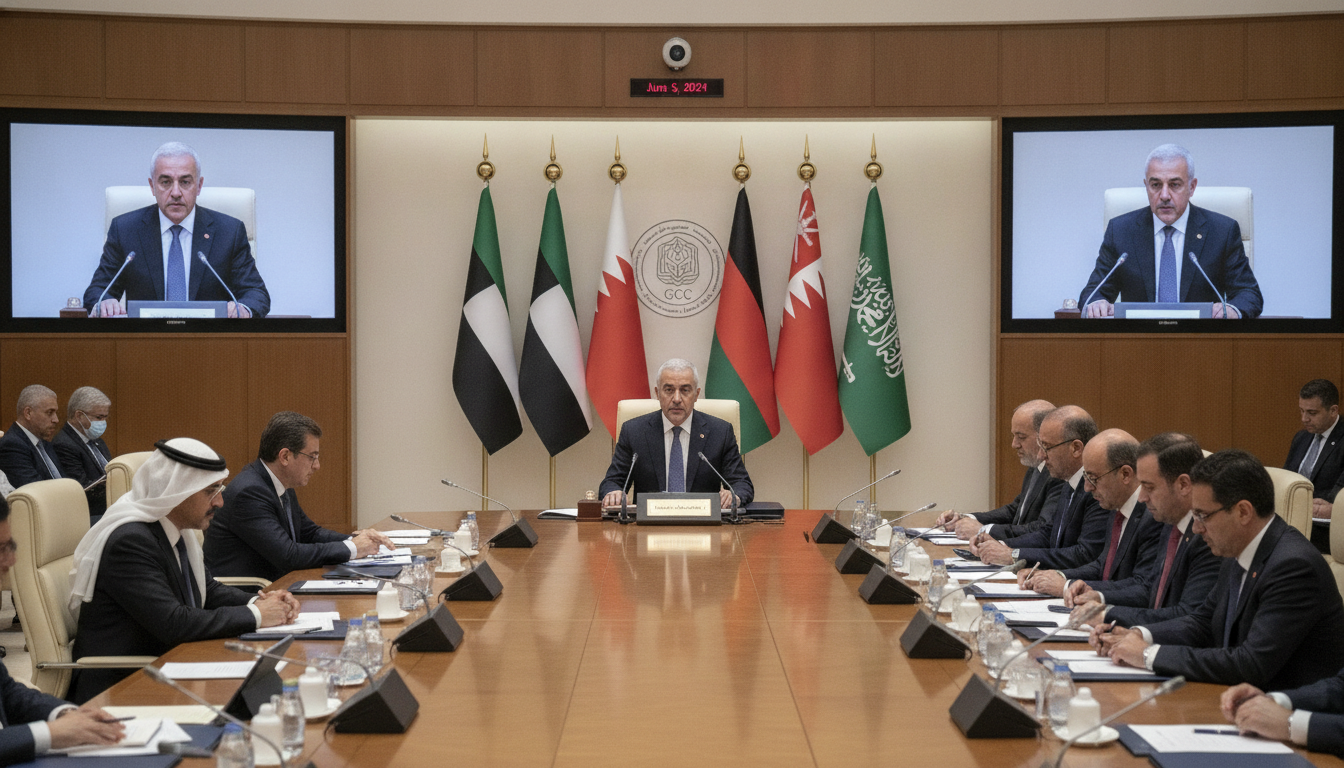
GCC Condemns Iranian Attacks on Jordan and Kuwait, Vows Support for Sovereignty and Security
GCC condemns renewed Iranian attacks on Jordan and Kuwait, pledging full solidarity and support for measures to protect sovereignty and regional stability.
The Gulf Cooperation Council’s secretary-general sharply condemned the renewed Iranian attacks on Jordan and Kuwait, calling the strikes a clear violation of national sovereignty and international law. Jassim Mohammad Al-Budaiwi described the incidents as a dangerous escalation that threatens regional security and stability, and he affirmed the council’s support for both countries’ right to defend their borders. The statement underscores the GCC’s unified stance and signals heightened diplomatic coordination among member states in response to the unfolding events.
GCC Secretary-General’s Formal Statement
Jassim Mohammad Al-Budaiwi issued a forceful denunciation of the attacks, characterising them as unacceptable breaches of sovereignty and international norms. He called on the international community to recognise the gravity of the incidents and to support efforts to uphold state sovereignty and the rule of law. The secretary-general’s remarks reflect an immediate and public expression of solidarity with the governments of Kuwait and Jordan. GCC officials indicated they will continue to monitor developments and coordinate policy responses through established diplomatic channels.
Legal and Security Implications Cited by GCC
The council framed the Iranian attacks on Jordan and Kuwait as violations of international law that carry potentially wide-ranging legal implications. Such incidents raise questions about state responsibility, the legality of cross-border strikes, and obligations under the UN Charter to refrain from the use of force. GCC legal advisers and diplomats are expected to review available evidence and explore avenues for recourse within regional and international institutions. The statement emphasised that unchecked breaches of sovereignty risk normalising aggression and undermining regional security frameworks.
Solidarity Measures and Support for Kuwait and Jordan
The GCC pledged full solidarity with Kuwait and Jordan, affirming support for “all measures” those states take to protect their security and sovereignty. While the council did not list specific military or diplomatic steps, its public backing signals readiness to assist through intelligence-sharing, logistical cooperation, and unified diplomatic pressure. Member states have a history of coordinating support in crises, and officials indicated that consultations are ongoing to determine the appropriate mix of political, economic, and security measures. The emphasis on collective backing aims to deter further incidents and reassure allies of the council’s cohesion.
Regional Impact and Risk of Escalation
Analysts note that the renewed Iranian attacks on Jordan and Kuwait risk widening tensions across the Gulf and Levant, potentially drawing neighbouring states into a cycle of retaliatory measures. Increased military activity near international borders can disrupt trade, energy shipments, and civilian safety, compounding the humanitarian and economic toll of regional instability. The GCC’s condemnation also serves as a warning that the council views such actions as threatening the broader equilibrium of the Gulf region. Diplomats are urging restraint while preparing contingency plans to manage spillover effects.
Calls for De-escalation and Diplomatic Resolution
Alongside condemnation, the GCC urged immediate de-escalation and a return to diplomatic channels to address grievances and prevent further violence. The statement appealed to all parties to exercise restraint and to respect internationally recognised borders and legal norms. Regional stakeholders, including Arab and international partners, are being encouraged to facilitate dialogue and to support verification mechanisms that can help establish facts on the ground. The council’s approach balances a firm defense of sovereignty with an expressed preference for solutions achieved through negotiation rather than prolonged conflict.
The GCC said it will remain engaged with Kuwait, Jordan and international partners as the situation develops, reiterating its commitment to protecting member states’ sovereignty and maintaining regional stability.
