
Iceland’s female-dominated public sector raises questions about institutional balance
Iceland’s female-dominated public sector sparks debate as women occupy most government roles, prompting concerns about institutional balance and social trust.
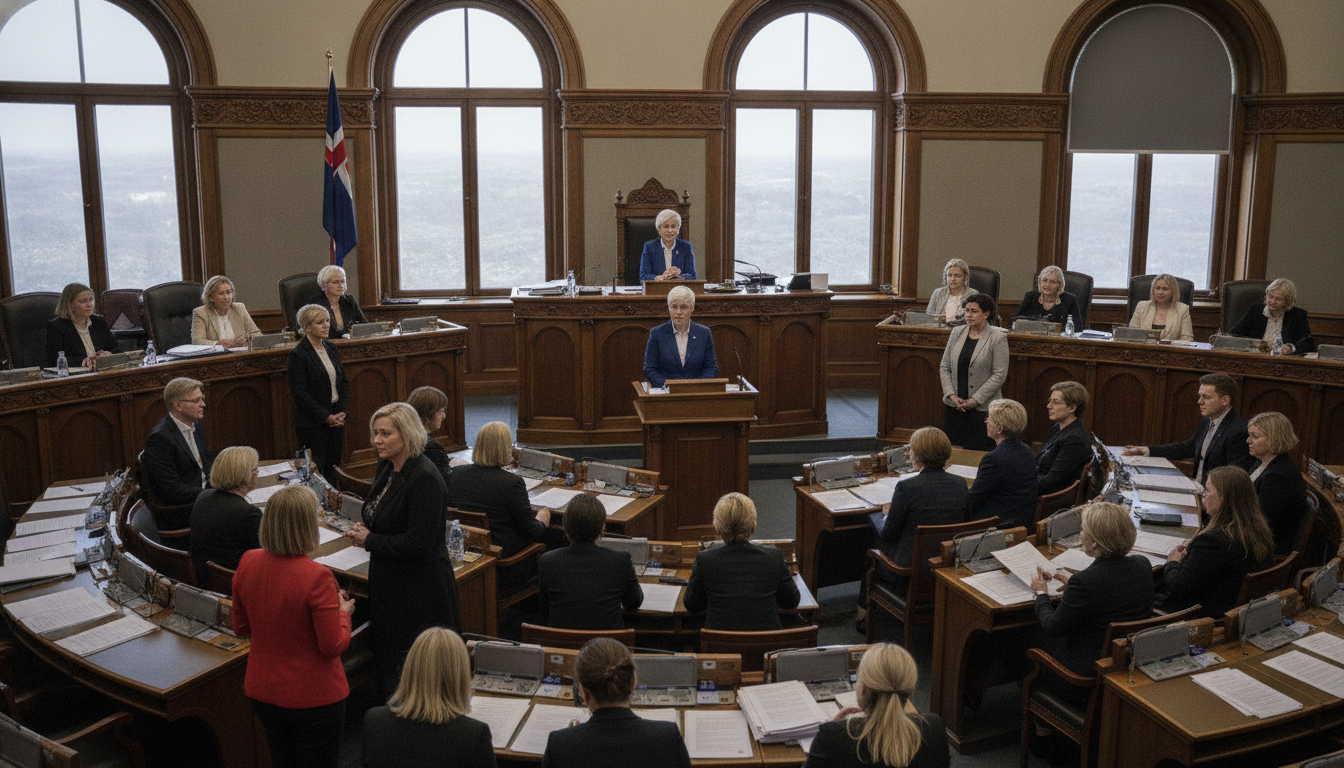
Iceland’s decades-long drive for gender equality has transformed its public institutions, and the female-dominated public sector now sits at the centre of a new national conversation. The country that many hail as the world leader in gender parity has women in the presidency, the premiership and the leadership of major public institutions. As women populate ministries, schools, social services and regulatory bodies, questions are emerging about whether institutional homogeneity has produced new blind spots and social strains.
Iceland’s Public Sector Majority Female
Iceland’s public payroll is heavily female: women make up a clear majority in central and municipal government workforces. Estimates show women account for roughly 62 percent of central government employees and about 70 percent of municipal staff, with some agencies approaching near-total female representation. The concentration is particularly pronounced in education, social services and administrative functions where public funding and policy priorities are focused.
Concentration of Women in Key Ministries
Several ministries and departments now have overwhelming female representation among technical and managerial staff. For example, staffing in some justice, child and education, and health departments shows twice as many women as men, and in certain parental and equality offices men are numerically marginal. That staffing profile has translated into women shaping everyday policy choices in schools, health care, child protection and workforce regulation across the country.
Effects on Male Participation and Social Trust
Alongside institutional changes, observers report a quieter social effect among men who say they feel circumscribed in public interaction. Some men describe reticence to voice certain opinions for fear of social or professional repercussions, producing what scholars and commentators call an atmosphere of constrained expression. Political scientists warn that democracies rely not only on legal protections for speech but also on social trust that allows citizens to disagree, joke and err without assuming the worst.
Occupational Segregation and the Private Sector
The labour market in Iceland remains strongly gender-segregated by sector. Roughly 43 percent of working women are employed in the public sector, whereas only about 15 percent of working men are, and around 85 percent of men work in private industries. Men are concentrated in export-oriented and physically demanding sectors such as fisheries, heavy transport, construction, energy and aluminium production, while women predominate in teaching, social work, human resources and public administration.
Institutional Homogeneity and Ideological Blindspots
Social scientists caution that institutions composed largely of people with similar training, career paths and worldviews are prone to cultural blindspots. When recruitment, promotion and collaboration occur within tight social and ideological networks, policy debates may narrow and dissenting perspectives may be under-represented. The result can be effective delivery of familiar services together with a reduced capacity to see unintended consequences or to accommodate alternative policy approaches.
Debate and Democratic Resilience Ahead
The debate in Iceland is not a repudiation of women’s leadership or of decades of progress toward equality; rather it is a question about balance within state institutions. Policymakers, civil society groups and scholars are beginning to consider how to preserve the gains of inclusion while broadening the ideological and occupational diversity of public institutions. Measures under discussion include targeted recruitment from a wider range of disciplines, incentives for men to enter care and administrative professions, and safeguards to ensure a plurality of viewpoints in policy formation.
Iceland’s experience offers a cautionary example for other democracies: creating new majorities inside institutions can solve one form of imbalance while generating another. A resilient democratic system, analysts say, will be one that combines equality of opportunity with institutional heterogeneity so that public bodies reflect not only gender parity but also a diversity of backgrounds, experiences and perspectives.
