
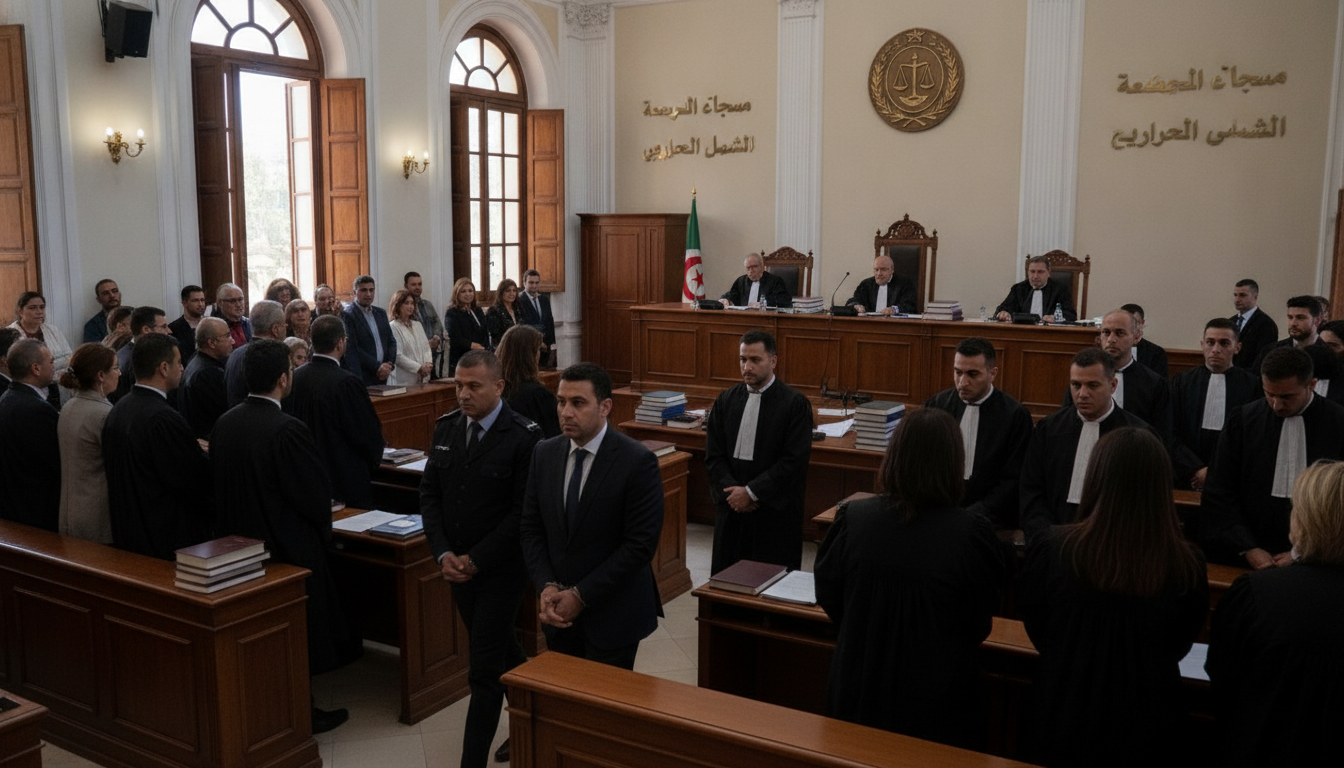
French Court of Cassation upholds conviction for linking occupation and resistance
Court of Cassation ruling upholds conviction for linking occupation to resistance, prompting debate over free speech, judicial reach and political discourse in France.
France’s highest court, the Court of Cassation, has confirmed a conviction that punished a local official for repeating a political analysis linking occupation and resistance, a ruling that critics say criminalises debate about Palestine. The decision, handed down in March 2024, upheld a suspended prison sentence and a temporary ban from public office for Mohamed Makni after he cited a remark equating some acts of resistance with responses to occupation. The case has since become a focal point in discussions about free expression, counterterrorism law and the bounds of acceptable political speech in France.
Details of the conviction
The Court of Cassation’s March decision affirmed a lower-court ruling that imposed a four-month suspended prison term and a four-month prohibition on holding public office for Makni. Prosecutors argued the statement amounted to glorifying terrorism, while supporters of Makni said his words merely reflected a historical and political interpretation of resistance under occupation. Legal filings show the sentence did not allege direct incitement to violence but focused on the context and perceived endorsement of a contested viewpoint.
A separate appeal ruling on May 27 in a different matter resulted in a financial penalty tied to Palestine-related remarks, adding to perceptions of an expanding judicial response to public debate on the issue. Together, these cases have intensified scrutiny of how French courts apply laws against glorifying terrorism and whether those statutes are being extended into the realm of political expression. Observers note the legal outcomes have real consequences for individuals active in public and political life.
Statement at the centre of the case
The phrase that triggered the proceedings was a single-sentence citation of a third-party analysis linking acts labelled as terrorism with claims of resistance by those living under occupation. Judges examined not only the quoted sentence but also the broader circumstances in which it was used, including the speaker’s public role and the audience reached by the remark. The prosecution argued that repeating such a view in the specific context went beyond abstract commentary and risked normalising or praising violent acts.
Defence lawyers countered that the citation was political commentary grounded in a longstanding international debate over the legality and legitimacy of resistance in occupied territories. They emphasised that the defendant did not call for or celebrate violence and that the words cited came from a former diplomat rather than a militant actor. The legal dispute has therefore hinged on how courts parse intent and context when applying counterterrorism statutes to political speech.
Judicial precedent and changing legal interpretations
Legal analysts say the Court of Cassation’s intervention marks a notable moment in the post-October 2023 legal landscape in France, where courts have been increasingly called upon to rule on statements relating to the Israel–Palestine conflict. The country’s anti-terrorism statutes were originally framed to tackle jihadist propaganda and recruitment, but critics argue they are now being stretched to regulate wider political discourse. This shift raises questions about how precedent will guide future cases where political interpretation collides with security concerns.
Supporters of the rulings stress the state’s responsibility to prevent the normalisation of violence and to protect public order, particularly in a charged international environment. Opponents warn that expanding the scope of glorifying-terrorism charges risks chilling legitimate political debate and academic discussion. Legal commentators expect appeals and further litigation may clarify the boundaries between protected speech and criminal liability.
Government policy and public debate
Since October 2023, French authorities have said they will take a firm line against rhetoric that could incite violence or be seen as endorsing extremist acts, and prosecutors have increasingly invoked glorification charges in such contexts. Critics contend that this approach conflates historical and political analysis with advocacy of violence, while government supporters argue that firm enforcement is necessary to prevent radicalisation and hate-driven unrest. The tension highlights the difficulty of balancing security with open debate on sensitive foreign-policy issues.
The controversy has also prompted debate within political circles and civil society about whether judicial measures are being used in lieu of political engagement to address polarising international developments. Some politicians and community leaders have called for clearer legal standards and greater judicial restraint, arguing that democratic debate should tolerate contentious historical interpretations without criminal sanction.
Reactions across communities and historical references
Community organisations, legal groups and international observers have weighed in, with many urging caution over any legal framework that might silence political perspectives shared across large parts of the Global South. Commentators have noted historical precedents in which occupying powers labelled resistance movements as terrorism, and some have referenced past French leaders who acknowledged the complex nexus between occupation and insurgency. These references are being used to frame the current debate as part of a longer conversation about colonialism, law and political legitimacy.
At the same time, victims of terrorism and their advocates maintain that judicial systems must remain vigilant against rhetoric that can be interpreted as legitimising violent attacks. The clash of perspectives has underscored the broader diplomatic and societal fault lines that the Makni case has brought to public attention.
The Makni ruling has become more than a single legal outcome; it is a catalyst for renewed scrutiny of how France’s legal system navigates the boundary between protecting security and preserving open political debate about Palestine and occupation. The decision’s ripple effects will likely be watched closely by legal scholars, civil society groups and political leaders both inside France and internationally.
