
Ronaldo World Cup 2026: Portugal Eliminated by Spain as Six Negative Stats Shadow Ronaldo’s Finale
Spain eliminate Portugal in Dallas, ending Cristiano Ronaldo’s World Cup 2026 run; six negative statistics defined his tournament and shaped his legacy.
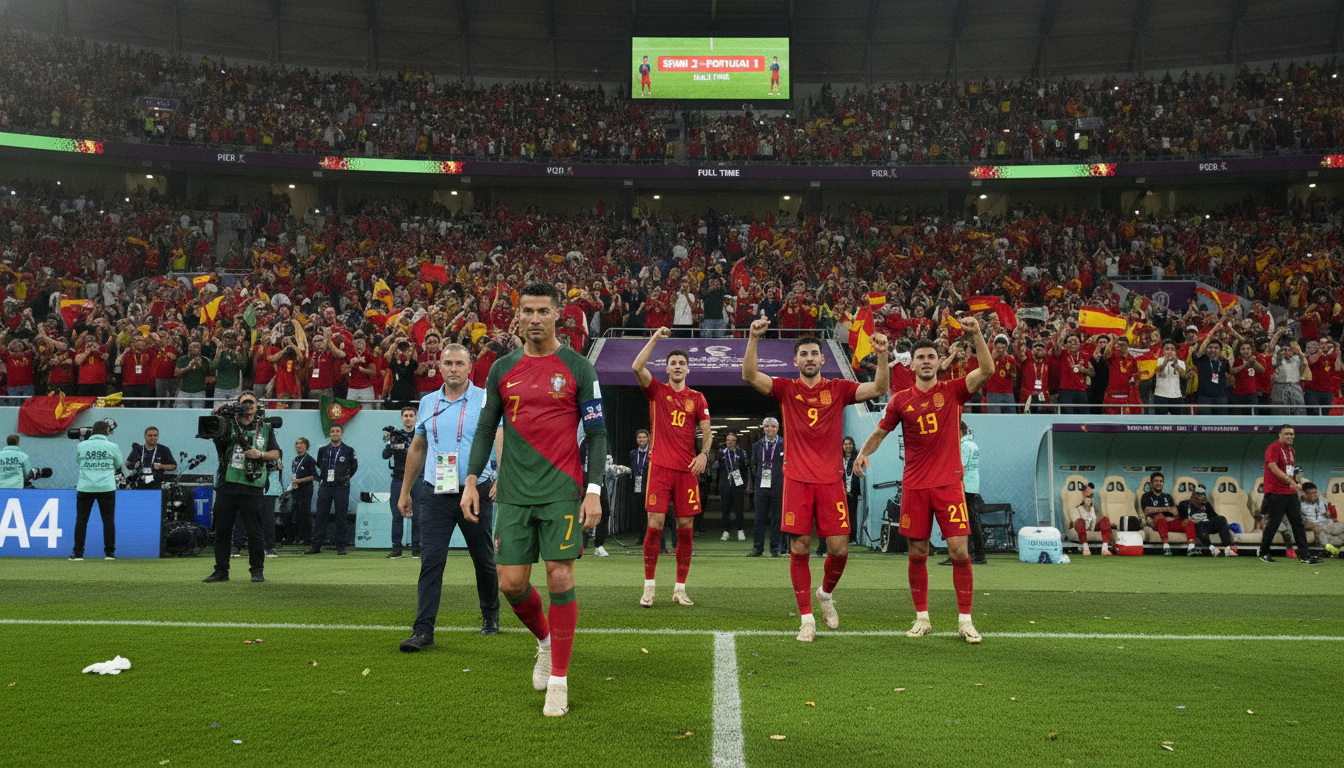
Cristiano Ronaldo’s World Cup 2026 campaign ended as Portugal were beaten 1-0 by Spain in Dallas, bringing the striker’s six-tournament run to a close. The match marked the final appearance for Ronaldo at the global finals and capped a tournament in which he also set a historic scoring record. While he became the first player to score in six different World Cups, several performance metrics from the event painted a more complicated picture.
Portugal Eliminated by Spain in Dallas
Portugal exited the World Cup after a single-goal defeat to Spain in the round of 16, a match that sealed the end of Ronaldo’s long tournament history. The defeat came despite Portugal fielding experienced attackers and a team that had advanced from the group stage. Spain’s solitary goal proved decisive and Portugal could not find an equaliser in the second half.
The loss immediately shifted focus to Ronaldo’s final tournament numbers, which combined milestone moments with troubling indicators. Media and analytics outlets highlighted both his historic scoring across six World Cups and a set of negative statistics that tracked his declining influence in key areas of play.
Six Negative Statistics Outline Ronaldo’s 2026 Campaign
Analysts compiling tournament data identified six clear negative statistics that defined Ronaldo’s World Cup 2026 showing. Chief among these was the absence of successful dribbles, a surprising shortfall for a forward of his pedigree. Data from OneFootball reported that Ronaldo failed to complete a single successful dribble during his final matches, including the elimination game against Spain.
Other flagged metrics included low ball touches and limited creative output, measurements that suggested Ronaldo was less involved in build-up play than in previous tournaments. Opta further noted he led the tournament in shots without registering an assist-creating pass, underscoring a mismatch between his shooting volume and chance creation for teammates.
Dribbling, Touches and Possession Shortcomings
Ronaldo’s inability to beat opponents one-on-one stood out as a notable decline in sharpness. The OneFootball numbers showed zero completed dribbles, a stark contrast with earlier stages of his career where individual runs frequently destabilised defences. That lack of successful take-on attempts reduced his effectiveness in breaking compact defensive blocks.
The striker’s touches also fell to unusually low levels for a senior team captain, with a tournament-low 25 touches recorded in the match versus the Democratic Republic of Congo and only 19 against Spain. Reduced involvement in possession phases limited his capacity to link with midfield creators and to participate in sustained attacking movements.
Shooting Volume Without Creating Chances
Despite those limitations, Ronaldo remained active in front of goal, registering a high volume of shots during the tournament. Opta’s figures recorded 17 shots in this single World Cup edition, which made him the most prolific shooter without producing a recorded chance-assist for teammates. That disparity highlighted a tendency to shoot from positions that did not translate into direct chances for others.
His three goals in the competition — two against Uzbekistan and one against Croatia — showcased his persistent threat from set situations and penalty scenarios. However, his scoring in 2026 relied less on dynamic attacking sequences and more on moments of individual strike opportunity, a balance that did not carry Portugal past the last-16 hurdle.
Knockout Match Scoring and Historical Context
Across his World Cup knockout appearances, Ronaldo’s scoring profile remained limited in open-play scenarios. Tournament records indicate that, in elimination matches across editions, he had struggled to find the net from open play, with penalties comprising a notable portion of his decisive goals. This trend persisted in 2026 and contributed to debate about his influence in high-stakes contests.
Over six World Cups Ronaldo played 27 matches and scored 11 goals, statistics that keep him among the tournament’s all-time scorers. Those totals reflect longevity and a rare consistency at major tournaments, even as his final campaign mixed a historic milestone with diminishing returns in certain performance measures.
Legacy and Reaction After the Exit
Reaction to Portugal’s elimination and Ronaldo’s farewell at the World Cup combined admiration for his records with sober analysis of his final on-field contributions. Supporters and commentators acknowledged his achievement as the first player to score in six separate World Cups, while analysts emphasised the six negative metrics that tempered celebration. The contrast between the milestone and the analytics narrative framed much of the post-match discussion.
Team officials and former players offered measured tributes, noting Ronaldo’s impact on Portuguese football and his role in elevating the national team for two decades. At the same time, coaching staff will now face questions about transition and how Portugal rebuilds its attacking identity in a post-Ronaldo era.
Cristiano Ronaldo concludes his World Cup career with a complex legacy: unmatched longevity and landmark records alongside a final tournament defined by concerning statistical trends that highlight how elite careers can evolve as players age.
