
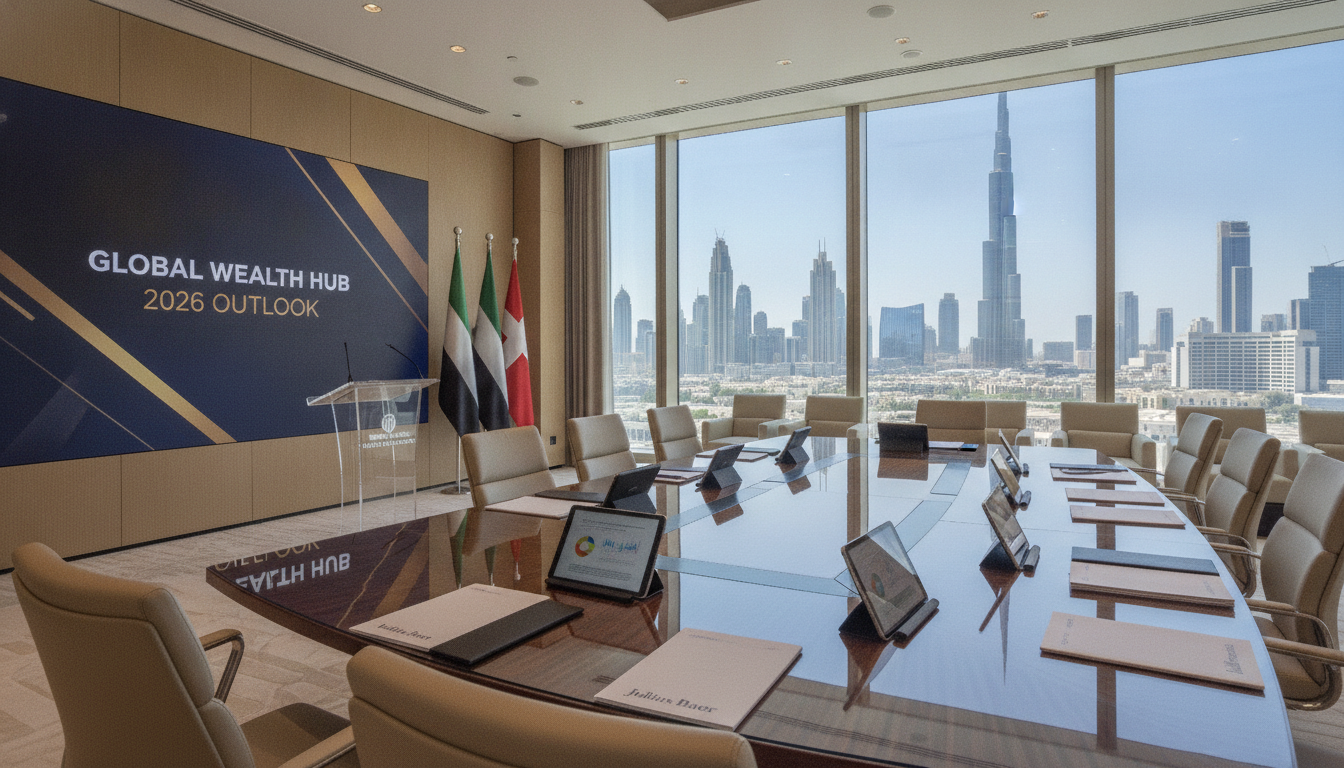
Dubai wealth hub: Julius Baer 2026 report shows emirate deepening lead in attracting global high-net-worth individuals
Julius Baer 2026 finds Dubai wealth hub attracting high-net-worth residents with competitive luxury real estate, strong dollar linkage and lower living costs.
Dubai continues to strengthen its position as a regional and global wealth hub, according to the Julius Baer Global Wealth and Lifestyle Report 2026. The report highlights the emirate’s successful blend of luxury living, entrepreneurship and future-focused innovation as central to attracting high-net-worth individuals. Luxury real estate is singled out as a key pull factor, offering comparatively better value than many leading Asian and European cities. The analysis also notes that Dubai’s economy, linked to the US dollar, provides a favourable cost structure for wealthy expatriates and mobile families.
Julius Baer 2026 highlights Dubai’s competitive appeal
The Julius Baer report places Dubai among the most competitive markets worldwide for spending on high-value goods and services. It contrasts the emirate’s pricing dynamics with cities tied to stronger currencies such as the euro and Swiss franc, where luxury costs have risen markedly. That relative affordability, the report argues, underpins continued wealth inflows and increased long-stay residency by affluent global citizens. Market observers say this competitiveness reinforces Dubai’s role as a logistics and lifestyle gateway between east and west.
Luxury real estate remains a primary magnet for HNWIs
Dubai’s luxury property sector is identified as a principal reason wealthy buyers choose the emirate, with high-end developments offering perceived value against record prices elsewhere. Developers and brokers highlighted in the report have focused on premium amenities, integrated services and international-quality design to appeal to affluent buyers. The availability of new stock and a variety of tenure options have also expanded the market’s reach. Experts caution, however, that sustaining demand will require ongoing product differentiation and transparent regulatory frameworks.
Dollar linkage lowers relative living costs for expatriate wealth
A central finding of the report is the effect of Dubai’s currency linkage to the US dollar on affordability for foreign residents. For high-net-worth individuals whose wealth and incomes are frequently denominated in dollars, the peg reduces exchange-rate friction and cushions living costs. The report contrasts this with cities where stronger local currencies have pushed the effective price of luxury goods and services higher for dollar-based residents. This currency alignment has become a structural advantage for Dubai in attracting mobile global families and entrepreneurs.
Global luxury costs rose 10.2% in US dollar terms
Julius Baer’s data show that the cost of luxury lifestyles worldwide increased by an average of 10.2% in US dollar terms over the previous year. The rise reflects a combination of higher prices for premium goods and services and currency-driven shifts in affordability across markets. The report emphasises that macroeconomic resilience in financial markets did not prevent a rapid repricing of luxury consumption. Analysts note that such increases are reshaping where and how the wealthy choose to live, work and spend.
Geopolitical tensions and trade shifts reshape wealth flows
The report links the accelerated changes in luxury costs and residency patterns to broader geopolitical tensions, changing global trade routes and currency market volatility. These factors have altered travel, investment and supply-chain behaviours that influence lifestyle costs for the wealthy. In turn, cities that can offer stability, open access and favourable pricing stand to gain market share. Dubai’s strategic location, diversified economy and policy incentives are cited as elements that help it capitalise on these structural shifts.
Implications for investors, policymakers and service providers
For investors and real estate developers, the report suggests sustained appetite for premium assets in Dubai, provided product quality and service ecosystems remain competitive. Policymakers are urged to maintain regulatory clarity, visa facilitation and quality-of-life enhancements to convert short-term interest into long-term residency. Luxury retailers, hospitality groups and private service providers are advised to tailor offers to increasingly mobile, dollar-denominated customers. Observers warn that global volatility and policy changes abroad could still alter flows quickly, so adaptive strategies are essential.
The Julius Baer 2026 findings underscore Dubai’s growing magnetism for global wealth, driven by competitive luxury property, a US dollar-linked economy and strategic positioning amid shifting international dynamics. Continued gains will depend on sustained policy support, product innovation and the emirate’s ability to offer stability and value to an increasingly mobile high-net-worth population.
