
Trump to Attend White House Correspondents’ Dinner Amid Press Freedom Debate
President Trump will attend the White House Correspondents’ Dinner for the first time as president, reigniting debate over media independence and changes to the event’s format.
Opening summary of the event and controversy
President Donald Trump’s decision to attend the White House Correspondents’ Dinner on Saturday marks the first time he will join the black-tie gathering as the sitting president. The move has intensified scrutiny of the annual event, which long symbolises the relationship between the White House and the press corps. Critics and supporters alike say the appearance raises questions about whether the dinner can maintain its role as a forum for independent journalism.
Attendance breaks a recent pattern
Trump’s presence ends a pattern of refusals: he declined invitations throughout his earlier presidential terms and only attended as a private citizen in 2011. That earlier appearance, when he was not yet president, became a memorable moment after then-President Barack Obama used the platform to publicly mock Trump’s emerging political profile. Saturday’s attendance is notable because past presidents typically appear at least once, but Mr. Trump’s prior absences had already shifted expectations for the event.
Format changes remove comedian and add mentalist
Organisers altered the dinner’s traditional format this year, most visibly by removing the long-standing practice of a stand-up comedian as the headline performer. Instead, the programme includes a performance by mentalist Oz Pearlman, a departure intended by the White House Correspondents’ Association (WHCA) to avoid controversy. The change follows several years of fraught exchanges between the dinner’s entertainers and the White House, and highlights the organisers’ cautious approach to programming.
Flashpoints from recent dinners inform debate
The dinner’s tone has been shaped by several contentious moments in recent years. In 2018, comedian Michelle Wolf’s set drew sharp criticism from some in the press and the White House for its hard-edged jokes about both the president and the media. The following year the WHCA shifted away from comedians, instead inviting speakers such as historian Ron Chernow. Last year’s planned performance by Amber Ruffin was abruptly cancelled, and the association has faced repeated pressure to avoid what it calls the “politics of division.”
Journalist groups demand a clear message on press freedom
A coalition of journalism organisations, including large professional societies and civil liberties groups, has urged the WHCA to use the occasion to reaffirm protections for the press. In an open letter, the groups called on the association to deliver a forthright statement that freedom of the press is not partisan. They also urged the WHCA to resist normalising behaviour the groups describe as hostile to journalists and public access to information.
Specific grievances cited by press organisations
The letter and subsequent statements cite a range of actions they say demonstrate an erosion of press access and safety, including limits placed on press pools, regulatory pressure on broadcasters, immigration enforcement targeting non-citizen reporters, and law-enforcement actions affecting journalists. The critics also point to the White House creating a “hall of shame” page spotlighting outlets it says are biased, and to repeated public denunciations of reporters. Those examples have become central to calls for the WHCA to press the administration on press freedom.
White House defends transparency and engagement
White House officials have rejected the characterisation that the administration seeks to restrict press freedom. Spokespeople have described the president as unusually accessible to media, citing frequent public events and impromptu interviews. Supporters argue that direct engagement with reporters demonstrates openness rather than obstruction. The administration’s defenders say the dinner provides a chance for dialogue and a reminder that a free press and an engaged presidency can coexist.
Symbols and planned demonstrations of support for the First Amendment
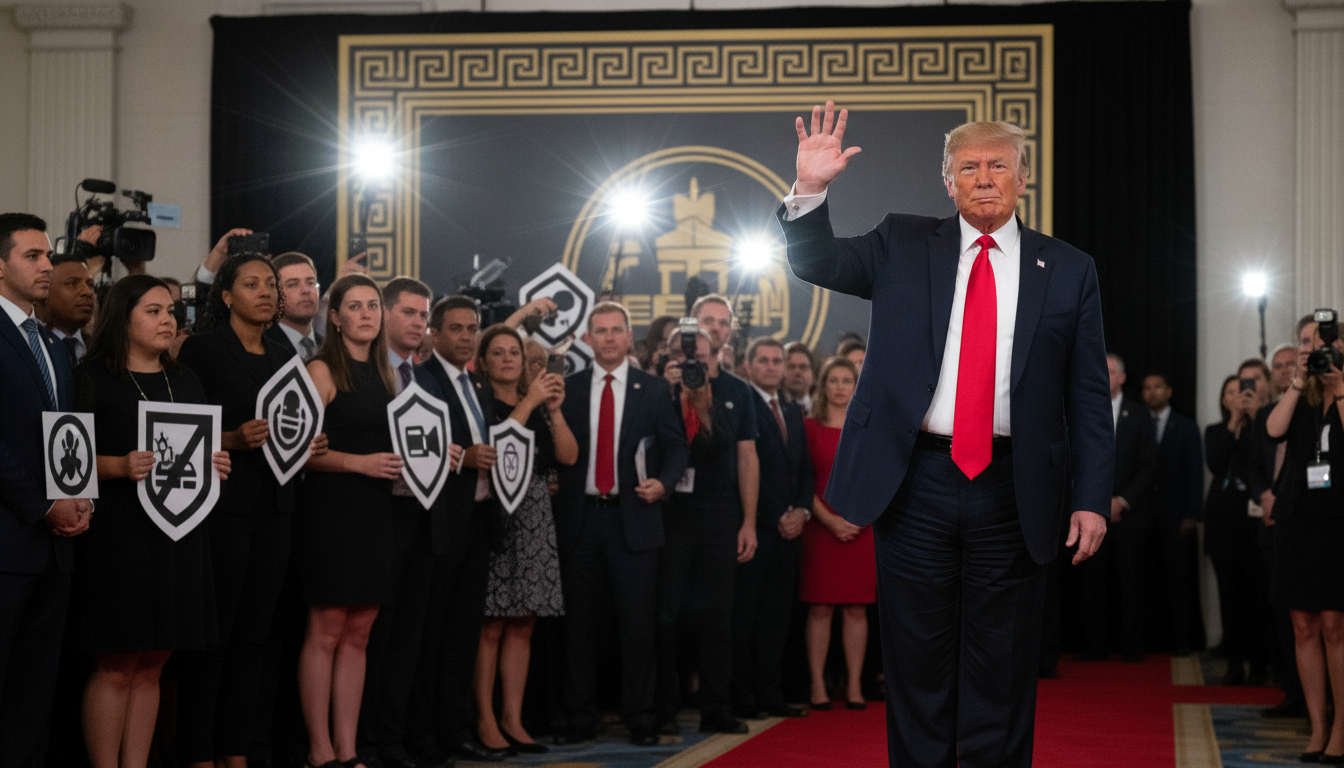
Some attendees plan to signal solidarity with press protections through small visual gestures at the dinner, such as wearing pocket handkerchiefs or lapel pins bearing “First Amendment.” These symbolic acts are meant to underscore journalists’ concerns about constitutional protections for speech and a free press. Organisers and participants have said they intend the event to honour reporting while also acknowledging the tensions that have surfaced in recent years.
The White House Correspondents’ Dinner, which traces its roots to the early 20th century and has long served as both a celebration and a roast of power, arrives this year under unusual conditions. With a president who has previously derided the mainstream media attending for the first time as incumbent, the night will test whether the ceremony can balance civility, critique and the watchdog role of the press.
