
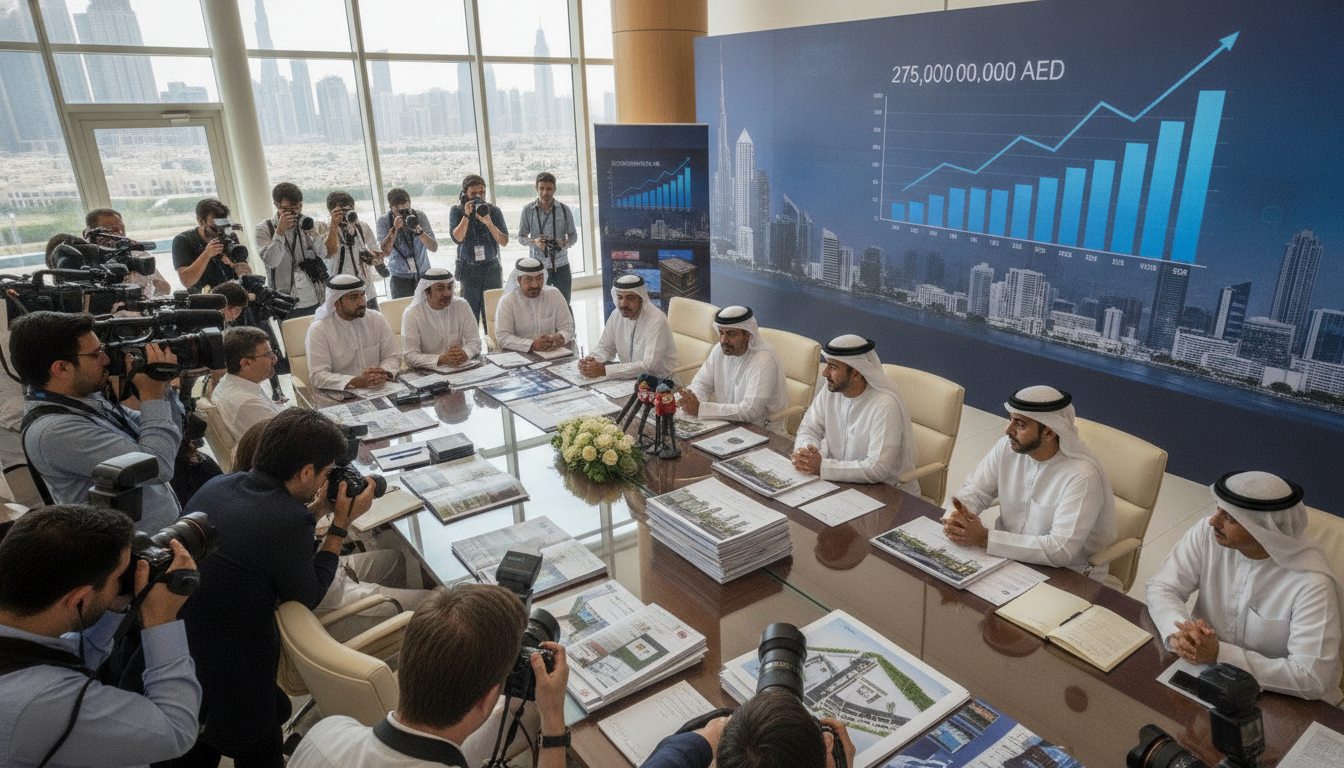
Dubai real estate projects surpass AED 275bn as launches accelerate in 2026
Dubai real estate projects top AED 275bn in 2026 as developers unveil thousands of units; W Capital reports robust residential demand and investor confidence.
Dubai recorded a surge in new project announcements in the first half of 2026, with total value now exceeding AED 275 billion, according to an industry analysis by W Capital. The spike in activity underscores a widening development pipeline and renewed momentum in the property market. The figures reflect both large-scale strategic announcements and a steady stream of smaller project registrations.
W Capital analysis details volume and headline announcements
W Capital’s review shows 250 new projects were registered with the Dubai Land Department through the end of May, collectively valued at about AED 75 billion. These registered launches were supplemented in June by a single large masterplan announced by Emaar Properties with an estimated value of approximately AED 200 billion. Taken together, the tally of newly announced and registered projects puts the 2026 total well above AED 275 billion and approaching AED 300 billion within six months.
The combination of numerous mid-sized launches and one very large announcement marks what W Capital describes as the largest semiannual wave of new project launches in Dubai’s history. Market participants say this mixed pipeline—from apartment blocks to master-planned communities—signals developers’ confidence in sustained demand for a range of residential products.
Residential units account for the bulk of new supply
Data compiled by W Capital indicate that projects launched during the first five months of 2026 include roughly 59,400 apartments and about 10,800 villas. The concentration on residential development continues to be the principal driver of activity, with apartments remaining the dominant product type in the new supply mix. Developers and brokers attribute this focus to strong end-user demand and healthy investor appetite for income and capital appreciation.
Last year, apartments represented nearly 88.8 percent of new units introduced to the market, while villas and townhouses registered notable growth in total project value. The uptick in low-density, community-style developments reflects buyer preference for integrated living environments and larger homes among both domestic and overseas purchasers.
Annual comparisons show sustained expansion since 2024
Historical comparisons underline the scale of the expansion. In 2025, Dubai saw 648 new projects launched by 258 developers, delivering more than 167,000 units with an estimated aggregate value of around AED 463 billion. By contrast, 2024 recorded approximately 145,000 units with a combined value near AED 360.1 billion. Those figures translate into a year-on-year rise of about 15.2 percent in units and 28.4 percent in total project value from 2024 to 2025.
Analysts say the multi-year increase in both volume and value highlights a maturing market capable of supporting larger development pipelines. The pace of new project announcements in early 2026 suggests developers are accelerating plans to capitalise on favorable market dynamics.
Developers and investors cite market confidence
Walid Al Zarouni, chairman of W Capital brokerage, said the early-2026 numbers reflect strong confidence from both developers and investors. He noted that achieving near-AED 300 billion in announced project value within less than six months is an exceptional indicator of real demand rather than speculative activity. Al Zarouni emphasized that the composition of launches points to sustainable, long-term interest in Dubai property.
Market sources add that international capital flows, coupled with favourable residency schemes and ongoing infrastructure investment, have supported a broad investor base. Those factors, together with targeted product strategies from developers, have helped sustain transaction levels and pre-sales activity across multiple price segments.
Regulatory improvements and market structure support absorption of supply
Industry observers highlight improvements in Dubai’s regulatory and legislative framework as a factor enabling the market to absorb larger volumes of new supply. Enhanced transparency, clearer developer obligations, and investor protections are credited with strengthening buyer confidence and reducing execution risks. These changes have, in turn, encouraged a wider set of institutional and private investors to commit to local projects.
The combination of regulatory reform and diversified funding sources has allowed a broader range of projects to proceed, from high-density apartment schemes to lower-density villa communities. Developers say this varied pipeline helps mitigate concentration risk and aligns product offerings with evolving buyer preferences.
Outlook for Dubai real estate projects through the remainder of 2026
Looking ahead, the momentum of new project announcements is expected to continue through the second half of 2026, driven by strategic masterplans and targeted residential schemes. Key variables to watch include global capital conditions, interest-rate trends, and construction timelines, all of which will influence delivery schedules and buyer sentiment. Market participants caution that while headline values are large, successful absorption will depend on phased delivery and effective sales and marketing strategies.
Developers and brokers remain optimistic but pragmatic, noting that careful alignment of product, price and timing will be critical as the emirate handles a growing pipeline of projects. Continued monitoring of sales velocity and leasing outcomes will provide the clearest signals of how well new supply is being integrated into Dubai’s market.
The surge in Dubai real estate project announcements in early 2026 underscores the emirate’s appeal to both developers and investors, while also raising the stakes for execution and delivery in a market that is rapidly scaling up.
