
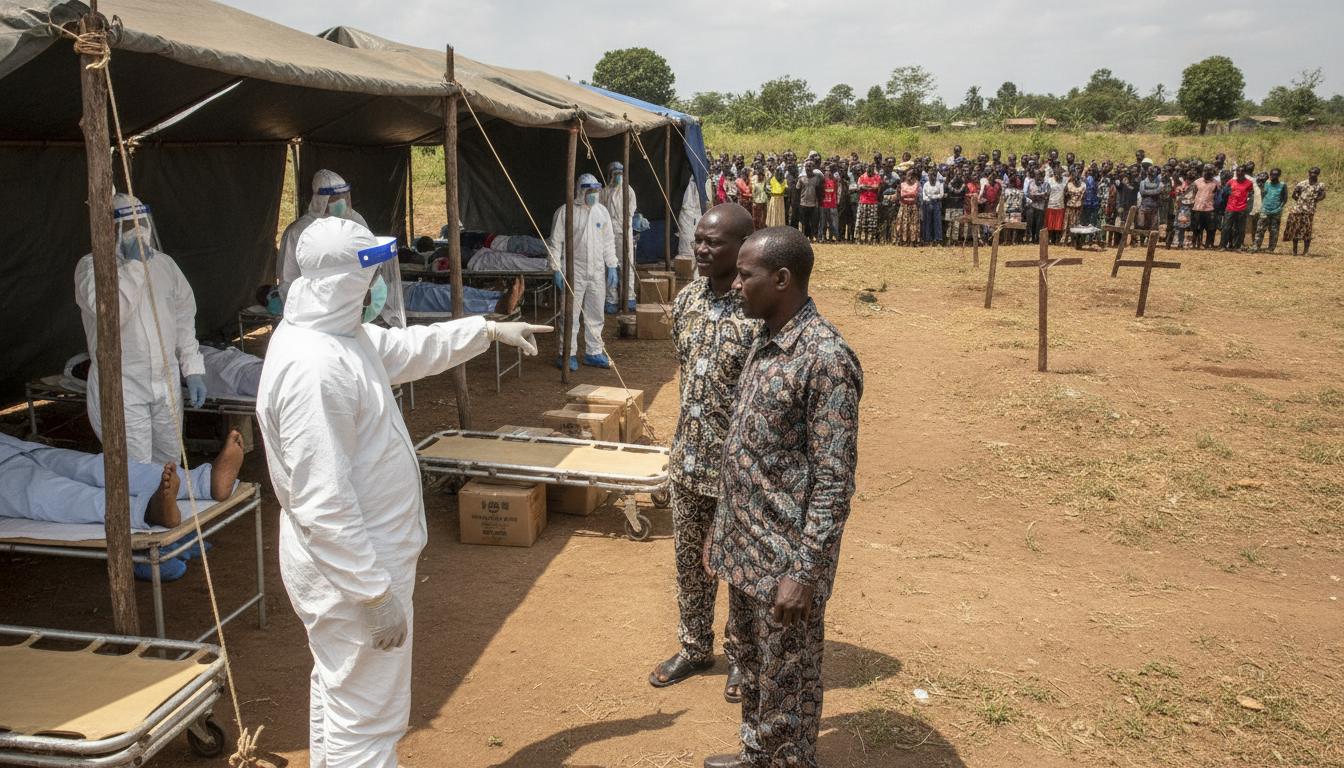
Ebola outbreak in DR Congo kills 648 as confirmed cases reach 1,830, government reports
Ebola outbreak in DR Congo: 648 dead and 1,830 confirmed cases, government says. Health teams are intensifying containment and vaccination efforts nationwide.
The Democratic Republic of Congo is confronting a renewed Ebola outbreak that has claimed 648 lives and produced 1,830 laboratory-confirmed infections, according to government data released on Friday. The figures represent the cumulative toll through the most recent 24-hour reporting period and underline the urgency of stepped-up public health measures. Authorities say surveillance, contact tracing and community engagement are being expanded to limit further spread of the virus.
Ebola toll and confirmed cases
The Ministry of Health’s latest report lists 648 fatalities linked to the current Ebola outbreak and 1,830 confirmed cases as of the end of the reporting day. Those totals include cases and deaths recorded in the preceding 24 hours, reflecting ongoing transmission in affected areas.
Officials emphasized that case counts could change as investigations and laboratory confirmations continue, and they warned that the numbers may understate the true scale of the outbreak because of delays in detection and reporting in remote communities.
Regional spread and hotspots
Health authorities have identified several provinces where transmission remains active, with clusters concentrated in both urban centers and rural zones. Localized spikes in case numbers have been attributed to community gatherings and limited access to healthcare facilities.
Cross-border movement and informal trade routes are complicating containment efforts, particularly in border-adjacent districts where surveillance capacity is weaker. Public health teams are prioritizing hotspot mapping to direct resources to the most affected communities.
Government response and surveillance
The national response has focused on rapid case finding, isolation of suspected patients, and systematic contact tracing to break transmission chains. Mobile teams and local clinics are being mobilized to improve detection and expedite sample transport to diagnostic laboratories.
Authorities report intensifying community awareness campaigns to encourage early presentation for testing and to counter misinformation. Enhanced surveillance is being paired with targeted screening at transport hubs and clinics to identify cases before they seed new clusters.
Vaccination campaigns and treatment centers
Vaccination remains a core tool in the response, with ring vaccination strategies deployed around confirmed cases to protect contacts and frontline workers. Health officials say available Ebola vaccines are being distributed to high-risk areas, though logistics and cold-chain constraints pose operational challenges.
Treatment centers have been established in priority areas to provide clinical care and isolation for confirmed patients, but bed capacity and staffing shortages are reported in several regions. Authorities are working to expand clinical support and ensure infection prevention measures are consistently applied.
International assistance and coordination
International health partners, non-governmental organizations and UN agencies are engaged in the response, offering technical support, vaccines and logistical aid. Coordinated efforts aim to bolster laboratory capacity, supply chains and risk communication programs across affected provinces.
Diplomatic and cross-border coordination is also being pursued to mitigate the risk of regional spread, with neighboring countries advised to enhance surveillance at points of entry. Global partners have reiterated the need for rapid, sustained assistance to prevent escalation.
Healthcare system challenges and outlook
The outbreak is placing renewed strain on an already stretched healthcare system, exposing gaps in workforce capacity, diagnostics and transport infrastructure. Health workers face elevated risk while working in often difficult conditions, and ensuring their protection remains a priority.
Public health officials caution that controlling the outbreak will require sustained investment in surveillance, vaccination, and community trust. While immediate containment is the focus, planners are also mobilizing longer-term capacity-building to reduce vulnerability to future outbreaks.
The government said it will publish regular situation updates as teams continue response operations and as laboratory confirmations are completed. In the coming days, authorities expect intensified vaccination rounds and increased deployment of surveillance teams to the hardest-hit districts, with the aim of halting further transmission and preventing cross-border spread.
