
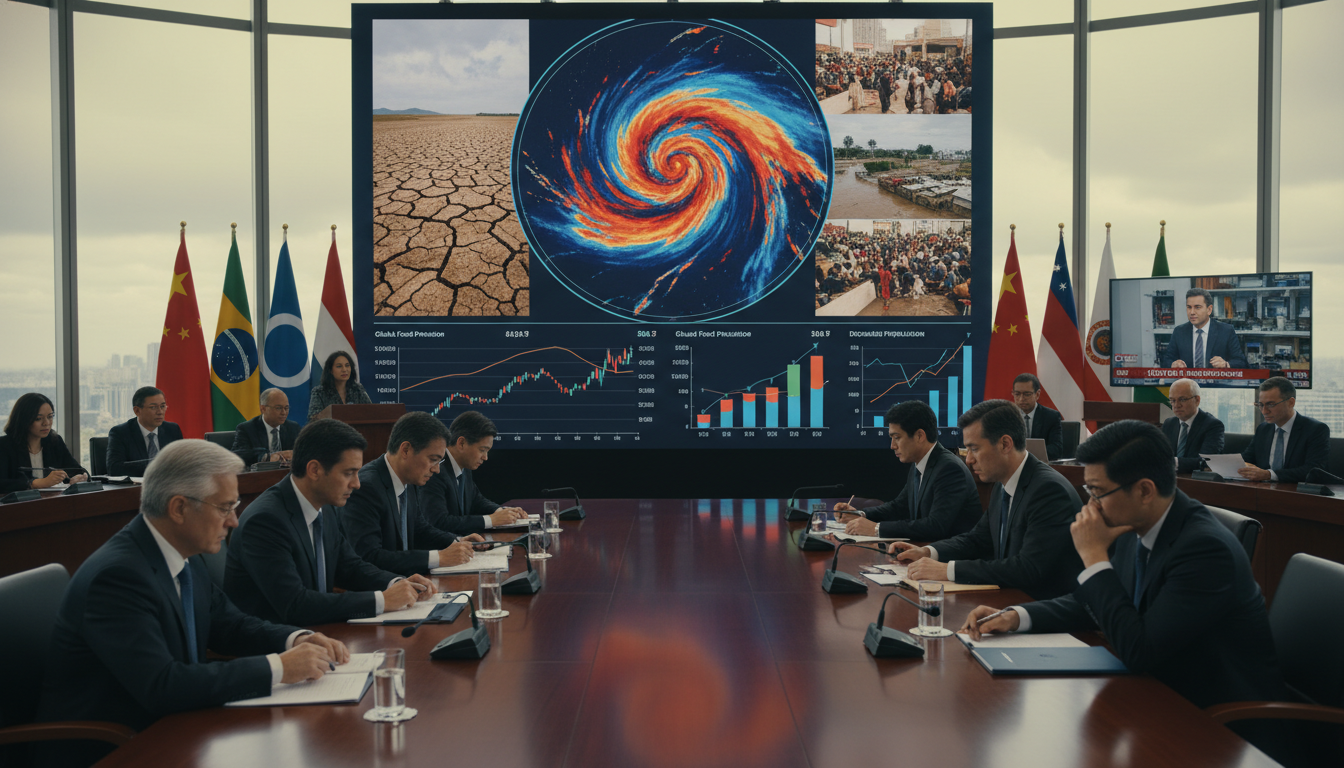
Scientists warn of potential record-breaking El Niño, raising global drought and food-security risks
El Niño may be entering a potentially record-setting phase, scientists warn, threatening disrupted rainfall, higher global temperatures and added pressure on food and water systems worldwide.
El Niño’s growing strength has prompted concern among climatologists as models indicate a chance of an exceptionally strong Pacific warming event that could reshape weather patterns globally. The phenomenon, known for altering winds and sea surface temperatures across the central and eastern Pacific, is closely watched because of its outsized influence on rainfall, storms and seasonal temperatures. Policymakers and emergency agencies are reviewing early-warning data while farmers, traders and humanitarian organisations assess potential disruptions to supplies and markets.
Historical shocks tied to powerful El Niño events
Severe El Niño episodes have left deep marks on human societies, at times triggering famines, epidemics and social upheaval. Records and academic studies link major disruptions — including the catastrophic 1877–78 event — to widespread crop failures and elevated mortality across the tropics.
Researchers point to historical cases where natural variability combined with economic or political decisions to magnify harm, particularly in regions lacking safety nets. Scholars have argued that colonial-era export policies during some 19th-century famines, for example, worsened outcomes by prioritising external markets over local food needs.
Advances in monitoring and scientific understanding
The scientific picture of El Niño has sharpened dramatically since the mid-20th century, when researchers first connected Pacific ocean–atmosphere feedbacks to global weather shifts. Modern observation networks of buoys, satellites and ocean sensors now deliver near-real-time readings of sea surface temperatures and wind patterns.
These tools allow meteorologists to issue earlier and more precise seasonal forecasts than ever before, enabling governments and agencies to plan interventions, deploy water management strategies and release strategic food reserves when needed.
Current forecasts and the question of magnitude
A number of climate models now show a non-trivial chance that the developing El Niño could reach magnitudes not commonly observed in recent decades. Some simulations indicate central Pacific temperature departures that would make this event one of the strongest on record, raising the likelihood of elevated global land temperatures in the months after the ocean peak.
Scientists caution, however, that models carry uncertainty and that early-stage indicators do not guarantee a record outcome. El Niño events typically intensify through the latter half of the calendar year, and global temperature impacts often register in the year that follows.
Regional impacts: where wetter and where drier conditions may unfold
El Niño tends to produce wetter-than-normal conditions across parts of the Americas while suppressing Atlantic hurricane activity, but it also heightens the risk of drought in South and Southeast Asia, Australia and southern Africa. The distribution of extremes will be uneven, with some areas facing flood hazards while others confront reduced rainfall and water stress.
Those shifts have direct implications for agriculture and food markets. Reduced harvests in vulnerable regions can push up global commodity prices, while localized crop failures can strain household incomes, prompt migration and increase demand for humanitarian assistance.
Socioeconomic vulnerabilities and compounding global pressures
Experts warn that an El Niño of exceptional strength would act on top of existing stresses in the global system. Supply-chain disruptions, higher energy costs stemming from geopolitical tensions, and shortages of key agricultural inputs could combine to amplify shocks.
Think tanks and researchers highlight the risk of cascading effects: reduced incomes and savings, business closures, rising indebtedness and increased food insecurity. Cuts to international aid and constrained government budgets in some low-income countries could reduce the capacity for timely response.
Early measures and policy responses under way
Governments in regions traditionally sensitive to El Niño are already taking precautionary steps, from convening preparedness meetings to reviewing food distribution and drought-mitigation plans. India, for example, has held coordination sessions and cited public distribution systems and grain reserves as buffers against worst-case outcomes.
International agencies and scientific bodies urge nations to bolster monitoring, maintain or expand strategic reserves, protect vulnerable households with targeted cash or food assistance, and ensure the continuity of supply chains for essential agricultural inputs. Experts also stress that rapid, well-targeted support early in a crisis reduces long-term human and economic costs.
History shows that natural climate variability by itself can be devastating, but its worst effects often emerge where social, political and economic vulnerabilities persist. If the developing El Niño follows the stronger model projections, the world will face elevated climate volatility; whether that translates into humanitarian catastrophe will depend in large part on the speed and scale of preparedness and response measures.
