
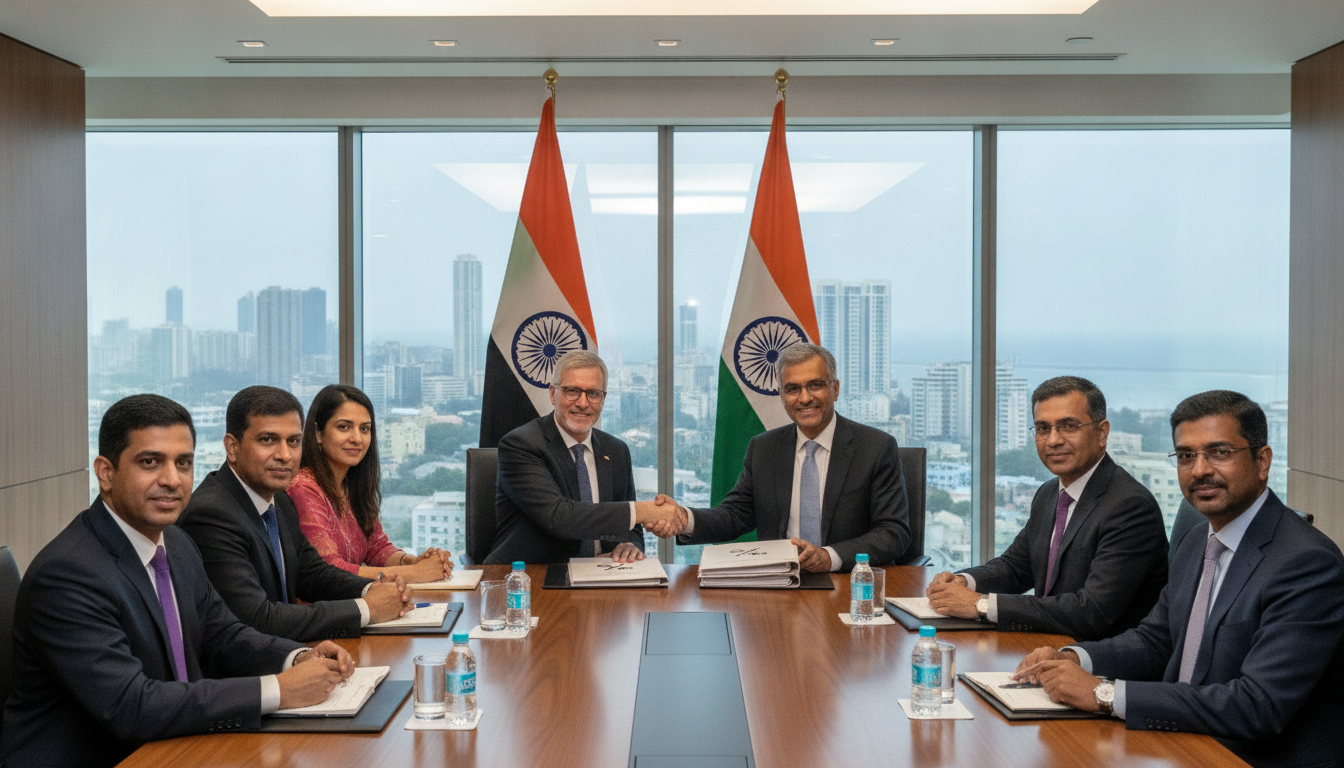
Emirates NBD Completes Acquisition of 60% Stake in RBL Bank with $2.75bn Capital Injection
Emirates NBD completes acquisition of majority stake in RBL Bank after a $2.75 billion capital injection, aiming to strengthen RBL’s balance sheet and deepen UAE‑India financial ties.
Emirates NBD has finalised its acquisition of a majority stake in RBL Bank, completing the transaction announced on October 18, 2025. The UAE lender injected approximately $2.75 billion (around 260 billion rupees) as initial capital, and now owns 60% of RBL’s expanded capital base. The move, completed after securing all required approvals and closing conditions, is presented as a strategic step to bolster RBL’s capital adequacy and support its long-term growth strategy.
Deal closed with $2.75 billion capital injection
The transaction, first disclosed publicly on October 18, 2025, reached completion after both parties satisfied regulatory and contractual conditions. Emirates NBD’s initial capital injection of close to $2.75 billion represents the first tranche under the broader acquisition framework. Bank statements confirmed that all mandated approvals were obtained and that the closing conditions set out at signing were met.
The capital infusion is expected to immediately strengthen RBL’s balance sheet and improve its regulatory capital ratios. Management has described the funds as a platform to pursue disciplined growth, enhance risk management and invest in digital and operational capabilities. Market sources say such a sizeable injection provides RBL with headroom to expand lending and explore regional opportunities.
Emirates NBD holds 60 percent of expanded capital
Following the closing, Emirates NBD holds a 60 percent stake in RBL based on the bank’s expanded capital structure. The new ownership mix positions Emirates NBD as the controlling shareholder while retaining significant Indian management and board representation. The arrangement is designed to balance strategic oversight with continuity of RBL’s domestic operations.
RBL’s remaining shareholders retain 40 percent of the expanded capital, a structure that the parties say will preserve local knowledge and operational continuity. Officials indicated governance changes will be implemented in phases to align practices across both institutions, while ensuring compliance with Indian regulatory requirements.
Leadership frames the deal as a strategic UAE‑India partnership
Senior leaders from both banks framed the transaction as a deepening of economic ties between the United Arab Emirates and India. Sheikh Ahmed bin Saeed Al Maktoum highlighted the deal as evidence of long‑standing cooperation and mutual economic ambitions between the two countries. Emirates NBD’s deputy chairman and managing director described the acquisition as a long‑term commitment to India and a vehicle to enhance cross‑border trade and investment flows.
RBL’s chairman welcomed Emirates NBD as a strategic investor and said the partnership signals international confidence in the bank’s franchise and in the broader Indian banking sector. Both sides emphasised that the relationship aims to support governance enhancement, capability development and resilience-building at RBL.
Expected effects on RBL’s capital position and growth plans
Management at RBL expects the capital injection to improve capital adequacy ratios and provide headroom for credit growth. The funds are earmarked to support lending to retail and corporate customers, investment in technology, and upgrades to risk and compliance frameworks. Analysts note that stronger capital buffers typically allow banks to pursue growth while maintaining regulatory compliance.
Executives also pointed to potential operational synergies, including cross‑selling opportunities, expanded correspondent banking relationships and access to Gulf markets. The combined platform is expected to facilitate trade finance, remittance flows and corporate banking services between India and the Middle East.
Regulatory clearance and integration roadmap
The transaction closed only after obtaining the necessary approvals from the relevant regulatory authorities in both jurisdictions. Both banks stated that they had completed prescribed regulatory filings and satisfied statutory closing conditions. Integration will follow a phased approach, with an emphasis on aligning governance, risk management and reporting systems first.
Operational integration is likely to include joint initiatives on digital banking, compliance upgrades and talent exchange programs, according to officials. They stressed that customer-facing operations in India will continue uninterrupted and that regulatory compliance will remain a priority throughout the integration period.
Regional market implications and investor outlook
The acquisition is among the largest cross‑border banking investments involving an Indian lender in recent years and is expected to draw attention from regional and global investors. Market commentators said the deal underscores the UAE’s role as a financial bridge to South Asia and reinforces investor appetite for strategic stakes in Indian financial services. The transaction may prompt other regional banks to explore similar tie-ups that link capital centres in the Gulf with growth markets in South Asia.
Broker and institutional analysts are closely monitoring how RBL deploys the new capital and how the partnership translates into revenue synergies. Observers also highlighted that maintaining asset quality and executing disciplined lending will be critical to realising the anticipated benefits of the acquisition.
The banks say customers, employees and regulators will be kept informed as the integration progresses, and that the partnership is built on a shared objective of creating a resilient, growth‑oriented financial institution positioned to serve expanding trade, investment and remittance flows between India and the Gulf.
