
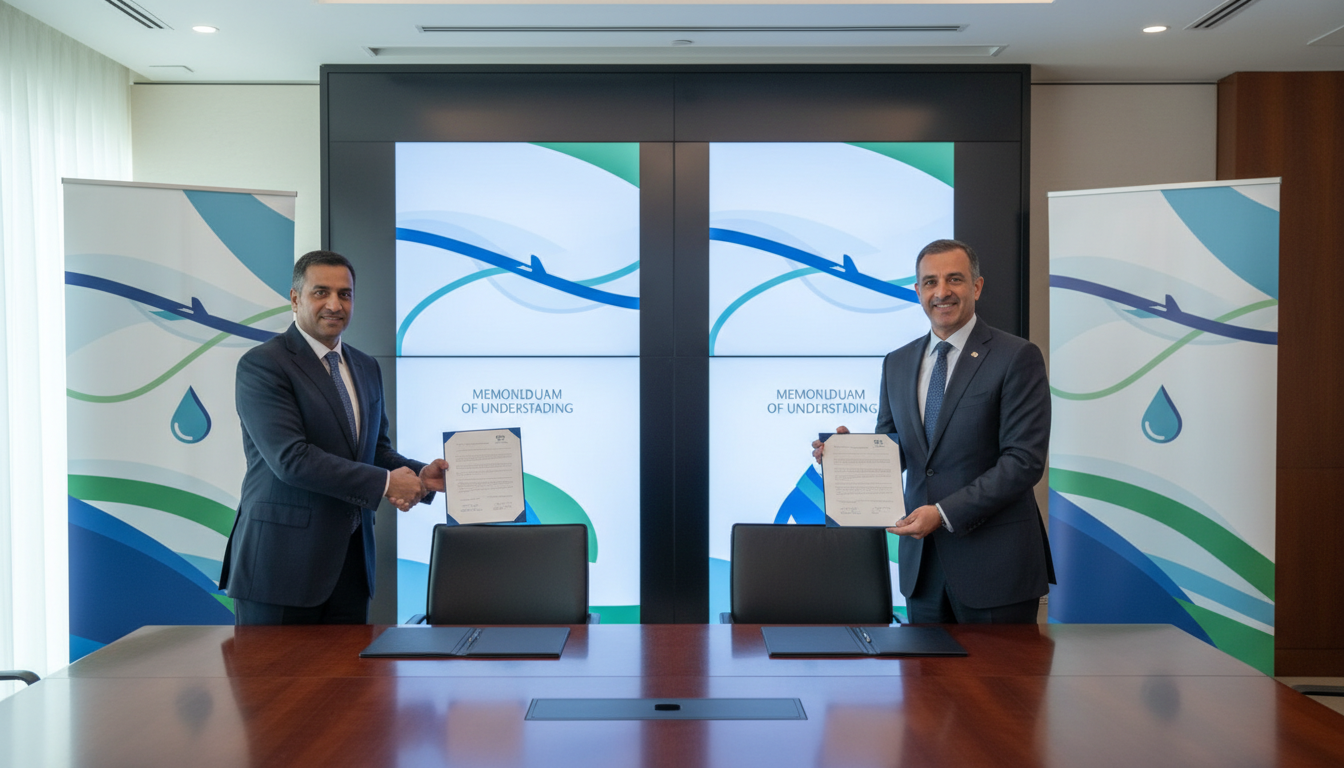
ENOC and Emarat sign MoU to strengthen aircraft fuel supply continuity in the UAE
ENOC and Emarat sign MoU to establish a continuity plan ensuring aircraft fuel supply continuity and greater operational resilience for UAE aviation now.
The ENOC Group and Emirates Petroleum (Emarat) have signed a memorandum of understanding to establish a joint business continuity framework designed to secure aircraft fuel supply continuity across the UAE aviation network. The agreement sets out coordinated procedures for pipeline transfers and truck loading to reduce the risk of disruption and improve the reliability of fuel deliveries. ENOC and Emarat said the partnership will formalize rapid coordination mechanisms and embed documented response steps to maintain uninterrupted operations.
Scope of the memorandum and operational coordination
The MoU outlines a structured framework for day‑to‑day coordination as well as emergency response, covering the logistics of moving jet fuel by pipeline and road. It establishes clear roles and shared protocols between the companies to enable immediate operational alignment when transfers, reallocations or logistical adjustments are required. The framework is intended to prevent ad hoc decision‑making by creating pre‑agreed procedures for routine movement and crisis scenarios.
Business continuity plan features and preparedness measures
A central element of the collaboration is a joint business continuity plan that will include documented response actions and restart procedures for both organizations. The plan will mandate regular drills, staff training and exercises to test both equipment and communication lines. These recurring tests aim to validate systems and personnel readiness so that supply chains can be restored quickly in case of service interruptions.
Logistics and technology improvements under the partnership
ENOC and Emarat plan to develop coordinated logistical solutions and explore technological measures to streamline fuel transfers and inventory management. Improvements cited by the partners include enhanced monitoring of pipeline flow, optimized truck loading schedules and strengthened communication channels between depots and airlines. Such measures are expected to shorten response times and reduce the operational friction that can arise during peak travel periods or unexpected events.
ENOC executive: proactive planning to safeguard aviation supply
Hussein Sultan Lootah, Chief Executive Officer of the ENOC Group, said the agreement reflects the company’s proactive approach to continuity planning as a key energy sector contributor in the UAE. He emphasized that aligning expertise with a national fuel supplier will help maintain seamless operations across aviation fuel supply chains. Lootah added that the partnership supports ENOC’s commitment to keep the UAE positioned as a reliable global aviation hub.
Emarat chief highlights national responsibility and resilience
Burhan Al Hashimi, Chief Executive Officer of Emarat, characterized the MoU as a practical framework to unify readiness and response for routine and emergency situations. He said ensuring continuous fuel supplies for aviation is a national responsibility that the company takes seriously. Al Hashimi noted that pre‑agreed coordination enhances operational resilience and underpins confidence for passengers, airlines and the wider economy that depends on reliable air connectivity.
The partnership between ENOC and Emarat signals a coordinated industry effort to reduce vulnerabilities in the aviation fuel supply chain and to institutionalize rapid response capabilities. By formalizing joint procedures and investing in regular testing and staff training, both companies aim to limit service interruptions and improve the speed of recovery. The approach reflects broader UAE priorities to reinforce infrastructure resilience and support uninterrupted air transport services.
Market participants and airline operators are expected to welcome the new arrangement for its potential to stabilize fuel availability and scheduling reliability. Stable fuel logistics can reduce operational risk for carriers and help maintain flight schedules, which in turn supports tourism, trade and business travel. The MoU therefore has implications beyond the fuel sector, touching on the broader economic ecosystem that relies on consistent aviation operations.
The agreement positions ENOC and Emarat to respond more effectively to seasonal demand variations, infrastructure disruptions or other contingencies that could affect jet fuel movement. Through shared protocols, joint exercises and strengthened communication, the companies aim to deliver a higher standard of reliability to airports and airlines across the UAE. The memorandum underscores a collaborative approach to safeguarding a critical supply chain for a nation that prizes its status as a major aviation crossroads.
