
Democrats mount preemptive Trump impeachment push ahead of possible 2027 House majority
House Democrats prepare an early Trump impeachment push, gathering evidence and staging ‘shadow hearings’ to seek a day‑one vote if they regain the House in Jan 2027.
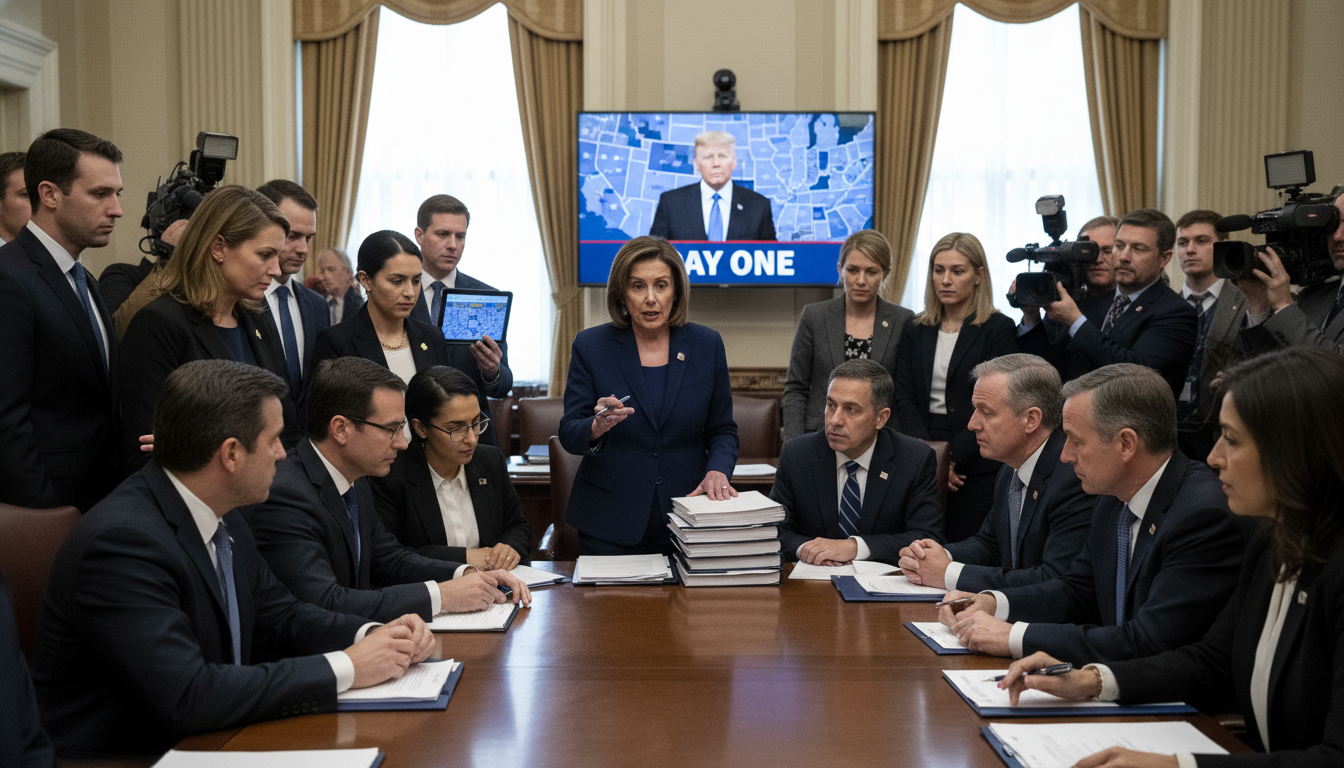
Democrats in the U.S. House have launched a covert, preparatory campaign to build a legal and evidentiary case for the impeachment of former President Donald Trump, lawmakers and aides say. The group’s objective is to be ready to hold a House vote on impeachment “on day one” if the Democratic Party retakes the majority when Congress convenes in January 2027. The effort includes coordinated evidence collection, preliminary hearings and a push to expand public support for a potential impeachment process.
Planned day‑one strategy
Organizers describe the operation as a deliberate, calendar‑driven plan designed to ensure immediate action if the political math shifts in 2026. The effort presumes a Democratic takeover of the House and aims to present a completed, courtroom‑style record to justify launching formal impeachment proceedings.
Proponents argue that acting quickly would prevent delay, preserve crucial documents and witness testimony, and shape public perception before competing narratives take hold. Opponents within the party warn that a hastily pursued vote could backfire politically and focus attention away from other legislative priorities.
Shifting support within the Democratic caucus
Party officials say the internal appetite for pursuing Trump impeachment has grown markedly since 2024, with the number of House Democrats publicly backing impeachment measures rising substantially. Those figures, they note, moved from a smaller core of about 78 lawmakers to roughly 140 by late last year, signaling broader willingness to consider formal action.
That shift reflects both grassroots pressure and a faction of members who view impeachment as a tool of accountability rather than solely a partisan weapon. Nonetheless, the change has not been unanimous and remains the subject of debate in multiple House offices.
Public opinion and historical parallels
A recent national poll commissioned by a nonprofit research group, cited by Democratic strategists, found that a majority of Americans support a House vote on impeachment. The poll showed 55 percent in favor of such a vote and 37 percent opposed, a margin that some analysts compared to the levels of popular support seen during the Watergate crisis.
Democratic backers say that comparison bolsters their argument that a formal process could be both legally justified and publicly accepted. Skeptics counter that historical parallels are imperfect and warn against equating contemporary political divisions with past crises.
Evidence‑gathering and ‘shadow hearings’
Lawmakers leading the campaign emphasize a methodical approach: assembling documents, interviewing witnesses and conducting informal or “shadow” hearings to test testimony and findings before launching formal proceedings. Representative Delia Ramirez (D‑Ill.) told colleagues the party needed a “coordinated, tangible strategy” to ensure any impeachment bid would be grounded in facts and withstand legal scrutiny.
The so‑called shadow hearings are intended to replicate committee questioning and vet witness credibility while avoiding some of the procedural constraints of formal committee sessions. Organizers say that approach would help produce a preponderance of evidence to present to the full House if members move forward.
Senate math and moderate caution
Even as enthusiasm grows among a sizable portion of House Democrats, several voices inside the party urge caution because conviction in the Senate requires a two‑thirds majority. Representative Brad Schneider warned that the constitutional barrier in the upper chamber makes impeachment a politically costly gambit without a clear path to conviction.
Moderates argue that the party should balance accountability with an agenda focused on security, economic relief and everyday issues for voters. They worry that prioritizing impeachment could provide opponents with a rallying point and distract from efforts to win and govern.
Expanding accountability beyond the former president
Some Democrats say their inquiry could extend beyond the former president to include other officials and actors implicated in relevant investigations, reflecting a broader ambition to examine institutional failures. That prospect, party strategists say, has intensified behind‑the‑scenes planning and intensified internal discussions about scope and sequencing.
The possibility of bringing additional targets into an accountability framework compounds legal complexity and raises questions about resource allocation, political timing and public receptivity. Party leaders face the task of weighing those trade‑offs while preparing for a potential shift in control of the House.
A months‑long build‑up inside Democratic ranks suggests a deliberate calculation: prepare the legal groundwork now so that, if voters hand the party the majority in the 2026 midterms, lawmakers can move swiftly. The strategy reflects both confidence among impeachment backers that evidence can be assembled and caution from moderates mindful of Senate hurdles and electoral risks. The coming year is likely to determine whether those preparatory efforts translate into a formal impeachment vote in January 2027 or remain a contingency pursued largely behind closed doors.
