
EU Chooses Restraint: US-EU Trade Deal in June Defuses Threat of Higher Auto Tariffs
EU chose restraint amid U.S. threats to raise car tariffs; the US-EU trade deal in June 2026 aims to prevent retaliation and preserve rules-based trade.
Opening: Deal Averts Immediate Tariff Clash
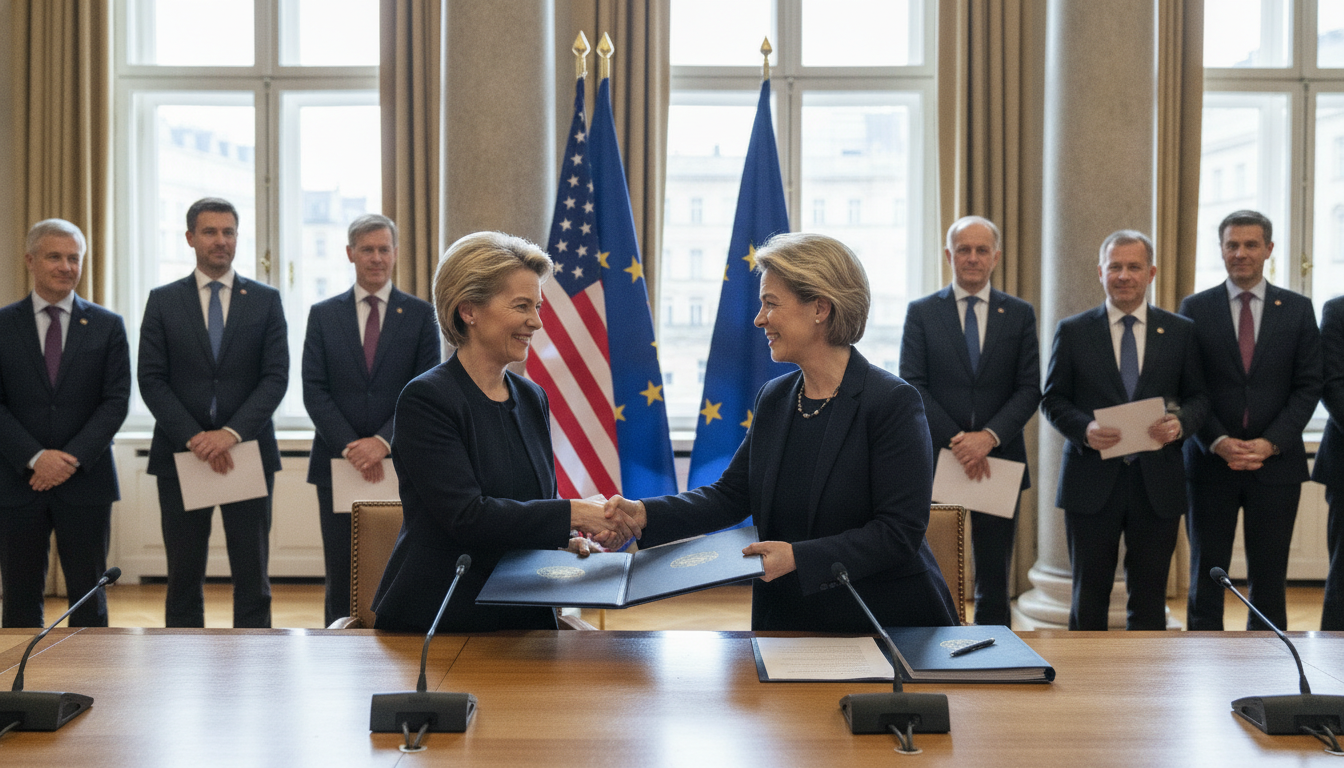
The European Union responded to a May 2026 threat from Washington by negotiating a US-EU trade deal aimed at averting higher duties on cars. The agreement, reached through EU consultative bodies in June 2026, sought to head off a planned rise in U.S. auto tariffs that had been postponed until July 4, 2026. European officials framed the move as a pragmatic effort to limit economic damage while defending long-term trade rules.
Trump’s Tariff Threat and the July 4 Deadline
In May, the White House signaled it would raise tariffs on European cars from 15% to 25%, setting a deadline of July 4, 2026 for implementation. That threat put diplomatic and commercial pressure on EU capitals and prompted intensive talks in June. Rather than meet the deadline with immediate retaliation, Brussels opted for a negotiated arrangement intended to remove the immediate justification for new duties.
EU Opts for Negotiation Through Advisory Channels
European leaders and trade institutions elected to pursue a formal trade arrangement via their established consultative mechanisms in June 2026. The approach prioritized institutional dialogue over reciprocal, unilateral measures and was presented as a responsible, if imperfect, compromise. EU officials emphasized that the agreement was designed to stabilize transatlantic commerce while preserving leverage to address unresolved disputes.
The decision reflected a deliberate trade-off: accept a limited, negotiated settlement now in return for avoiding an escalation that could trigger widespread countermeasures. Brussels argued that visible, immediate damage from higher tariffs would be more politically salient to voters than the harder-to-measure benefits of keeping markets open. The EU’s course signalled a preference for preventing harm rather than winning short-term political points.
Reasons European States Avoided Retaliatory Tariffs
Multiple factors explain why most U.S. trading partners refrained from mirror tariffs despite repeated unilateral U.S. measures. One central motive was the desire to protect decades of progress in the rules-based multilateral trading system overseen by the World Trade Organization. Officials in many capitals concluded that unilateral retaliation would undermine the collective gains built through cooperation and could worsen global economic fragmentation.
Legal considerations also weighed heavily. Many of the threatened U.S. measures were viewed by partners as inconsistent with international trade law, making tit-for-tat tariffs difficult to justify under WTO rules. In such circumstances, governments preferred to channel disputes into formal mechanisms or negotiate bilateral understandings rather than resort to reciprocal, legally dubious steps that might deepen uncertainty for businesses.
Principles at Stake: Non-Discrimination and the WTO
A major point of contention has been the erosion of the WTO principle of non-discrimination, a cornerstone of modern trade governance. Critics argue that prioritizing selective, protectionist measures over equal treatment of like goods contradicts the longstanding multilateral framework. European diplomats and trade experts warned that abandoning non-discrimination in practice risks replacing predictable rules with ad hoc decisions that heighten economic and geopolitical risk.
Proponents of multilateralism contend that global prosperity depends on reducing trade barriers through collective action rather than unilateral choices. Those defending the WTO framework say the system’s legal structures, despite their flaws, remain the best available instrument to manage conflicts and expand trade benefits across a wide range of economies.
Economic Calculations and Trade Diversification
Practical economic realities have also influenced responses to the U.S. tariff threat. The United States accounts for roughly 10% of global exports and about 13–15% of world trade, figures that give other markets leverage to redirect commerce. Many countries have chosen to diversify supply chains and open alternative markets rather than escalate disputes with punitive duties on U.S. goods.
This commercial recalibration reduces the effectiveness of U.S. pressure and offers trading partners a pathway to mitigate disruption. For European manufacturers and exporters, maintaining access to multiple markets and preserving stable rules for trade was judged a better long-term bet than immediate, retaliatory tariffs that could spark a broader trade war.
Final paragraph and outlook
The US-EU trade deal negotiated in June 2026 represents a tactical pause in a wider struggle over trade policy, not a comprehensive resolution of underlying tensions. By choosing negotiation and restraint, the EU aimed to limit short-term damage and defend the multilateral rules that underpin global commerce, even as the July 4, 2026 deadline receded. The durability of that outcome will depend on future adherence to agreed terms and whether both sides commit to restoring predictability to transatlantic trade.
