
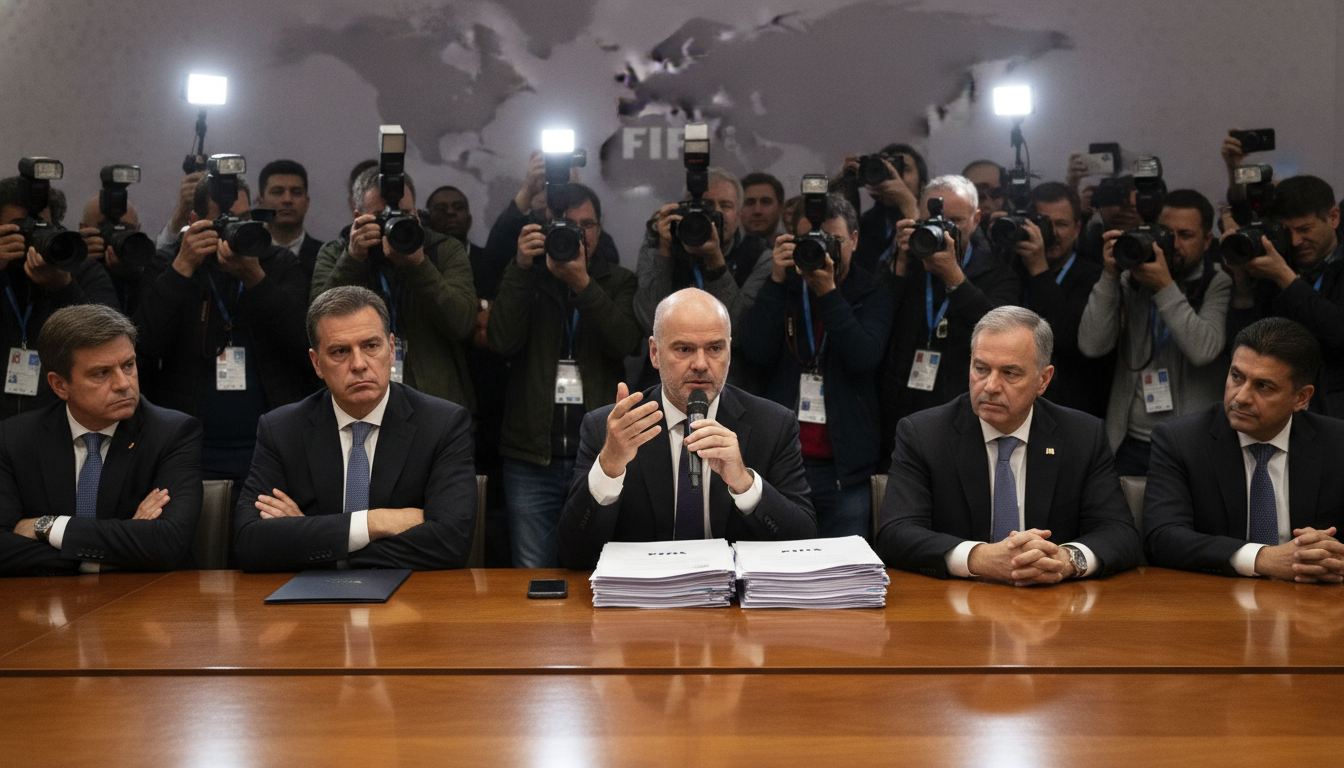
FIFA Plan to Sell World Cup Stakes Sparks Backlash as Infantino Calls It an “Opportunity”
FIFA’s plan to sell World Cup stakes in a new $20bn unit has provoked sharp criticism from regional confederations, even as President Gianni Infantino insists the proposal is an “opportunity, not an obligation.”
FIFA announced on 30 July 2026 that it intends to create a $20 billion subsidiary to manage the World Cup and other events, and has proposed offering up to 20% in external equity. The proposed sale of World Cup stakes is being presented by FIFA as part of a consultation aimed at strengthening the game’s commercial capacity.
FIFA Announces $20bn World Cup Subsidiary
FIFA said the new entity would consolidate the World Cup and related competitions under a single commercial vehicle worth $20 billion. Under the plan, investors could acquire as much as 20 percent of the unit, according to FIFA communications issued on 30 July 2026.
The governing body framed the move as a structural step to boost long-term revenues and capacity to develop competitions, rather than an immediate sell-off mandate. FIFA emphasised that the proposal initiates a consultation process and is not a binding obligation for member associations.
Infantino Frames Proposal as Consultation, Not Obligation
President Gianni Infantino addressed the plan in a video released by FIFA, describing the initiative as an opportunity to professionalise and expand the commercial side of the sport. He said the process will be democratic and consultative, and reiterated that fans will remain central to football governance.
Infantino also stressed that FIFA will continue to govern football independently and that its flagship tournaments, including the FIFA World Cup and the FIFA Women’s World Cup, will remain under the organisation’s control. He framed the capital-raising concept as a way to secure resources for future investments rather than ceding control.
Regional Confederations Voice Strong Opposition
Several regional confederations reacted angrily to the proposal, saying they had been blindsided by FIFA’s announcement and expressing concern over private investors entering the sport. Officials cited a lack of prior consultation and warned of potential risks to sporting integrity and the commercial distribution of revenues.
Leaders within the confederations argued the plan could shift power toward private interests and complicate internal governance arrangements. Their response has underscored tensions between FIFA’s central leadership and its regional bodies over strategic direction and decision-making authority.
Commercial Rationale and Financial Context
FIFA is one of the wealthiest sporting organisations globally, generating substantial revenues from broadcasting rights, sponsorships and other commercial arrangements tied to the World Cup. The proposed sale of World Cup stakes is intended to monetise a portion of that long-term value to attract outside capital.
FIFA has told member bodies the injection of investor funds could finance tournament expansion, infrastructure support and development programmes across member associations. Proponents argue that external capital can accelerate investment in women’s football, grassroots projects and global marketing strategies.
Concerns Over Governance and Fan Interests
Critics say any sale to private investors raises questions about governance safeguards, revenue sharing and the protection of fans’ interests. They have called for clear limits on investor influence, transparent contracts and assurances that sporting decision-making will not be compromised by commercial partners.
FIFA has responded by reiterating that the organisation will continue to govern football without external interference and that the proposal is part of a broader consultation. Nevertheless, the immediate pushback highlights a fragile consensus among football’s stakeholders on how to commercialise major events responsibly.
What Happens Next in the Consultation Process
FIFA has described the announcement as the start of a democratic consultation, but it has not published a detailed timetable for negotiations or decision milestones. Member associations can expect briefings and discussions in the coming weeks as the governing body seeks feedback from confederations and national federations.
The outcome will depend on how FIFA addresses the confederations’ governance and transparency concerns and whether potential investors accept constraints proposed by football authorities. Any deal would also require careful legal and regulatory review given the global scale of the competitions and varied local rules.
The proposal to offer up to 20 percent of the World Cup unit marks a significant moment in the sport’s commercial evolution, prompting urgent questions about accountability, long-term strategy and the balance between investment and control. As FIFA moves into consultations, both supporters and opponents will push for concrete guarantees to protect the competitions and ensure benefits flow across the global football family.
