
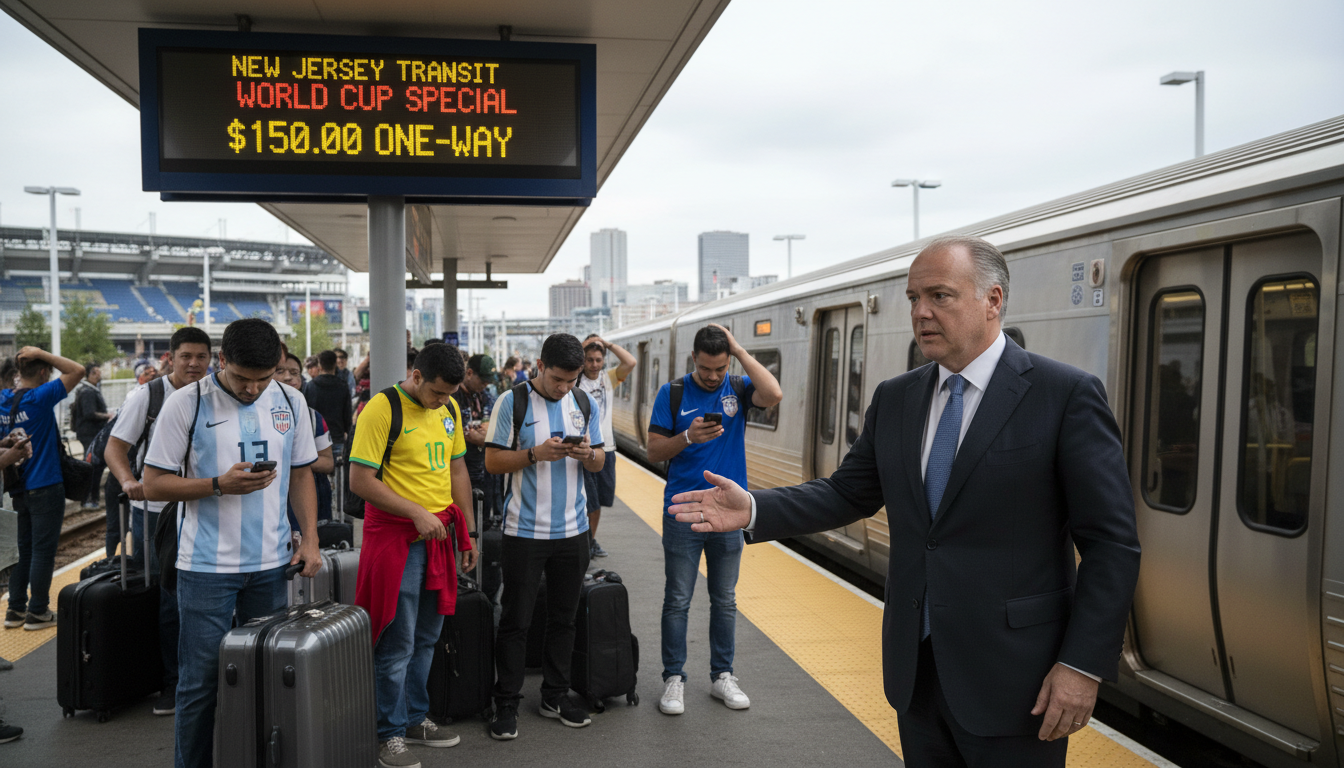
FIFA train fare hike: World Cup organiser condemns $150 round‑trip fee to MetLife Stadium
FIFA condemns a $150 round‑trip train fare from New York to MetLife Stadium during the 2026 World Cup, calling the pricing arbitrary and a barrier for fans.
FIFA on Friday publicly criticised what it called a steep “FIFA train fare hike” after New Jersey transit authorities set a round‑trip fare of $150 for travel between New York and MetLife Stadium during the 2026 tournament. The governing body said the charge was imposed arbitrarily and warned it would discourage supporters from attending matches. FIFA officials framed the move as unprecedented and argued it would push fans toward alternative, less predictable travel arrangements.
FIFA operations director calls the charge ‘unprecedented’
Haimo Shergi, FIFA’s operations director for the tournament, said the decision to raise the fare and demand that FIFA cover part of the cost was without precedent. He described the pricing model as an extreme departure from normal event‑day transport arrangements and said the request for FIFA to shoulder the expense was unreasonable.
Shergi warned that the tenfold increase implemented by the New Jersey transit authority during the World Cup would have a chilling effect on attendance. He added that no comparable global event organiser had faced a similar demand and stressed the potential reputational damage if supporters perceive access to matches as prohibitively expensive.
State official says FIFA should pay; FIFA disputes characterization
New Jersey’s newly installed governor, Mikie Sherrill, argued that FIFA — which is projected to generate substantial revenues from the World Cup — should assume responsibility for transporting visiting fans. The governor framed the burden as part of hosting obligations for a major international tournament.
FIFA pushed back, noting that the frequently cited $11 billion figure refers to event revenues rather than net profit, and reiterated its status as a non‑profit organisation that reinvests World Cup proceeds into global football development. The organisation emphasised that tournament revenues are used to fund youth and women’s programmes worldwide, framing transport discussions in the context of broader development goals.
Fare jump and comparison with other host cities
FIFA submitted a sample of public‑transport fares from other 2026 host cities that ranged roughly between $1.25 and $15 for comparable journeys. The samples were intended to demonstrate that the $150 round trip being charged around MetLife Stadium was an outlier among host‑city pricing structures.
Tournament organisers pointed out that several host stadiums are much closer to their city centres — for example, Atlanta and Philadelphia venues — which affects typical fare structures and supporters’ travel costs. FIFA argued that differences in urban geography and service models should not translate into a punitive surcharge solely for World Cup matchdays.
Potential impact on fans, families and international visitors
Transport experts and fan groups said a $150 round‑trip fare would disproportionately affect young supporters, families, and budget travellers who already face ticket and accommodation costs. For many, the additional fare could make attending group matches financially unviable, reducing the diversity and size of travelling fan contingents.
Organisers also warned of secondary consequences: increased use of private cars or ride‑hailing services could raise traffic congestion and emissions in matchday corridors. Fans forced to seek ad hoc alternatives may face longer waits, higher costs and inconsistent service, undermining the tournament experience.
Logistical context: Penn Station to MetLife distance and duration
The journey between New York Penn Station and MetLife Stadium covers roughly 30 kilometres and typically takes about 30 minutes by rail under normal service conditions. Organisers noted the relatively short journey time to underline their argument that such a steep fare did not reflect the trip’s distance or duration.
Matchday operations rely on predictable, high‑capacity transit options to move tens of thousands of supporters efficiently. Disrupting that predictability with a steep surcharge risks creating bottlenecks and pushing demand onto less suitable transport modes.
Negotiation avenues and practical remedies under discussion
FIFA, state officials and transport authorities have signalled their intent to engage in discussions aimed at mitigating the dispute before match schedules intensify. Possible solutions raised in public commentary include subsidised shuttle services, integrated ticketing that bundles match and transit fares, and temporary fare caps for accredited match days.
Local organisers and municipalities may also explore targeted subsidies for lower‑income fans, timed departures to stagger flows and expanded temporary rail services to reduce pressure on single lines. Each option carries budgetary and operational trade‑offs that will need to be weighed by stakeholders in the coming weeks.
The controversy over the FIFA train fare hike places transport policy and fan access at the centre of broader World Cup planning debates, with both logistical and reputational stakes for local hosts and the governing body. As negotiations proceed, supporters and local communities will watch whether an agreement is reached that keeps matchday travel both affordable and reliable.
