
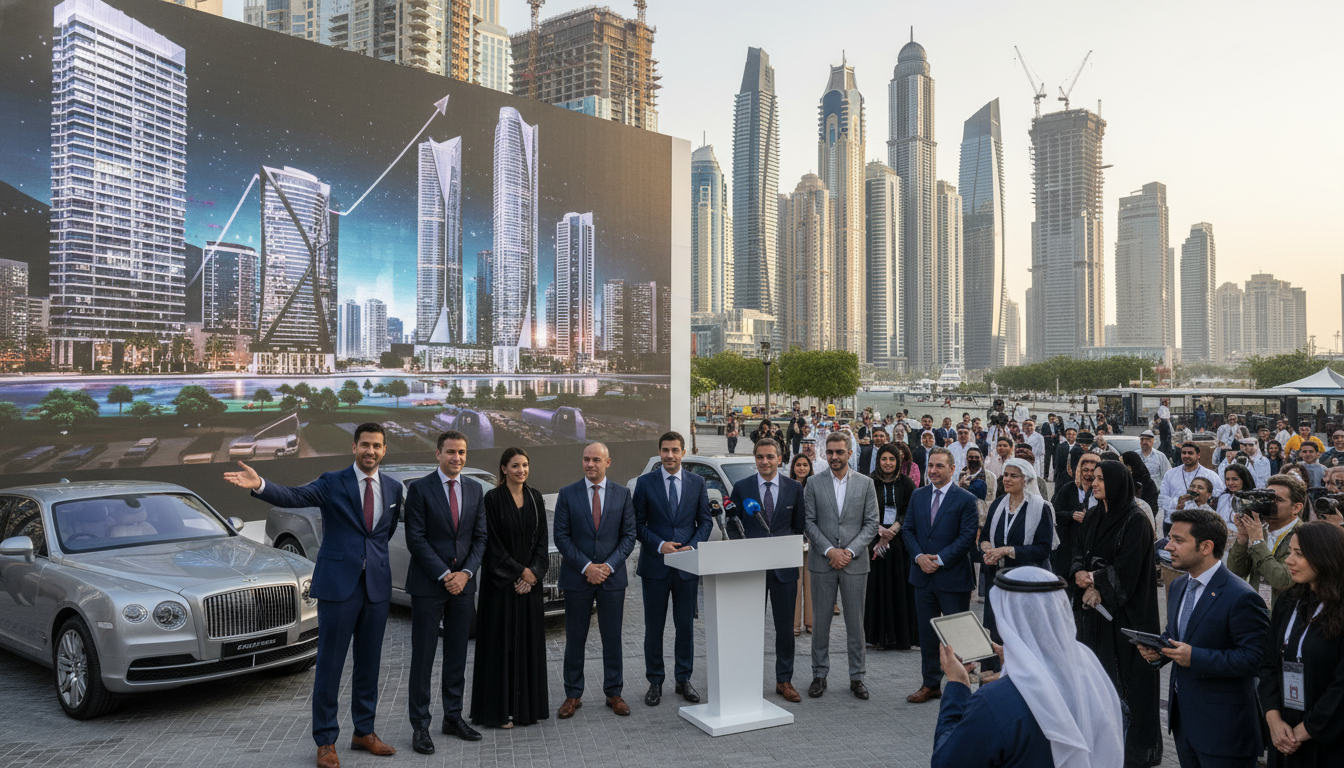
GCC projects market stays resilient as UAE luxury retail and hospitality boom accelerates
3D Consulting: GCC projects market remains resilient as UAE luxury retail and hospitality surge amid cost inflation, supply-chain strains and tight timelines.
3D Consulting finds GCC projects market resilient
The GCC projects market is showing notable resilience and sustained activity, driven largely by targeted government investment and expanding tourism, according to a new report by 3D Consulting. The report highlights particularly strong momentum in the United Arab Emirates across retail, hospitality and mixed‑use developments.
Gilber Bustani, vice president for project delivery at 3D Consulting, told the report that rising demand and diversified economic agendas have kept project pipelines robust across the Gulf. He warned, however, that resilience now coexists with pressures that are shifting how projects are planned and executed.
Government spending and tourism underpin demand
Public sector investment has been a primary stabiliser for the GCC projects market, the report notes, supporting infrastructure and landmark developments that attract private capital. Tourism growth, especially in the UAE, continues to feed demand for hotels, retail destinations and specialized entertainment venues.
This government-driven momentum has encouraged international and regional investors to increase allocations to Gulf real estate and project development. That influx is reinforcing project pipelines but also raising the bar for delivery quality and speed.
Luxury retail and hospitality set new expectations
Developers and consultants report a clear shift in retail toward immersive, technology‑enabled flagship stores that prioritize brand experience. The emphasis is no longer on mere fit-out; clients expect bespoke architecture, high-quality finishes and integrated customer journeys for luxury brands.
Bustani said the Dubai luxury property market recorded unprecedented levels of activity in 2025 as high-net-worth individuals and family offices increased interest in the emirate. That demand has translated into tighter delivery schedules for premium retail and hospitality projects, where launch dates are commercially fixed and rarely negotiable.
Cost inflation and supply-chain instability create execution risks
Despite strong demand, the GCC projects market now faces acute execution challenges linked to rising construction costs and uneven supply chains. The report identifies inflation in materials and logistics bottlenecks as persistent constraints that extend project timelines and strain margins.
Project leaders must balance three competing priorities — cost, time and quality — with customers increasingly intolerant of delays or compromised standards. As a result, risk management and contingency planning have become central to maintaining profitability and client trust.
Local and international firms compete on different strengths
Competition in the region is intensifying, driven by both established local contractors and large international consultancies. According to 3D Consulting, international firms bring global best practices and brand recognition, while local companies offer deep regional knowledge and executional agility.
Bustani said 3D Consulting responds to this competitive landscape by blending international standards with locally grounded expertise. That hybrid approach seeks to deliver high-quality outcomes while adapting to the fast-changing regulatory and commercial environment in the Gulf.
Project delivery strategies emphasise early planning and digital tools
To meet fixed launch dates without sacrificing quality, firms are increasingly relying on early-stage planning, transparent stakeholder coordination and proactive risk management. The report highlights the adoption of structured project-management methodologies as essential to successful delivery.
Digital tracking and collaboration platforms are also playing a growing role, enabling real‑time oversight of schedules, costs and procurement. Bustani noted that these tools, combined with decisive leadership and flexible execution models, help teams compress timelines without compromising standards.
The market outlook remains positive as long as developers and contractors adapt to evolving client expectations and logistical realities.
As the GCC projects market expands, the intersection of government investment, tourism growth and rising luxury demand will continue to shape project pipelines. Meeting higher client expectations while managing inflationary and supply‑chain pressures will determine which firms secure the region’s most prominent commissions.
Longer term, industry players that invest in integrated planning, digital project controls and a blend of global best practices with regional know‑how are likely to outperform peers in delivering the complex, high‑quality developments that investors and brands now require.
