
UAE Tops Gulf in Swiss Watch Imports as Global Exports Tick Up in Q1 2026
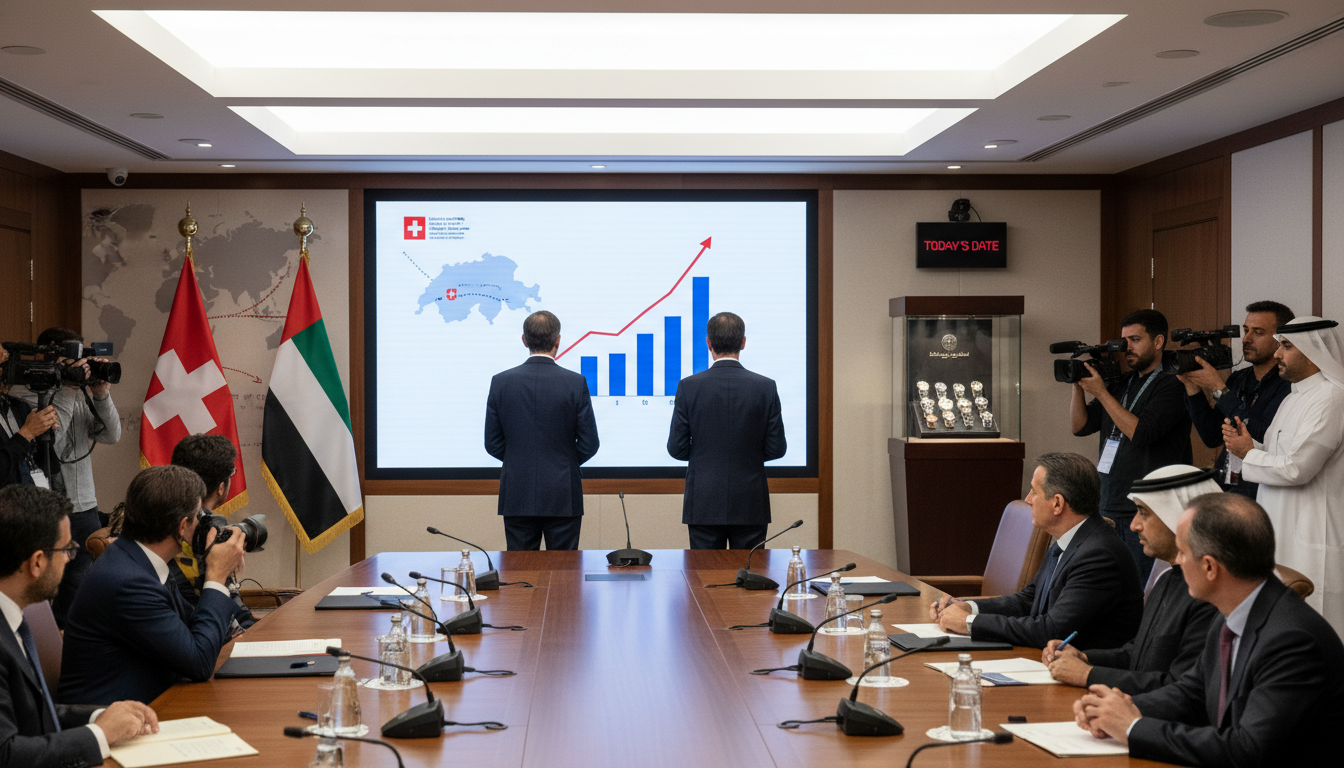
Swiss watch exports rose 1.4% in Q1 2026 to CHF 6.201bn; UAE leads Gulf imports with CHF 316.6m (≈AED 1.483bn), ranking eighth globally.
The latest trade data show Swiss watch exports increased modestly in the first quarter of 2026, with the United Arab Emirates emerging as the largest Gulf market for Swiss timepieces. Swiss watch exports remain a key barometer of luxury demand, and the UAE’s import volume of CHF 316.6 million (about AED 1.483 billion) placed it eighth among 30 global markets in Q1 2026. The rise in exports to CHF 6.201 billion represents a 1.4% gain versus the same period in 2025, signaling steady demand for Swiss horology.
UAE leads Gulf in Swiss watch imports
The UAE recorded CHF 316.6 million in Swiss watch imports during Q1 2026, up 5% from CHF 301.5 million a year earlier. This performance makes the UAE the top importer in the Arab world and the Gulf region for Swiss timepieces. The import total also secured the UAE the eighth position globally among the 30 largest markets for Swiss watches in the quarter.
The strength in the UAE reflects sustained high-end retail activity and continued visitor spending. Retailers in Dubai and Abu Dhabi report steady interest across mid- and high-tier Swiss brands, supporting import volumes despite global market fluctuations.
Overall Swiss exports edge higher in Q1
Swiss watch exports reached CHF 6.201 billion in the first quarter of 2026, a 1.4% increase compared with Q1 2025. The modest rise suggests that while demand is not surging, it remains resilient across key markets. Analysts say the improvement is notable given uneven performance in several major markets.
The United States remained the largest single market for Swiss watches, and a handful of countries showed significant year-on-year variation that balanced out to produce the net increase in exports.
GCC market movers and laggards
Among Gulf Cooperation Council countries, performance varied widely in Q1 2026. Oman recorded a robust increase, importing CHF 23.5 million—up 26.7% from the prior year—while Saudi Arabia’s imports fell to CHF 75.3 million, down 8.6% from Q1 2025. Kuwait and Bahrain also posted declines, with Kuwait at CHF 36.1 million (down 13.2%) and Bahrain at CHF 20.2 million (down 22.6%).
Qatar experienced the steepest drop among GCC markets, with imports sliding 29.5% to CHF 55.6 million. Industry observers point to shifting tourist patterns, inventory cycles at retailers, and model refreshes by manufacturers as factors that can quickly affect quarterly import figures.
Global rankings and standout countries
Globally, the United States led imports of Swiss watches in Q1 2026 with CHF 1,156.3 million, up 2.8% year on year. Japan followed in second place with CHF 439.5 million, a slight decrease of 0.4%, while Hong Kong and France rounded out the top four with CHF 438.3 million and CHF 434 million respectively. France posted a significant rebound, rising 55.6% versus Q1 2025.
China imported CHF 420.5 million, down 0.7%, and the United Kingdom increased purchases by 2.7% to CHF 403.3 million. Singapore recorded CHF 388.7 million, a 1.3% decline. The mix of gains and losses across major markets underscores uneven recovery patterns and changing consumption trends for luxury watches.
Implications for UAE retailers and regional demand
The UAE’s top standing in the Gulf points to continued appetite for Swiss watches among residents and visitors, which supports high-street boutiques and airport luxury concessions alike. Retailers in the UAE are likely to lean into targeted marketing, limited editions, and exclusive partnerships to maintain momentum. The CHF-to-AED conversion used in reporting—placing CHF 316.6 million at about AED 1.483 billion—highlights the scale of the market for local stakeholders.
However, the mixed results elsewhere in the region suggest retailers and distributors should monitor inventory strategies and promotional calendars closely. Market responsiveness to new releases, trade promotions, and travel flows will be critical over the next quarters.
Outlook for the rest of 2026
Industry analysts caution that Q1 provides an early snapshot and that performance for the remainder of 2026 will depend on tourism recovery, consumer confidence, and launch schedules from watchmakers. Supply-chain stability and currency movements may also shape quarterly results. Brands that balance heritage collections with targeted innovations are expected to fare better if discretionary spending remains steady.
The UAE’s position as the leading Gulf market for Swiss watches underscores the country’s role as a regional luxury hub and suggests that, barring major macroeconomic shifts, demand for Swiss timepieces in the Emirates will remain an important driver of regional trade in 2026.
