
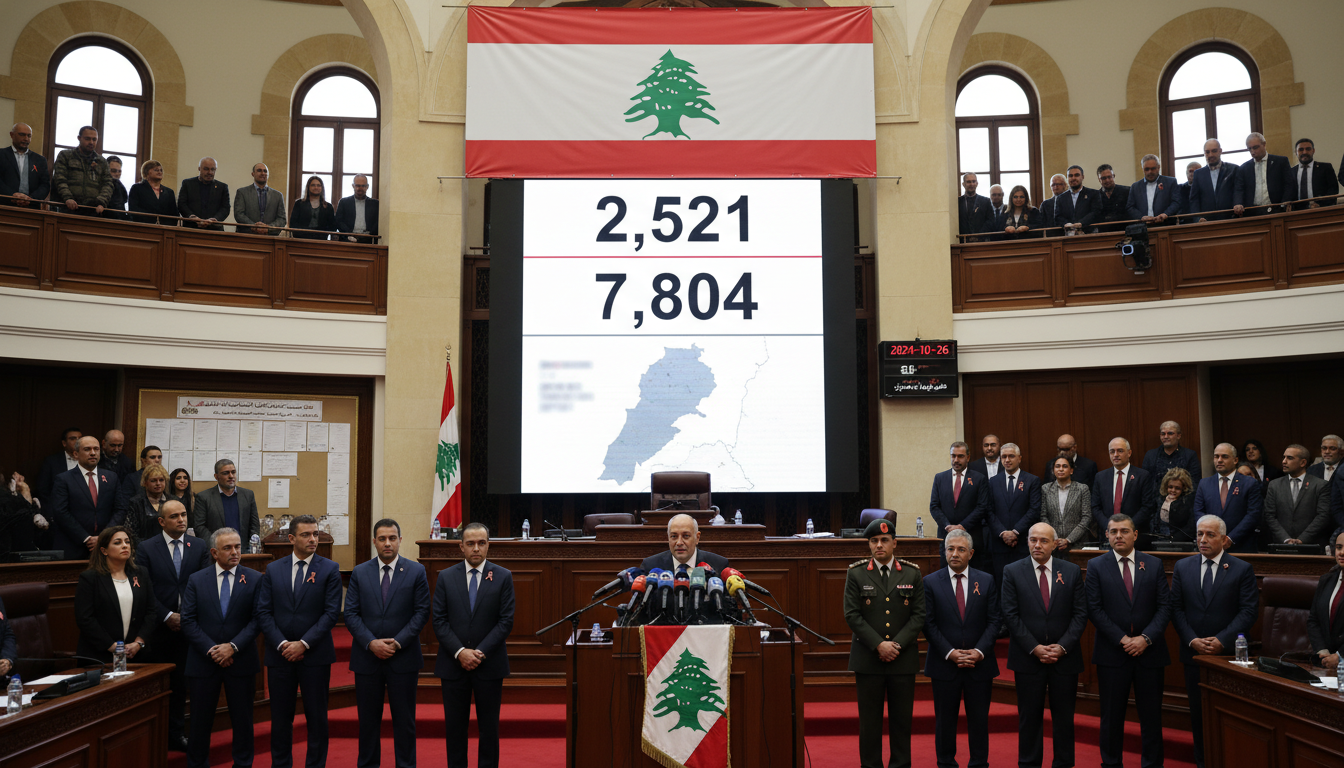
Lebanon death toll rises to 2,521 as fresh Israeli raids kill 14
Lebanon death toll reaches 2,521 with 7,804 injured after renewed Israeli air strikes, the Health Ministry says, as fighting that began on March 2 continues to strain hospitals.
Health Ministry Reports Cumulative Toll
The Emergency Health Operations Center at Lebanon’s Ministry of Public Health announced the cumulative figures on Monday, reporting 2,521 fatalities and 7,804 injuries since the outbreak of hostilities.
Those numbers cover the period from the dawn of March 2 through midnight on Sunday, according to the ministry’s emergency operations unit.
The ministry’s tally follows a renewed round of air strikes across southern Lebanon and other affected areas.
Officials say the figures are being updated as rescue teams and hospitals continue to process casualties and identify victims.
Latest Raids Kill 14 in Southern Lebanon
The Ministry of Public Health said Israeli strikes on southern Lebanon on Sunday resulted in 14 deaths, including two children and two women.
The same statement reported 37 people wounded in those raids, among them three women receiving treatment.
Local authorities and emergency services mobilized to evacuate the injured to nearby hospitals and field clinics.
Medical staff described a surge in arrivals that added pressure to facilities already coping with large numbers of war casualties.
Conflict Began After Hezbollah Strike Near Haifa
The wave of Israeli air operations that produced the reported casualties began at dawn on March 2, after an attack by Hezbollah on an Israeli army position south of Haifa.
Lebanese officials describe the ensuing bombardment as a sustained campaign of aerial strikes that has touched several regions of the country.
Analysts note the initial exchange quickly escalated into broader cross-border strikes and counterattacks, with communities in southern Lebanon among the hardest hit.
Humanitarian groups have repeatedly warned that continued bombardment risks further civilian casualties and infrastructure damage.
Impact on Hospitals and Emergency Response
Hospitals across affected regions have reported heavy caseloads since the start of the hostilities, with emergency departments stretched by trauma patients.
Field responders and the Health Ministry have coordinated triage and transfers, but supply shortages and damaged infrastructure complicate operations.
Ambulance services and volunteer rescue units have faced dangerous conditions while conducting night and daytime evacuations.
The cumulative Lebanon death toll and large numbers of wounded have prompted appeals for medical supplies and logistical support from humanitarian organizations.
Civilian Casualties and Displacement Concerns
Local authorities say many of the casualties include civilians living in border towns and villages that have borne repeated strikes.
Displacement has increased as families seek safer areas away from front-line towns, compounding needs for shelter, food, and medical care.
Humanitarian agencies monitoring the situation warn that ongoing strikes could deepen a crisis for the displaced and for communities trying to absorb newcomers.
Access to some affected zones remains restricted, making accurate assessment of casualties and needs more difficult.
Calls for De-escalation and International Attention
Lebanese health officials and community leaders have called for measures to protect civilians and for safe corridors to allow aid deliveries and medical evacuations.
Diplomatic channels and international organizations have been urged to press for de-escalation to prevent further loss of life and to enable humanitarian access.
The Emergency Health Operations Center continues to publish casualty figures as events unfold, underscoring the scale of the human cost.
As the Lebanon death toll climbs, pressure mounts on regional and international actors to seek steps that reduce violence and protect civilians.
The reporting agency’s figures underline a mounting humanitarian crisis as the conflict that began on March 2 persists and recent raids add to the casualty count.
