
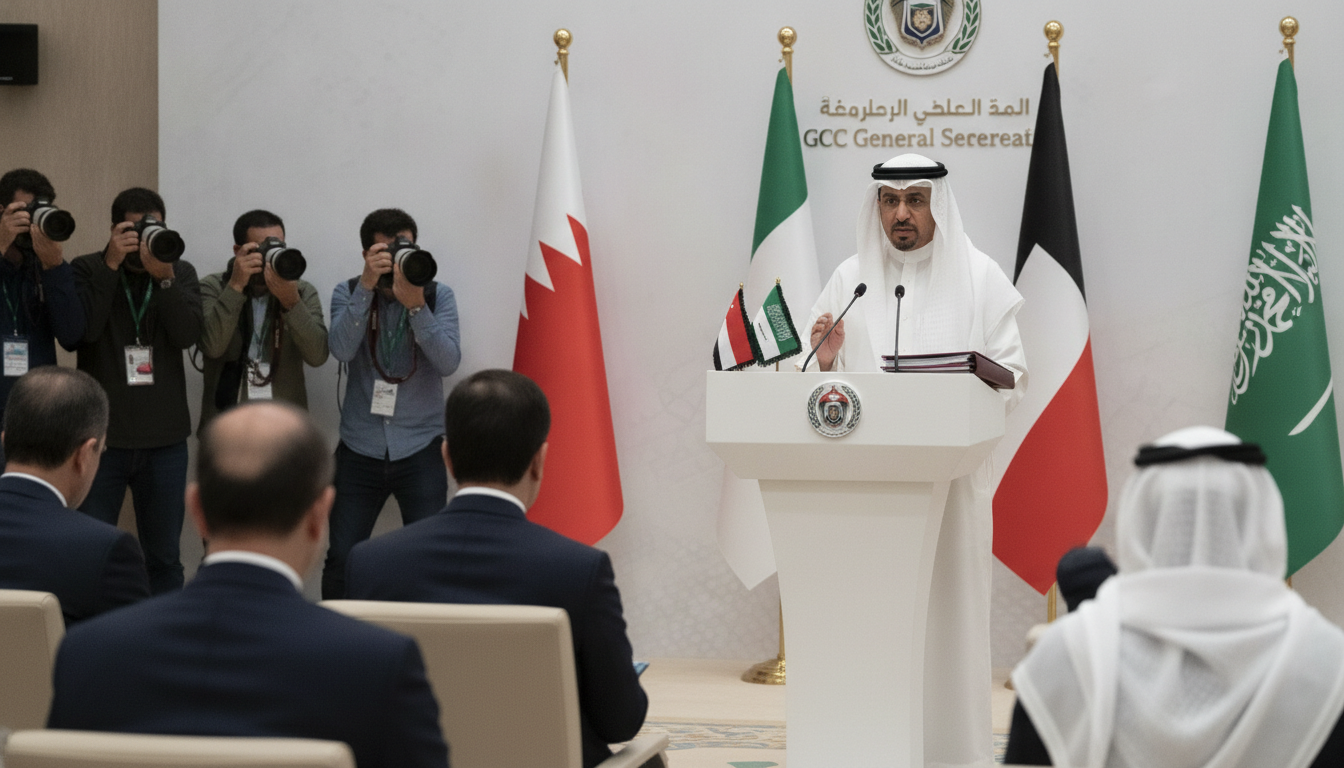
GCC Secretary‑General Condemns Iranian Attacks on Bahrain, Kuwait and Jordan
GCC Secretary‑General Jasim Mohammed Al‑Budaiwi strongly condemned recent Iranian attacks on Bahrain, Kuwait and Jordan, calling for urgent international action to protect sovereignty and regional security.
The Gulf Cooperation Council’s top diplomat issued a forceful denunciation of the Iranian attacks, describing them as a clear breach of state sovereignty and international law.
He warned that the continuing pattern of strikes posed a direct danger to regional stability and undermined global efforts to reduce tensions.
GCC Secretary‑General Condemns Iranian Attacks
The GCC Secretary‑General, Jasim Mohammed Al‑Budaiwi, characterized the Iranian attacks as unacceptable escalation and a blatant violation of the principles enshrined in the UN Charter.
He said the incidents targeted the territorial integrity of Bahrain, Kuwait and Jordan and demanded an immediate halt to such hostile operations.
Al‑Budaiwi’s statement urged the international community to adopt a firm and coordinated response that would deter future aggression.
The Secretary‑General emphasized that failure to respond decisively could embolden further actions that threaten broader regional peace.
Sovereignty Violations and International Law
The GCC’s message framed the Iranian attacks as contraventions of customary international law and the United Nations framework that protects sovereign states.
Officials noted that actions crossing international borders without consent represent serious legal and diplomatic transgressions.
The statement called on states and international bodies to reaffirm respect for sovereignty and to insist on compliance with established legal norms.
GCC sources indicated that legal and diplomatic avenues would be pursued to hold perpetrators accountable and to reinforce state protections.
Regional Security at Risk, Says GCC
GCC leadership warned that the strikes were not isolated incidents but part of a troubling pattern that jeopardizes regional security architecture.
The Secretary‑General argued that continuity in such actions increases the likelihood of miscalculation and wider confrontation among states in the Gulf and Levant.
The communiqué stressed that these developments undermine the efforts of regional and global partners working to stabilise security and reduce tension.
GCC representatives expressed concern that continued hostility could reverse progress made through recent diplomatic and security initiatives.
Call for Strong International Response
The GCC has urged a unified and decisive international response to the Iranian attacks, stressing that deterrence must be credible and coordinated.
Al‑Budaiwi called on the United Nations and major powers to condemn the strikes and to take practical steps to prevent recurrence.
Recommended measures included diplomatic pressure, reinforced monitoring of cross‑border threats, and support for affected states’ defensive measures.
The GCC’s appeal sought not only condemnation but tangible actions that would deter future violations and reassure regional partners.
Support for Bahrain, Kuwait and Jordan
The GCC reiterated full solidarity with the three countries targeted by the attacks and affirmed backing for any measures they take to safeguard their security and sovereignty.
The Secretary‑General conveyed the council’s readiness to provide political and, where appropriate, logistical support to bolster national defenses and crisis management.
Leaders expressed concern for civilian safety and for the stability of maritime and energy routes that are vital to the region’s economy.
The council also underscored the need for humanitarian considerations to be central to any response, particularly where civilian populations are affected.
Potential Diplomatic and Security Outcomes
Analysts say the GCC’s strong public rebuke may prompt accelerated diplomatic engagement among regional and global stakeholders.
A unified GCC position increases pressure on external actors to articulate clear policies and to consider collective measures that reduce the risk of escalation.
Security cooperation among Gulf states could be deepened through intelligence sharing, joint drills and strengthened air and maritime defenses.
At the same time, diplomats caution that a balance must be struck to avoid actions that could further inflame tensions or trigger unintended confrontations.
The GCC’s statement signals a shift toward firmer regional posture while leaving space for diplomatic remedies, and it sets the stage for intense diplomatic activity in the coming days.
