
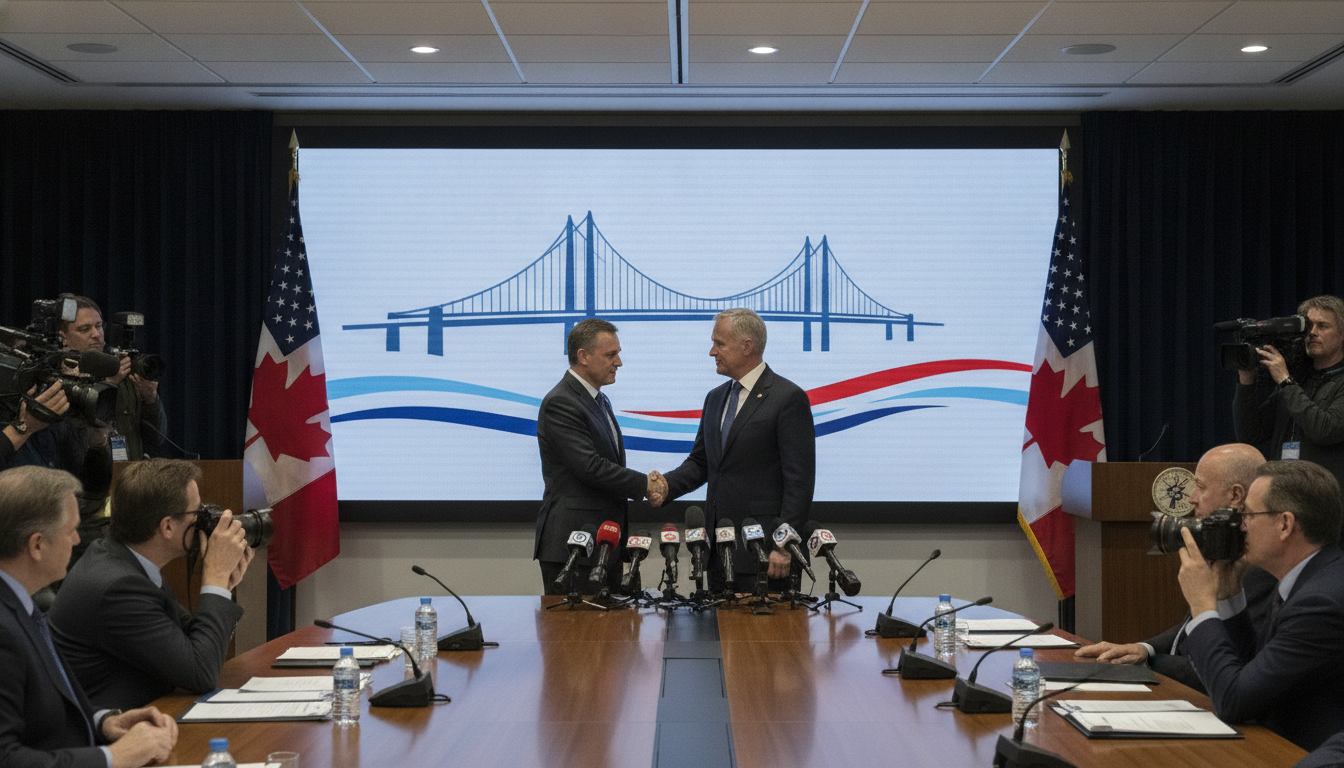
Gordie Howe Bridge opening delayed as Canada and U.S. agree to resolve outstanding issues
Canada and the United States delayed the Gordie Howe Bridge opening to allow time to resolve outstanding bilateral issues, officials said, and a new opening date will be announced once concerns are addressed.
The Windsor–Detroit crossing known as the Gordie Howe Bridge will not open as planned this week, Canadian authorities and the interim CEO of the Windsor-Detroit Bridge Authority confirmed. The delay is intended to provide both governments with time to work through outstanding matters related to the project. Officials said they are taking a cooperative approach and will announce a revised schedule when agreements are in place.
Authority statement on postponement
The interim chief executive of the Windsor-Detroit Bridge Authority, Chuck Andary, said in a statement that Canada and the United States had agreed to postpone the inauguration. He framed the decision as a coordinated effort to ensure all outstanding issues are fully addressed ahead of the public opening. The authority emphasized that the approach will be collaborative as officials finalize details and set a new date.
Scope and scale of the Gordie Howe Bridge
The Gordie Howe Bridge is a major cross-border infrastructure project linking Ontario and Michigan and was built at a reported cost of about $4.7 billion. Canadian financing covered construction, and the bridge is expected to be jointly owned by the Canadian government and the state of Michigan under the agreed terms. Project backers have highlighted the bridge’s expected benefits for trade, border resilience and regional connectivity once it is fully operational.
Funding and ownership arrangements
A public memorandum from the Windsor-Detroit Bridge Authority states that Canada financed the construction in full, while ownership will be shared with Michigan, reflecting the bilateral nature of the crossing. That financing model has been central to discussions between the two governments and to recent public attention on the project. Officials noted that legal and administrative arrangements tied to ownership and operations are among the matters being finalized before an opening date is confirmed.
Political tensions that affected the schedule
The project drew political scrutiny earlier this year, when former U.S. President Donald Trump raised objections and threatened in February to block the bridge unless U.S. interests were given equal ownership. Mr. Trump argued that the United States had not been treated fairly during the project’s development and called for at least a 50 percent U.S. stake. Those comments prompted diplomatic engagement as Canadian and U.S. officials sought to defuse tensions and maintain the construction timetable.
Canadian reactions and international context
Canadian officials had described the bridge opening as a positive development and a testament to cross-border cooperation, but they also acknowledged that geopolitical frictions contributed to heightened attention. The delay comes after a period of strained exchanges on trade and diplomacy between Ottawa and Washington, including disagreements over trade policy and other bilateral issues. Canadian authorities said the postponement is intended to create breathing space for constructive talks rather than signal a collapse of cooperation.
Next steps and timeline for opening
Officials from both sides said they will use the pause to work through remaining technical, legal and diplomatic items and to agree on a firm date for the public launch. The Windsor-Detroit Bridge Authority indicated that a revised schedule will be announced when those items are resolved and both governments are satisfied. In the meantime, operational preparations and safety inspections are expected to continue so the crossing can open without further delay once agreements are in place.
The Gordie Howe Bridge has been framed by supporters as a long-awaited boost for North American cross-border trade and travel, and its eventual opening remains a priority for planners on both sides of the border. As talks continue, authorities have signaled that public safety, clear ownership arrangements and cross-border cooperation will guide the timing of the official inauguration.
