
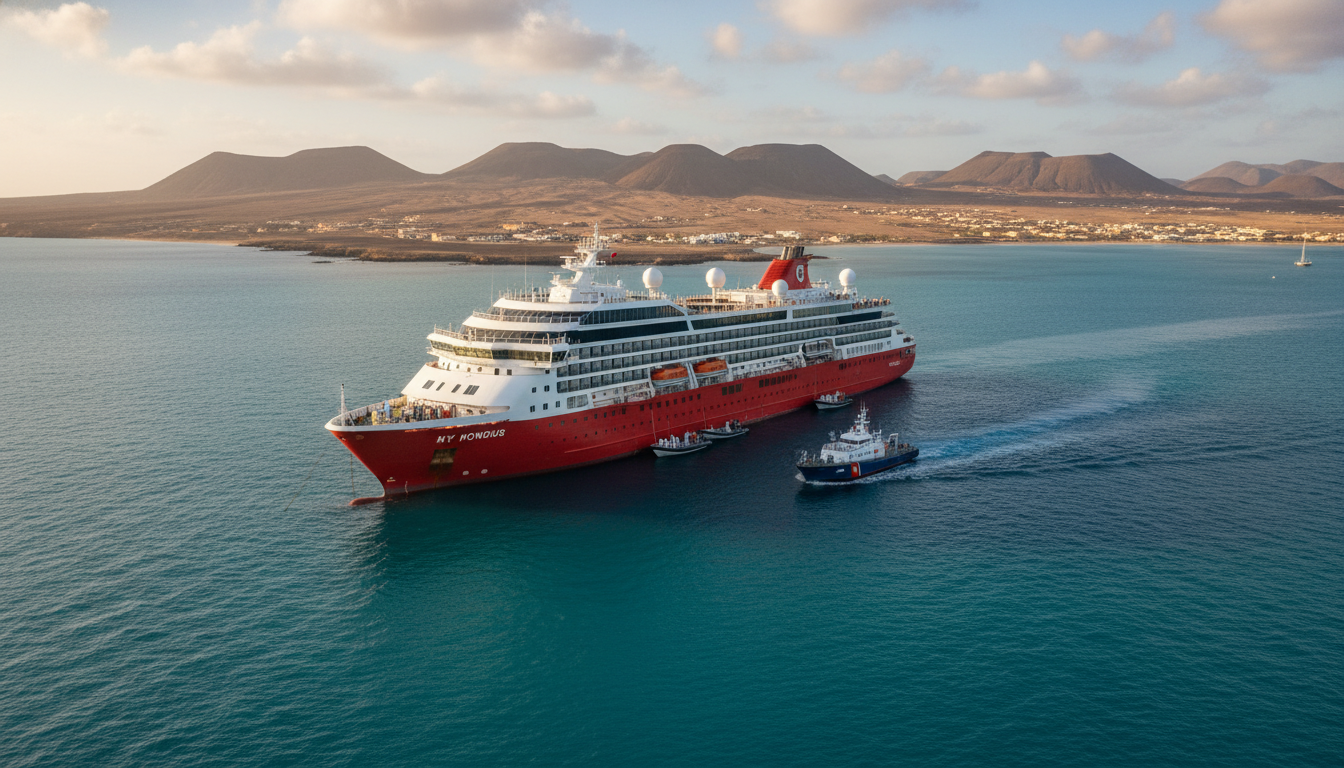
Hantavirus outbreak on MV Hondius leaves three dead as ship moored off Cape Verde
Hantavirus outbreak on the MV Hondius has left three passengers dead and several others ill as the Dutch-flagged vessel remains moored off Cape Verde while authorities and the operator seek evacuation options.
Ship moored off Cape Verde as evacuation options weighed
The expedition vessel MV Hondius was moored in the Atlantic off the coast of Cape Verde after reporting multiple suspected and confirmed cases of hantavirus among those on board. Oceanwide Expeditions, the ship’s operator, said authorities have not granted permission for passengers to disembark and that plans are under active consideration, including sailing to the Canary Islands for a controlled landing.
Officials and the cruise operator said no definitive disembarkation point had been finalized, and that international coordination was underway to identify the safest course for evacuating sick passengers and crew. The company indicated the atmosphere on board remained generally calm as passengers awaited instructions from health and government authorities.
Confirmed deaths and suspected infections reported on board
Oceanwide confirmed three fatalities: a Dutch couple and a German national, while several other passengers and crew members have developed respiratory symptoms. The World Health Organization said two cases have been laboratory-confirmed as hantavirus infections — including one of the deceased and a passenger who was evacuated and later hospitalized in South Africa — and that other cases remain suspected pending testing.
On Monday there were reports of three people being ill in addition to the fatalities, and authorities are treating the incident with urgency because hantavirus can cause severe respiratory illness. Investigators are focused on rapid testing and clinical triage to determine who requires treatment ashore and who can safely remain on board.
Voyage itinerary raises questions about possible exposures
The MV Hondius departed Ushuaia, Argentina, on April 1 with about 150 passengers and crew and visited remote regions including mainland Antarctica, South Georgia, Nightingale Island, Tristan da Cunha, St. Helena and Ascension Island. The World Health Organization has noted that the extent of passenger contact with local wildlife during the voyage or prior to boarding in Ushuaia remains undetermined.
Because hantaviruses are rodent-borne and infections can follow contact with rodent droppings or urine, investigators are examining the ship’s ports of call and any potential exposures during shore excursions. Health teams are also tracing close contacts on board to assess potential human-to-human transmission, which has been reported for some hantavirus strains in limited circumstances.
Health risks and clinical outlook explained
Hantavirus refers to a family of viruses carried by rodents that can cause hantavirus pulmonary syndrome, a severe respiratory illness with a high case fatality rate. Symptoms often begin with fever and muscle aches and can progress rapidly to cough and shortness of breath; the Centers for Disease Control and Prevention and other public health bodies note that hantavirus pulmonary syndrome is fatal in a significant proportion of cases.
The incubation period can extend up to eight weeks after exposure, complicating efforts to identify the initial source and making rapid public health screening and monitoring essential. Medical teams on board and ashore are prioritizing oxygen support and critical-care triage for patients showing severe respiratory compromise.
Operator and authorities coordinate international response
Oceanwide Expeditions said it was cooperating with Dutch authorities and international partners to arrange evacuations for crew members and passengers showing symptoms. The company specifically reported cooperating to evacuate two crew members with respiratory symptoms and an individual associated with the German national who died on the ship.
Officials are weighing options that balance urgent medical needs with the risk of further spread, and are considering routing the ship to the Canary Islands — roughly 1,000 miles northeast — as one potential disembarkation point. Cape Verde authorities have not authorized disembarkation at their ports at this time, underscoring the diplomatic and logistical complexities of managing contagious illness at sea.
Passengers report fear and uncertainty as testing continues
Several passengers have expressed anxiety and a desire for clarity as medical teams perform testing and monitoring on board. A travel influencer aboard the ship described the emotional strain in a social media post, saying people on the vessel wanted to feel safe and return home, reflecting growing concern among those affected by the outbreak.
Cruise staff and medical teams are attempting to maintain order and provide regular updates to passengers while prioritizing infection control measures. Public health officials are also preparing for possible arrivals at alternative ports and for onward medical care for any patients requiring hospitalization.
Authorities, the ship operator and international health agencies continue to exchange information as testing and contact tracing proceed, and passengers remain under observation while final evacuation and disembarkation plans are negotiated.
