
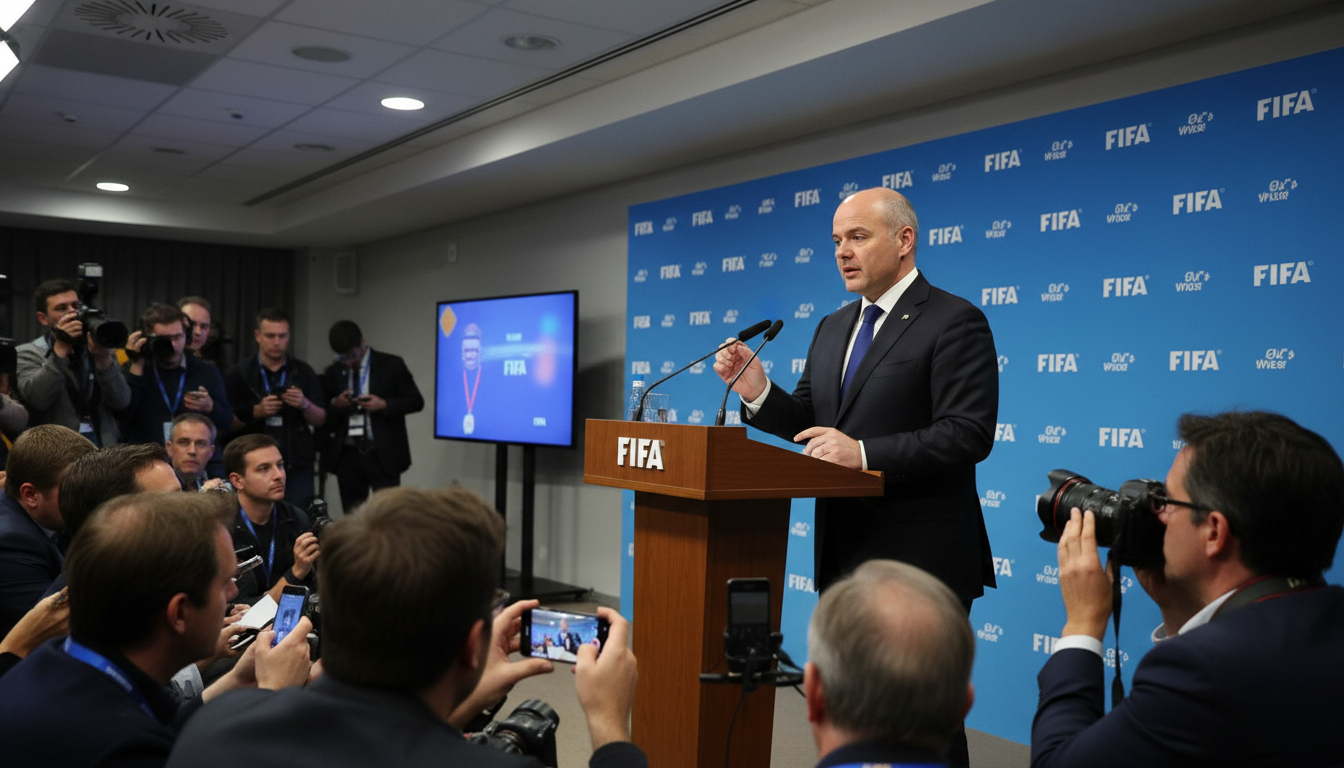
World Cup ticket prices defended by Infantino as fan groups mount legal challenge
Infantino defends World Cup ticket prices at Milken Institute, citing US resale laws and record demand as fans and regulators press complaints ahead of 2026.
FIFA president Gianni Infantino defended World Cup ticket prices on Tuesday, saying the figures reflect market realities and unusually high demand for the 2026 tournament. World Cup ticket prices were the focus of his remarks at the Milken Institute Global Conference in Beverly Hills, where he argued resale laws in the United States allow secondary-market values to soar. His comments come amid growing criticism from supporter groups and a formal complaint to European regulators.
Infantino’s remarks at the Milken Institute
Infantino insisted that headline resale listings do not equate to official face values, and he sought to contextualize sensational prices appearing online. He dismissed examples of multi-million-dollar resale ads as unrepresentative and quipped that if someone bought a $2 million final ticket he would personally bring them a hot dog and a Coke. The FIFA president also highlighted the scale of interest in the tournament, saying FIFA received more than 500 million ticket requests for 2026.
FIFA points to US market and resale rules
At the conference, Infantino framed the pricing issue as a function of operating in the US entertainment market, where secondary resale of tickets is permitted and commonplace. He argued that setting artificially low face prices would simply fuel even higher resale values, saying some tickets on the secondary market trade at far above FIFA’s published rates. FIFA’s own resale portal has featured extremely high listings for marquee matches, a point that has intensified public scrutiny.
Supporter groups file complaint over pricing
Fan organisation Football Supporters Europe (FSE) has been vocal in its opposition, calling the pricing structure “extortionate” and “a monumental betrayal.” In March, FSE lodged a complaint with the European Commission targeting what it described as excessive World Cup ticket prices. The dispute has sharpened as supporters compare 2026 face values with the 2022 Qatar World Cup, where the most expensive final ticket at face value was around $1,600.
Face-value increases and public reaction
By contrast, FIFA’s published face value for the 2026 final peaked at approximately $11,000, a sharp rise from 2022 levels and a central grievance for critics. Infantino defended the increases by pointing to market comparisons, saying it is uncommon to find major sports or entertainment events in the US for less than several hundred dollars. He also noted that 25 percent of group-stage tickets were priced below $300, a point intended to show retained lower-cost availability.
Sales patterns and remaining inventory
Despite the high-profile debate, FIFA faces mixed sales outcomes for early matches, with seats still available for many group-stage fixtures. Host nation USA’s opener against Paraguay, for example, still shows tickets listed in ranges beginning at roughly $1,120 up to about $4,105, while hospitality packages can reach approximately $6,050 per seat. FIFA has continued to offer seats through a “last-minute sales” section on its official site, underscoring uneven demand across fixtures and price bands.
Public frustration has been amplified by high secondary-market listings for premium matches, which have circulated widely on social media. Supporters have raised concerns that resale dynamics and high face prices together place live World Cup attendance beyond the reach of many fans, especially those who travel internationally.
Legal, reputational and commercial stakes
The clash poses legal and reputational risks for FIFA as regulators and fan bodies press complaints in Europe and commentary intensifies in the run-up to June and July match dates. The European Commission complaint could prompt regulatory scrutiny into whether pricing structures or resale facilitation run afoul of consumer protection standards. For FIFA, balancing commercial revenue, host-market realities and supporter access is now a central challenge ahead of the tournament.
Industry observers say the debate also touches on broader questions about the commercialisation of major sporting events and how organisers should manage secondary markets. Some rights holders have explored capped resale mechanisms or verified fan programmes, while others embrace market-based pricing; FIFA’s approach and public messaging will be closely watched.
Final decisions on regulation or remedies are likely to emerge only after review of formal complaints and potential follow-up by consumer authorities. In the meantime, the ticket controversy adds to the scrutiny of how football’s top tournament will be delivered across multiple host cities in North America.
The dispute over World Cup ticket prices underscores a wider tension between commercial models that maximise revenue and expectations that elite sport remains broadly accessible to supporters, and both sides say they will press their cases as the tournament approaches.
