
Iran agreement appears near as Iran signals cease-fire and reopening of Strait of Hormuz
US and Iranian officials signal a memorandum of understanding to halt fighting, reopen the Strait of Hormuz and lift a naval blockade, while key issues are deferred.
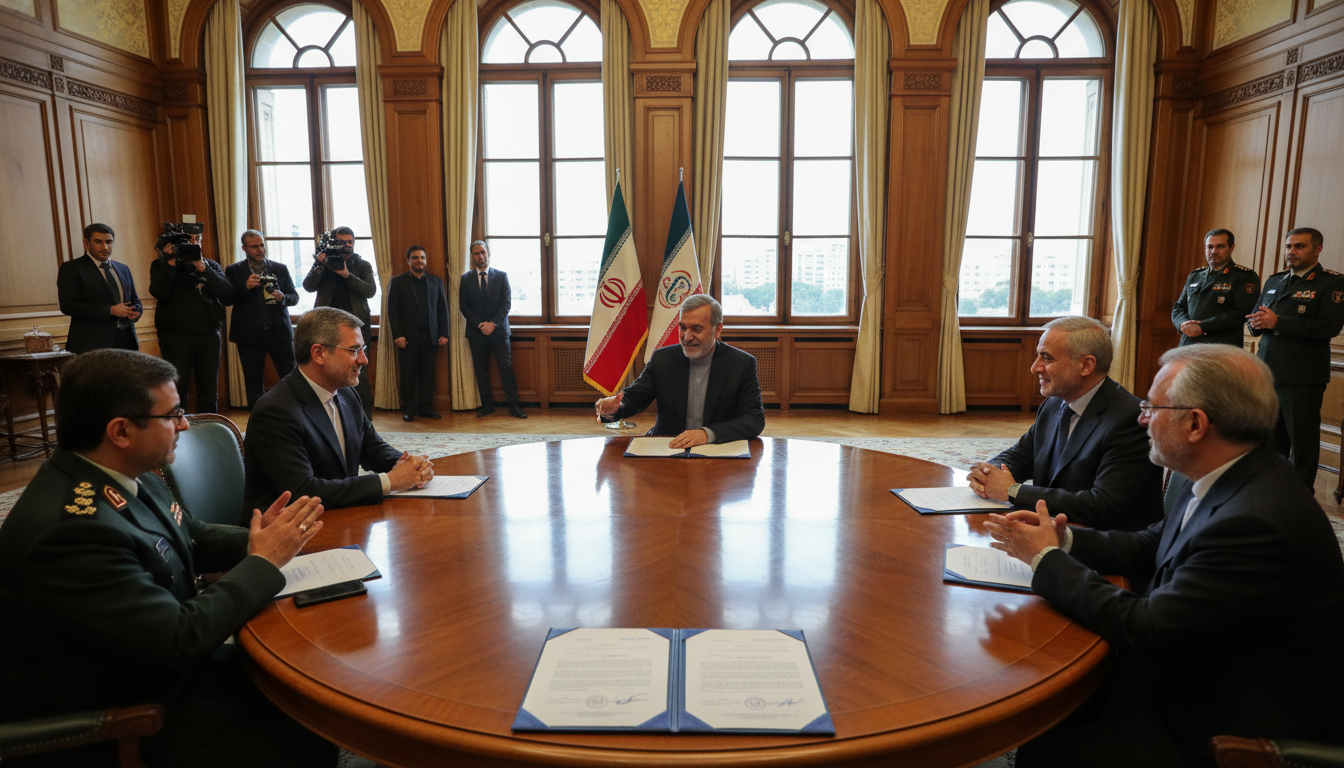
Iran agreement signals calm and a possible end to weeks of hostilities as Tehran’s negotiators indicated on Saturday that a memorandum of understanding had been accepted that would pause fighting and allow commercial passage through the Strait of Hormuz. The announcement followed a social media post by President Trump saying an agreement was close, and came amid intense diplomatic outreach by Iranian officials and regional mediators. The proposed deal would also include the lifting of a U.S. naval blockade and a timetable for resolving nuclear disputes, according to senior Iranian negotiators who spoke on condition of anonymity.
Terms of the memorandum as described by Iranian negotiators
Three senior Iranian officials told reporters that the memorandum would suspend hostilities on all fronts and allow ships to transit the Strait of Hormuz without tolls or fees for the time being. In exchange, they said the United States would end its naval blockade of Iranian waters, a step that would ease immediate pressure on commercial shipping in the region.
The negotiators said remaining disputes over Iran’s nuclear stockpile would be addressed separately within 30 to 60 days, and that the deal included the release of roughly $25 billion in Iranian assets frozen overseas. It was not immediately clear whether the draft described by the officials matched the version President Trump referred to publicly.
Military posturing continued during talks
Despite the diplomatic movement, Iran maintained a posture of military readiness, with commanders warning of reprisals should strikes resume and footage on state media showing militias and volunteers receiving training. Officials framed the mobilization as rebuilding and deterrence carried out during the cease-fire interval.
Military rhetoric intensified public anxiety in neighbouring states, with Iranian figures issuing threats toward critical infrastructure in the Gulf if external attacks resumed. The escalation underscored the fragile balance between the Kremlin-style shows of force inside Iran and the parallel diplomatic track pursued by Tehran’s leadership.
Domestic politics and leadership involvement in negotiations
Iran’s negotiating team, led in public by Parliament Speaker Gen. Mohammad Bagher Ghalibaf, said it had authority from the country’s new supreme leader, Ayatollah Mojtaba Khamenei, to make concessions. Officials indicated top generals and the negotiating delegation had been briefed on the limits of possible concessions.
That combination of military credibility and negotiated flexibility reflected Tehran’s attempt to secure both security guarantees and domestic legitimacy as it sought relief from economic hardship brought on by the conflict. Many Iranians, experiencing inflation, shortages and job losses, welcomed the prospect of a pause in fighting.
Regional diplomacy and mediators’ role
Iran’s foreign minister and other officials held talks with European counterparts and the United Nations secretary-general as part of a wider effort to de-escalate the crisis through intermediaries. Tehran also received a high-level delegation from Pakistan, including Prime Minister Shehbaz Sharif and his army chief, who reportedly urged acceptance of a proposed settlement.
Analysts cited by regional outlets argued that external mediation and pressure had helped make negotiations unavoidable for both sides given the economic and human costs of continued war. International actors appeared focused on locking in immediate arrangements to prevent fighting from resuming while deferring the hardest technical issues.
Economic toll and public reaction inside Iran
Iranians described mounting economic distress since the start of hostilities, with unemployment, fuel shortages and damage to infrastructure exacerbating public hardship. Several interviewees and local reports painted a picture of households preparing for renewed strikes before the weekend’s diplomatic developments.
The possibility of released assets and an end to the naval blockade prompted visible relief among ordinary citizens, who said the prospect of a pause would reduce the risk of renewed bombardments and ease shortages. Still, analysts cautioned that deeper economic recovery would depend on the resolution of nuclear and banking disputes now slated for later negotiation.
Talks advanced after a week of threats and hostile demonstrations, including televised displays that inflamed neighbouring countries and raised tensions with Gulf states impacted by the conflict. While Tehran’s negotiators sought to secure a deal that preserved core security interests, they also moved quickly to employ diplomatic channels and regional backchannels to avert the resumption of U.S. strikes.
The coming days will test whether the memorandum of understanding can be formalized and implemented on the ground, particularly in the Strait of Hormuz where uninterrupted maritime traffic is critical to global energy markets. Both sides now face the practical challenge of translating headline commitments into concrete, verifiable steps that ensure cease-fire conditions hold and that economic relief reaches affected populations.
