
Iran Responds to U.S. Proposal to End War, Sends Reply via Pakistan Mediators
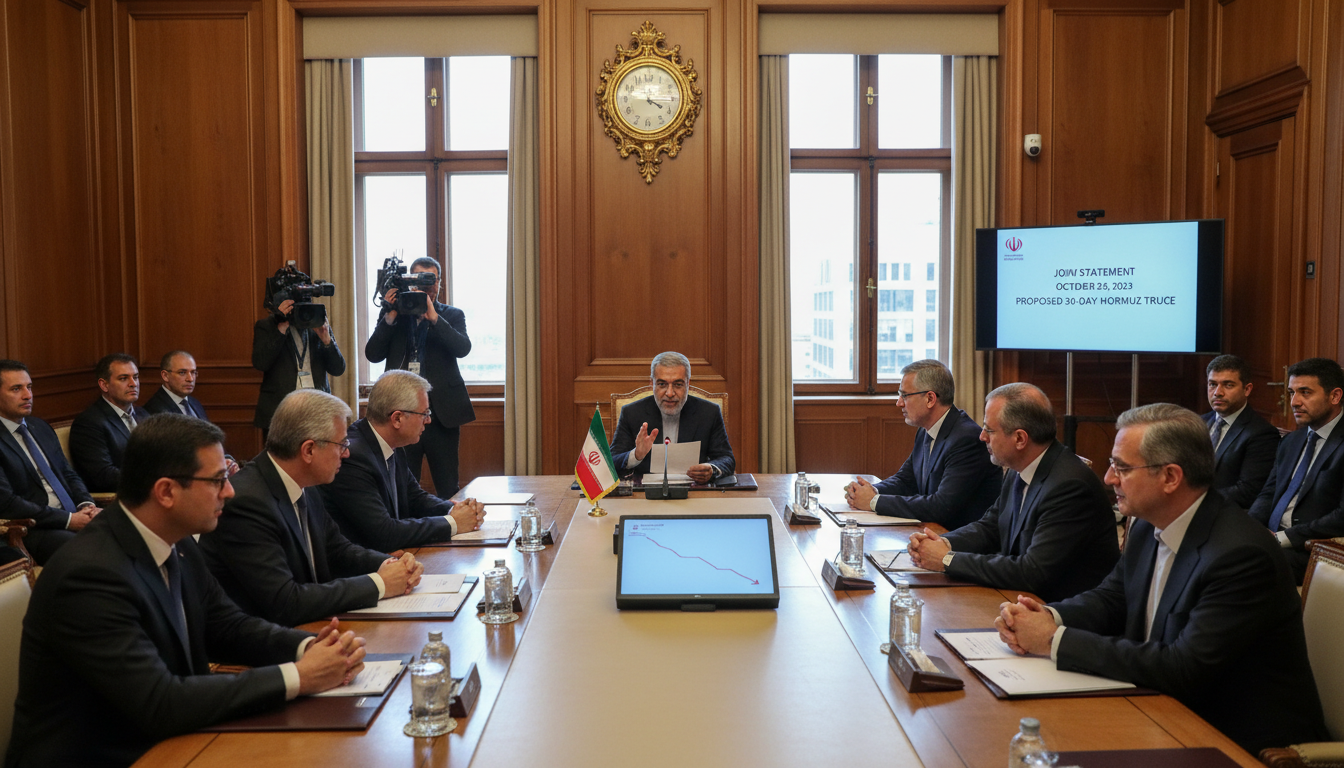
Iran has formally replied to the U.S. proposal to end the war, delivering its response through Pakistan-mediated channels as regional tensions and intermittent attacks continued to test a fragile cease-fire.
Iran’s response to the U.S. proposal was submitted to Pakistani mediators, state media reported, as diplomats seek a short-term pause and a pathway toward a comprehensive settlement. White House officials did not immediately comment on the content of the reply, leaving key terms and concessions unconfirmed. The exchange arrives amid renewed strikes and counterstrikes across the Persian Gulf that have underscored the precarious state of the truce.
Details of the Formal Reply Delivered to Pakistan
The Iranian state broadcaster said negotiators handed the response to Pakistan’s mediators, who have been acting as a conduit in the talks between Tehran and Washington. The announcement offered limited detail about whether Iran accepted the full framework of the U.S. proposal or sought significant revisions. Officials close to the process described the transmission as a step toward further diplomatic engagement rather than a finalized agreement.
Analysts say the choice to route the reply through Pakistan reflects Islamabad’s unique position of relations with both Tehran and Washington. Pakistan’s involvement has been diplomatic rather than operational, focused on message transmission and facilitating follow-up contacts. Islamabad’s role may prove critical if talks move quickly from a short-term pause toward a broader cessation of hostilities.
Short-Term Pause and the Strait of Hormuz Standoff
Iranian officials have publicly signalled support for a short-term arrangement that would pause fighting for 30 days and end Iran’s blockade of the Strait of Hormuz during that period. Under the proposed short-term framework, the United States and Iran would use the lull to negotiate a more comprehensive settlement addressing core security disputes. The terms reportedly also contemplate reciprocal measures, including a U.S. easing of certain military restrictions in the region.
For Gulf states and global energy markets, any agreement affecting the Strait of Hormuz is pivotal because the channel is a critical artery for oil and gas exports. Even a temporary reopening would reduce immediate disruptions to shipping, but market participants and regional capitals remain cautious until guarantees and verification mechanisms are spelled out. The devil, diplomats say, will be in the implementation details and in mechanisms to prevent rapid re-escalation.
Recent Attacks That Undermined the Truce
The cease-fire announced last month has been punctured by a series of attacks and reprisals that highlighted its fragility. The United Arab Emirates reported another attack by Iranian drones on Sunday, following several strikes over the past week that targeted Gulf facilities and infrastructure. In response to separate assaults, U.S. warships fired on military installations along Iran’s coast after coming under attack, according to U.S. military statements.
These exchanges have produced a state of “no war, no peace,” with intermittent skirmishes elevating the risk that a localized incident could quickly broaden into wider conflict. Gulf governments have stepped up maritime patrols and diplomatic outreach, seeking to prevent further disruption to commercial navigation and to limit civilian harm. International actors have warned that without concrete confidence-building measures, the pause could unravel.
Nuclear Material Remains a Central Sticking Point
One of the most persistent disputes in the negotiations concerns roughly 970 pounds of near-bomb-grade enriched uranium that inspectors say is likely stored at two underground sites targeted in last year’s strikes. Iranian authorities have rejected proposals to relinquish that material as part of an agreement, creating a major barrier to a comprehensive settlement. For both the United States and Israel, the presence of enriched uranium is framed as an unacceptable proliferation risk.
U.S. messaging on the uranium has at times been mixed; some officials have suggested a focus on dismantling enrichment capacity rather than immediate recovery of buried material, while others insist removal is necessary. Israeli leaders have been unequivocal in public statements that any lasting peace requires elimination or strict control of the material and associated enrichment infrastructure. These differences signal that technical talks on nuclear safeguards and verification will be among the most difficult elements to resolve.
Political Stakes and Paths Forward for Diplomacy
The U.S.-Iran negotiations are operating under intense political and strategic pressure on multiple fronts, from domestic constituencies to allied partners in the region. Israel has publicly warned that the conflict is not over until Iran’s nuclear material and supporting capabilities are addressed, while Gulf states press for assurances they will not be targeted or destabilised. For Washington, achieving a durable agreement will require balancing security guarantees with enforceable inspections and regional confidence measures.
Diplomats now face a compressed timeline if the parties move forward with the proposed 30-day pause; negotiators would need to translate broad commitments into verifiable steps within weeks. Observers say that successful diplomacy will likely demand a package that links short-term security actions to a phased, monitored resolution of nuclear and proxy-related concerns. Absent that linkage, any cease-fire may remain temporary and subject to the same cycle of strikes and reprisals that has characterised the past months.
The Iranian reply marks a diplomatic opening, but significant hurdles remain before a comprehensive deal can be reached and sustained.
