
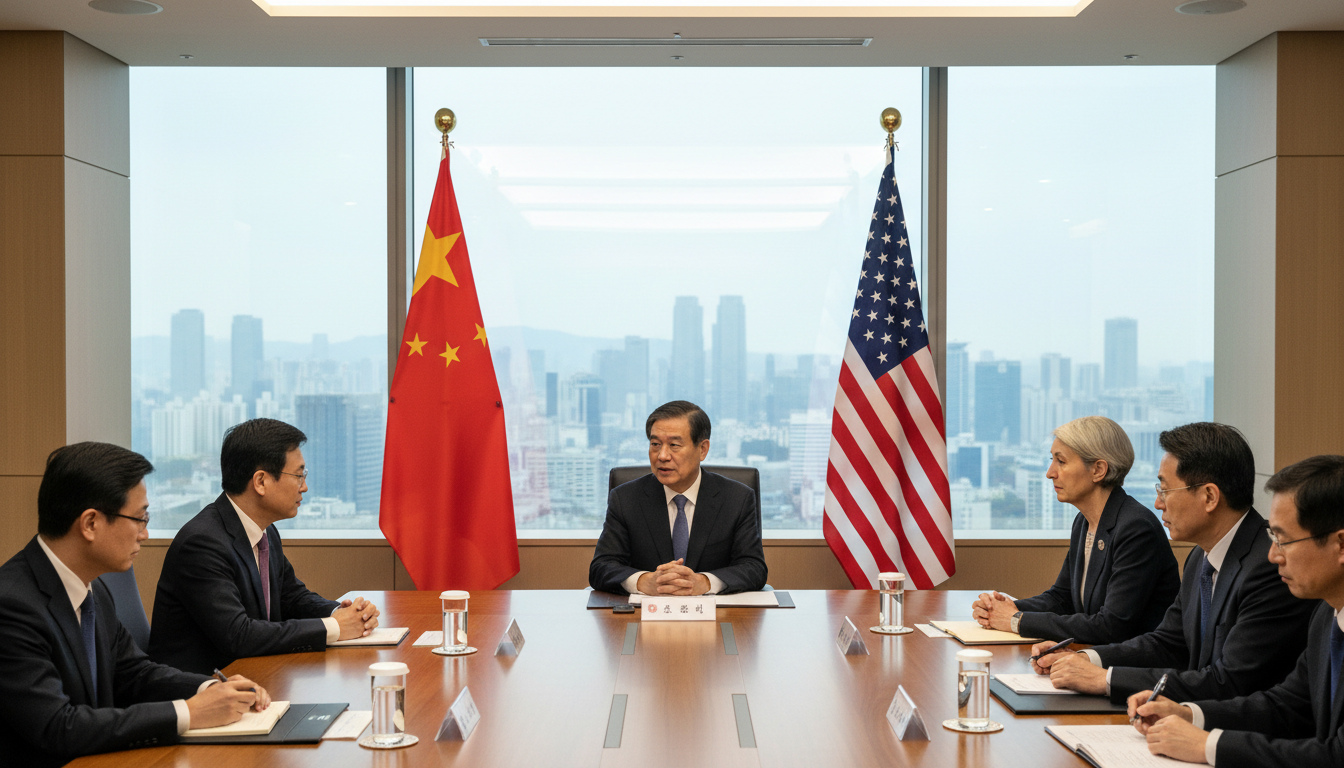
He Lifeng and U.S. Treasury Secretary Scott Bessent to meet in Seoul ahead of Trump‑Xi summit
Chinese vice premier He Lifeng and U.S. Treasury Secretary Scott Bessent will hold economic and trade talks in Seoul in the days before the Trump‑Xi summit in Beijing, aiming to reduce tensions and finalize possible joint actions.
Chinese Vice Premier He Lifeng is scheduled to participate in consultations on shared economic and trade issues in Seoul on Tuesday and Wednesday, officials said, while U.S. Treasury Secretary Scott Bessent confirmed he will meet He and other counterparts in the South Korean capital on Wednesday.
The talks come just before a planned mid‑May summit in Beijing between President Donald Trump and President Xi Jinping, where both leaders are expected to prioritize easing trade frictions and addressing cross‑strait tensions.
Seoul consultations scheduled this week
He Lifeng will lead the Chinese delegation in a two‑day series of consultations described by Beijing as focused on “economic and trade issues of mutual concern.”
U.S. officials confirmed Scott Bessent’s participation specifically on Wednesday, and said he will proceed to Beijing after the Seoul meetings to take part in the summit between the two presidents.
Profiles of the negotiators
He Lifeng serves as China’s top economic policymaker and has been the principal Chinese interlocutor on trade and economic negotiations with Washington.
Scott Bessent, identified by U.S. statements as the senior treasury official attending the talks, is the counterpart representing Washington in discussions that span tariffs, investment rules and other bilateral economic matters.
Trade measures and recent history
Relations between Washington and Beijing have previously been marked by reciprocal tariffs and other trade restrictions imposed by both sides over the past year.
Despite those measures, leaders from both countries met in October in South Korea and agreed to a temporary truce on new trade escalations, a pause that created space for the current round of negotiations and the forthcoming summit.
Key agenda items for the Seoul meetings
Officials say discussions in Seoul are expected to cover a range of issues including tariffs, market access, regulatory barriers, and mechanisms to prevent sudden policy escalations.
The two sides are also likely to touch on investment screening, currency matters and cooperation on global economic stability, all of which could shape the language and commitments that emerge from the Trump‑Xi summit.
Taiwan and strategic tensions on the table
Beyond trade, both Beijing and Washington are expected to use ministerial and technical talks to manage strategic risks, notably those related to Taiwan.
Delegations are unlikely to resolve core political disputes in Seoul, but officials will seek ways to reduce the risk of miscalculation and establish channels for crisis management ahead of the leaders’ meeting.
What negotiators hope the summit will deliver
Diplomats and trade officials will aim to put finishing touches on any joint statement or framework that the presidents might endorse in Beijing, with a preference for measurable steps to lower tensions.
Any agreement reached at the summit would likely combine short‑term confidence‑building measures with a commitment to continue dialogues on outstanding structural issues.
The outcome of the Seoul consultations will be watched closely by markets and governments across the region, which are keen to see whether the two economic giants can translate talks into tangible policy changes and a clearer path for cooperation.
