
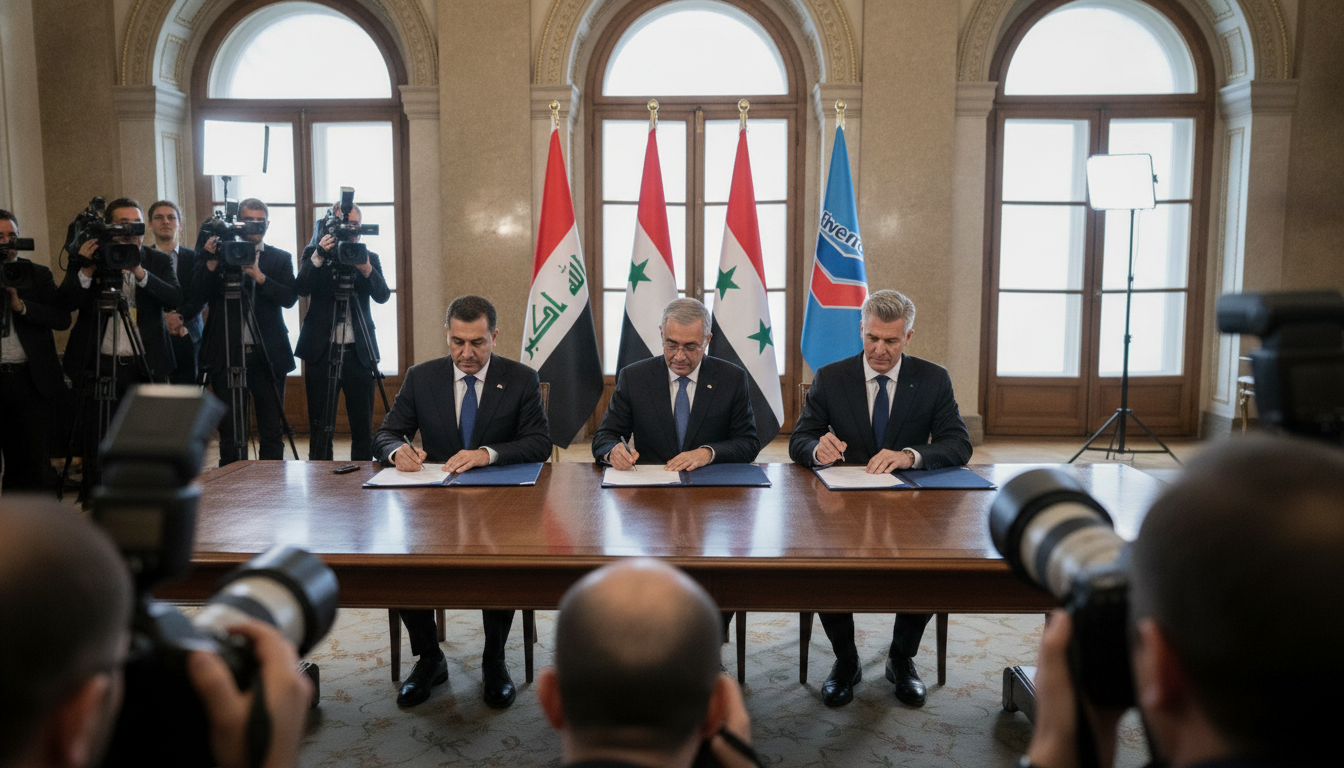
Iraq-Syria oil pipeline rehabilitation agreed with Chevron to lead works
US welcomes Iraq-Syria oil pipeline MoU; Chevron tapped to rehabilitate Haditha–Baniyas route.
Iraq and Syria signed a memorandum of understanding on Friday to rehabilitate the Iraq-Syria oil pipeline running from Haditha in western Iraq to the Mediterranean port of Baniyas in Syria, a move international backers say could reopen a direct export route for Iraqi crude. The Iraq-Syria oil pipeline rehabilitation agreement names US energy firm Chevron as the lead contractor for the project, and the US Embassy in Baghdad issued a statement welcoming the pact. Washington said American companies will play a key role in reconstruction and framed the deal as a contribution to regional connectivity and stability.
Governments formalise memorandum for Haditha–Baniyas pipeline
The memorandum of understanding lays out a framework for rebuilding the Haditha–Baniyas pipeline after years of disruption and disrepair, according to the joint announcement. Iraqi and Syrian officials signed the agreement on Friday, setting a formal basis for technical work, contracting and oversight while delegating construction responsibilities to the named contractor. The pact does not, in its initial public description, specify a detailed timeline, budget or financing package, leaving those elements to subsequent implementation agreements.
Chevron selected as principal contractor
Chevron, the American energy company identified in the memorandum, has been named to carry out rehabilitation and construction work on the pipeline, the statement said. The choice of a US firm underlines Washington’s interest in supporting reconstruction projects in the region and in backing private-sector participation. The US Embassy in Baghdad said American companies would play a major role in delivering construction and related services tied to the pipeline rehabilitation.
US frames project as security and stability booster
In a public statement, the US Embassy welcomed the memorandum and described the project as “historic,” saying it is likely to strengthen regional ties and contribute to security and stability. Washington positioned US involvement as both an economic and strategic contribution, emphasizing that infrastructure rehabilitation can reduce tensions by enhancing interdependence. The embassy’s remarks focused on the potential for reconstruction projects to create jobs and improve the flow of energy exports, while also stressing the need for transparent, accountable implementation.
Economic and energy implications for Iraq and Syria
Rehabilitating the Iraq-Syria oil pipeline could reopen a direct route to Mediterranean export facilities at Baniyas, potentially diversifying export options for Iraqi crude and lowering transit bottlenecks. For Syria, renewed pipeline activity could bring revenues, jobs and reconstruction investment after years of economic strain, while enabling port operations to benefit from increased throughput. Analysts caution that commercial viability will depend on technical assessments, security guarantees, and the structure of commercial agreements that determine pricing, transit fees and responsibility for maintenance.
Security, technical and financing challenges remain
The physical rehabilitation of a cross-border pipeline presents logistical hurdles, including assessments of damage, replacement of corroded sections, and the need for secure construction corridors across territories that have seen conflict. The memorandum creates a framework but stops short of addressing security arrangements or specifying how reconstruction will be protected during works. Financing and insurance lines for such a project are also crucial; the initial announcement leaves open whether international lenders, private investors, or state budgets will underwrite the rehabilitation.
Next steps and implementation expectations
Officials involved in the memorandum are expected to move to detailed feasibility studies, engineering surveys, and negotiating implementation contracts that will set timelines and responsibilities. Chevron’s appointment as lead contractor signals that technical planning and procurement could follow promptly, though formal project schedules have not been disclosed. Observers say progress will hinge on clear governance mechanisms and cooperation between Iraqi and Syrian ministries, as well as on the ability to secure financing and ensure on-the-ground security.
Rehabilitating the Haditha–Baniyas pipeline represents a significant diplomatic and commercial initiative for both Baghdad and Damascus, and the involvement of an American energy company and express US support is likely to draw international attention as the project moves from memorandum to execution.
