
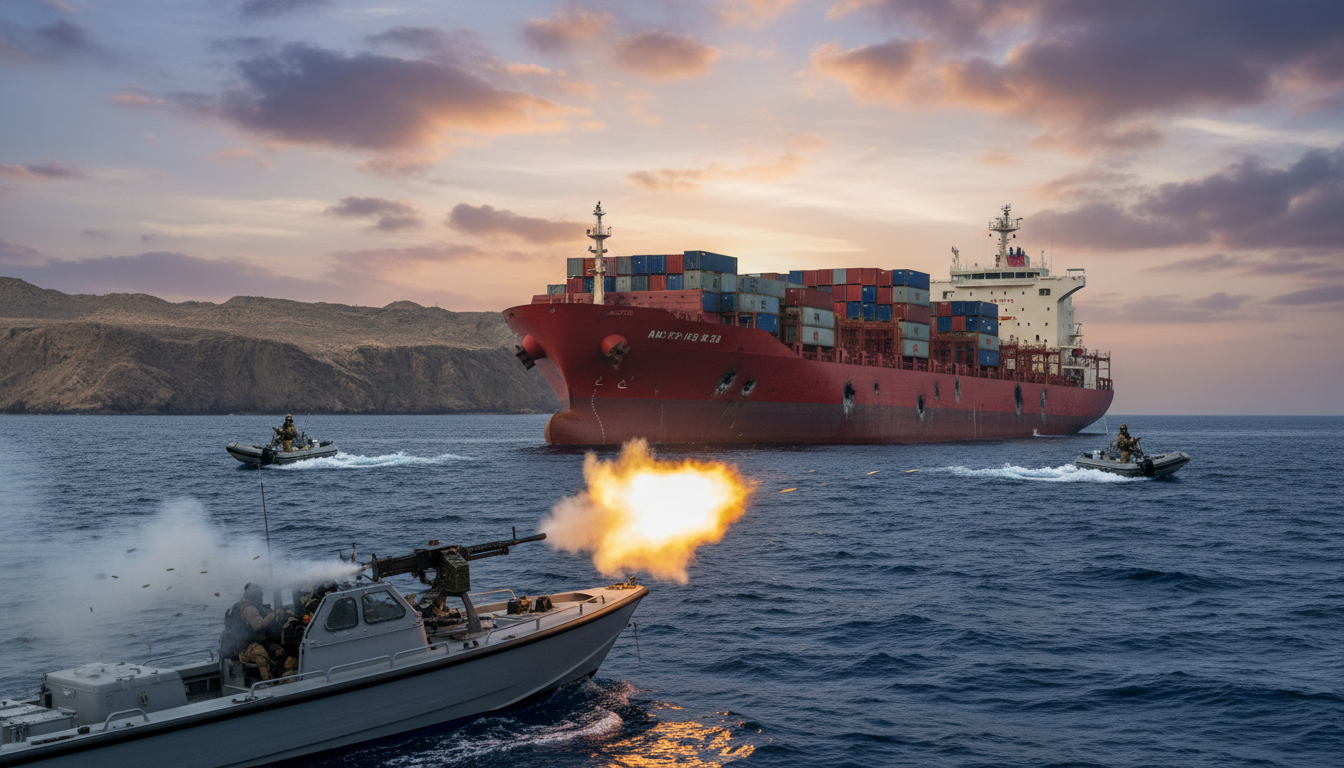
Iranian gunboat fires on container vessel off Oman, UKMTO says
Iranian gunboat fires on container vessel off Oman; UKMTO reports damage to the ship’s bridge and no casualties, while tensions rise as the US extends a ceasefire and maintains a naval blockade.
An Iranian gunboat fires on container vessel off Oman, the United Kingdom Maritime Trade Operations (UKMTO) reported on April 22, 2026, after the ship’s captain said an Iran Revolutionary Guard Corps (IRGC) vessel approached and opened fire. The attack, which damaged the ship’s bridge, caused no reported casualties or environmental harm, according to UKMTO and ship security sources. The incident came hours after US President Donald Trump announced an extension of a ceasefire with Iran, a move that has done little to calm regional tensions.
Bridge damaged, crew reported safe
The UKMTO bulletin said the vessel’s captain reported that an approaching IRGC vessel fired on the ship, causing heavy damage to its bridge systems. The agency added that there were no fires and that the crew were accounted for and unharmed, while the ship’s navigation capabilities were affected.
Maritime security analysts noted that bridge damage can severely limit a vessel’s ability to navigate safely through confined waters such as the approaches to the Strait of Hormuz. UKMTO did not identify the ship by name, citing normal operational security procedures, but emphasized the protection of seafarers in its statement.
Vessel flag and transit permissions
British maritime security firm Vanguard Tech said the container ship was sailing under a Liberian flag and had been informed it had permission to transit through the Strait of Hormuz. The company’s assessment suggested the vessel was operating within established shipping corridors at the time it was approached.
Vanguard Tech and other commercial monitors routinely issue navigational guidance and warnings to merchant vessels in the region, underscoring the layered role of private firms and international agencies in tracking incidents that could threaten maritime traffic.
IRGC statement and Iranian media accounts
Iranian state-aligned outlets including Tasnim and the Islamic Republic News Agency (IRNA) published contrasting accounts, with Tasnim saying the vessel had ignored warnings from Iran’s armed forces. IRNA quoted the IRGC’s Khatam al-Anbiya Central Headquarters as saying the action followed what it described as the US seizure of an Iranian commercial ship in the Sea of Oman.
The IRGC accused Washington of violating the ceasefire and engaging in “armed piracy,” alleging that US forces had fired on the Iranian vessel and disabled its navigation systems. Those claims mirrored a wider Iranian narrative that frames maritime actions in the Gulf as responses to perceived breaches by external powers.
U.S. extends ceasefire while maintaining naval posture
President Donald Trump announced on April 22, 2026, that he would delay a planned military strike on Iran after appeals from regional leaders, while instructing the US Navy to keep a blockade of the Strait of Hormuz in place. In a post on his Truth Social platform, the president said the pause would allow time for Iran’s fractured leadership to present a unified position.
Despite the announcement of an extended truce, US officials emphasized that maritime restrictions and readiness levels would remain high. The administration’s dual approach — offering a diplomatic pause while preserving operational pressure at sea — underscores a cautious stance intended to deter further escalation.
Mixed signals from Tehran and regional leverage
Reporting from Tehran, Al Jazeera correspondent Tohid Asadi described a mix of conciliatory and confrontational messaging from Iranian officials. He said Tehran insists it will not negotiate on imposed terms and continues to view control over transit through the Strait of Hormuz as a key leverage point in any diplomatic exchanges.
Analysts warn that such mixed signals — combining diplomatic posturing with assertive naval activity — increase the risk of miscalculation in a crowded maritime environment. Iran’s framing of its regional policy in terms of “mutual security” versus “security for none” illustrates how maritime actions are linked to broader geopolitical narratives.
Potential consequences for shipping and regional stability
Maritime insurers, shipping companies and energy market observers will monitor the incident closely for signs of a broader campaign of harassment or retaliatory measures. Disruption in the Strait of Hormuz, even if temporary, can have outsized effects on global oil markets and commercial shipping schedules that rely on the waterway.
International maritime agencies and flag states routinely urge vessels to maintain vigilance, report suspicious approaches and follow guidance from naval escorts when available. The latest incident is likely to prompt renewed calls for enhanced monitoring and deconfliction measures among naval forces operating in the Gulf and adjacent seas.
The confrontation off Oman highlights the fragile balance between diplomatic restraint and military readiness in the Gulf, as regional and global actors assess next steps while merchant shipping continues to transit a vital chokepoint.
